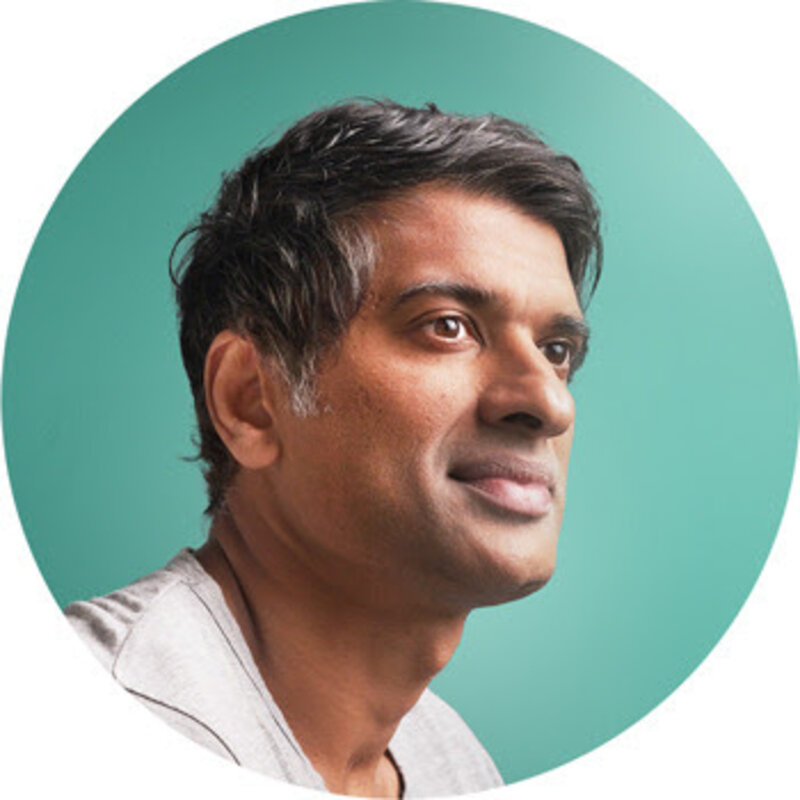
 Dr Rangan Chatterjee
This 5-Second Trick Instantly Calms Anxiety & Boosts Focus (Backed by Science) | Andrew Huberman
Dr. Rangan Chatterjee and Dr. Andrew Huberman on use light, optic flow, and panoramic vision to reduce anxiety.
In this episode of Dr Rangan Chatterjee, featuring Dr. Andrew Huberman and Dr. Rangan Chatterjee, This 5-Second Trick Instantly Calms Anxiety & Boosts Focus (Backed by Science) | Andrew Huberman explores use light, optic flow, and panoramic vision to reduce anxiety Viewing bright light at the wrong times (especially at night) can disrupt circadian timing in ways Huberman likens to junk food—subtle daily habits that accumulate into major health consequences.
At a glance
WHAT IT’S REALLY ABOUT
Use light, optic flow, and panoramic vision to reduce anxiety
- Viewing bright light at the wrong times (especially at night) can disrupt circadian timing in ways Huberman likens to junk food—subtle daily habits that accumulate into major health consequences.
- Spending about two hours per day outdoors and regularly looking into the distance can reduce myopia risk, ease eye strain/headaches, and support mood and metabolic health via specific light-to-brain pathways.
- Self-generated forward motion outdoors (walking/running/biking while not staring at a phone) creates “optic flow” that powerfully inhibits threat circuitry such as the amygdala, producing anxiety relief.
- Shifting from narrow, tunneled visual focus to panoramic (wide-field) vision covertly downshifts stress while improving situational awareness and reaction time, making it useful during arguments, public speaking, and between work bouts.
- Because cognitive focus follows visual focus, simple visual “vergence” drills (e.g., staring at a crosshatch for ~60 seconds) and a short morning visual routine can strengthen attention and reduce distraction from constant context-switching.
IDEAS WORTH REMEMBERING
5 ideasNighttime light exposure is a modern health disruptor.
Huberman argues that bright screens and lighting in the evening amplify signals to the body clock, degrading sleep and downstream health; practical fixes include dimming screens/lights and keeping phones/tablets out of bedrooms.
Two hours outdoors daily is protective for developing eyes and brains.
Large-scale trials cited suggest outdoor time (even doing homework outside) lowers myopia incidence through specific light-to-eye mechanisms and supports brain health, especially in kids with high neuroplasticity.
Look far away regularly to reduce strain and support well-being.
Frequent near-work keeps eye muscles engaged and can contribute to headaches/migraines; periodically viewing down the street or toward a horizon relaxes the visual system and complements the benefits of daylight exposure.
Walking forward outdoors can directly calm anxiety via optic flow.
Self-generated forward movement creates slip-compensating eye movements and optic flow that inhibit threat reflex circuitry (including the amygdala); it works best when you’re not fixating on a phone and is not equivalent to a treadmill.
Panoramic vision is a “covert” way to downshift stress fast.
Expanding the visual field (without moving eyes/head much) reduces brainstem-related alertness drive—more like easing off the accelerator than hitting the brakes—useful in arguments, public speaking, or stressful appointments.
WORDS WORTH SAVING
5 quotesImproper, uh, viewing of light, meaning at the wrong times, um, is going... We're gonna look back and, uh, and realize that this is the, um, snack and junk food of the '80s and '90s.
— Dr. Andrew Huberman
Even if you're just doing this ten, fifteen minutes a day, you're doing tremendous things for your health.
— Dr. Andrew Huberman
Kids who aren't doing this, who are locked to screens all day and all night, um, I mean, I don't wanna be hyperbolic, but they're messing themselves up, and their brain is very plastic.
— Dr. Andrew Huberman
Panoramic vision is great because it's completely covert.
— Dr. Andrew Huberman
We've killed all the micro breaks throughout the day.
— Dr. Andrew Huberman
QUESTIONS ANSWERED IN THIS EPISODE
5 questionsWhat specific light “timing mistakes” are most damaging—bright indoor lights, screens, or both—and what thresholds (brightness/duration) matter most?
Viewing bright light at the wrong times (especially at night) can disrupt circadian timing in ways Huberman likens to junk food—subtle daily habits that accumulate into major health consequences.
For the “two hours outdoors” finding, does the benefit depend on time of day, weather (cloudy vs sunny), or being in shade vs direct sun?
Spending about two hours per day outdoors and regularly looking into the distance can reduce myopia risk, ease eye strain/headaches, and support mood and metabolic health via specific light-to-brain pathways.
Why doesn’t optic flow anxiety relief translate well to treadmills—what sensory inputs are missing compared to outdoor forward motion?
Self-generated forward motion outdoors (walking/running/biking while not staring at a phone) creates “optic flow” that powerfully inhibits threat circuitry such as the amygdala, producing anxiety relief.
How exactly do you perform panoramic vision correctly (eyes fixed vs gently scanning), and how long does it take to feel the downshift?
Shifting from narrow, tunneled visual focus to panoramic (wide-field) vision covertly downshifts stress while improving situational awareness and reaction time, making it useful during arguments, public speaking, and between work bouts.
Could panoramic vision ever be counterproductive—for example in people with trauma/hypervigilance who feel safer with narrow focus?
Because cognitive focus follows visual focus, simple visual “vergence” drills (e.g., staring at a crosshatch for ~60 seconds) and a short morning visual routine can strengthen attention and reduce distraction from constant context-switching.
Chapter Breakdown
Light at the wrong times: the modern “junk food” habit for sleep and health
Huberman compares improper light exposure—especially in the evening—to the junk food era: ubiquitous, convenient, and quietly harmful over time. He frames small, repeated behaviors (like bright screens at night) as major drivers of long-term health and performance outcomes.
Practical evening fixes for kids (and adults): dim screens, dim rooms, remove devices
He offers simple, no-cost steps families can implement immediately to reduce circadian disruption. The focus is on reducing intense, contrast-heavy light exposure near bedtime.
Up-close viewing and myopia: why screens change the eye
Huberman explains how prolonged near work changes eye optics and can contribute to myopia (nearsightedness). He highlights that the eye is dynamic, but chronic near focus can lead to structural changes over time.
Two hours outdoors: clinical-trial evidence for reducing myopia and boosting health
He cites large-scale clinical trials showing outdoor time—about two hours daily—reduces myopia incidence, even if kids do homework outside. He also notes broader mood and metabolic benefits of daylight exposure through pathways beyond the circadian clock.
Distance viewing and “panoramic vision”: reset eye strain and support concentration
Beyond just being outdoors, Huberman emphasizes intentionally looking far away—ideally to the horizon—to counterbalance near-focus demands. He introduces panoramic vision as widening the visual field to reduce strain and help regulate arousal.
Optic flow for anxiety relief: why walking outside calms the threat system
He describes how self-generated forward movement creates “optic flow” that engages slip-compensating eye movements. This, in turn, inhibits threat circuitry (including the amygdala), producing a meaningful anxiety-reducing effect.
Why treadmills and screens aren’t the same as moving through real space
Huberman clarifies that the anxiety-reducing optic flow is strongest with real forward movement through an environment. Simulated motion (treadmills, streamed scenery) may help somewhat, but it’s not equivalent.
Vision as a state-control tool: panoramic vs narrow focus changes arousal
Chatterjee tees up the idea of bidirectional control (like breathwork), and Huberman explains that vision can also be consciously adjusted to influence brain state. Panoramic vision acts like easing off the accelerator—calming while preserving awareness.
Faster reactions and situational awareness: the magnocellular advantage
He explains that panoramic vision recruits fast-processing visual pathways (magnocellular systems). Rather than “zoning out,” widening vision can increase responsiveness and reaction speed—helpful for everyday life and high-performance contexts.
Micro-breaks and attention budgeting: why constant context-switching exhausts focus
Huberman argues modern life has eliminated natural micro-breaks, causing people to “spend” attention all day. Brief pauses—even 10 seconds—can improve learning consolidation and restore the ability to focus.
A 60-second visual focusing drill to jumpstart concentration
He shares a practical focusing technique: fixate on a crosshatch at screen distance to align visual focus with cognitive focus. The goal is to train vergence and reduce distractibility before work.
Huberman’s morning “visual meditation”: training transitions between internal, near, far, and panoramic
He outlines a short routine combining interoception (eyes closed), near focus, far focus, and panoramic vision, paced with a few breaths at each step. The purpose is to train smooth state transitions so you can drop into focus or shift contexts more effectively during the day.
The real problem with social media: relentless passive context switching
Huberman argues the core issue is less the content and more the rapid-fire switching of contexts—like “50 movies in two minutes.” He frames his visual practices as a way to reclaim agency over attention rather than letting external stimuli control it.
EVERY SPOKEN WORD
Install uListen for AI-powered chat & search across the full episode — Get Full Transcript
Get more out of YouTube videos.
High quality summaries for YouTube videos. Accurate transcripts to search & find moments. Powered by ChatGPT & Claude AI.
Add to Chrome