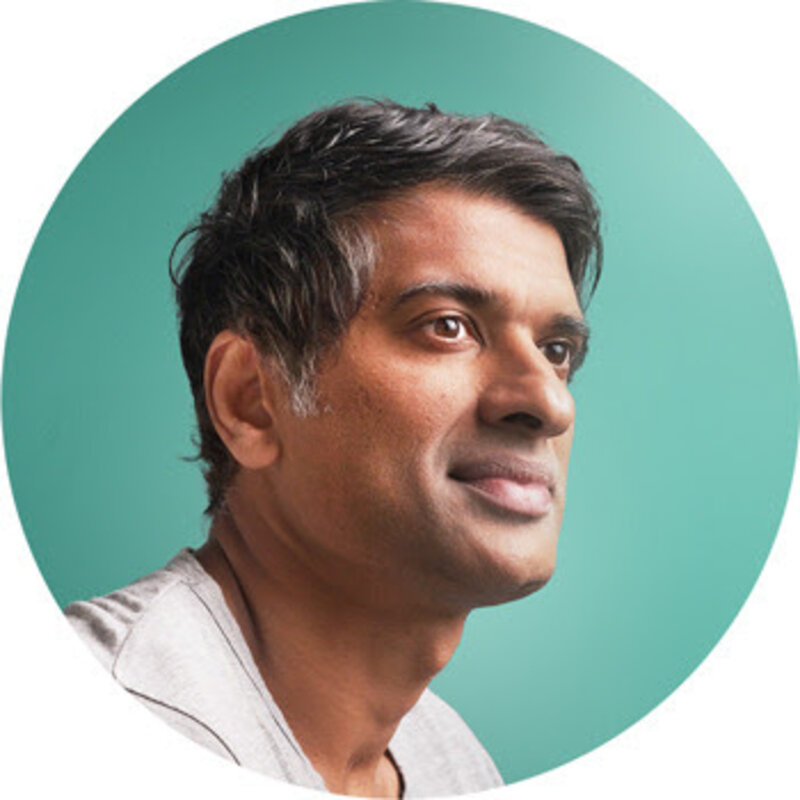
 Dr Rangan Chatterjee
This One Mental Shift Healed My Life (You’ll Never See People the Same Again)
Dr. Rangan Chatterjee on a simple perspective shift builds compassion and emotional resilience daily.
In this episode of Dr Rangan Chatterjee, featuring Dr. Rangan Chatterjee, This One Mental Shift Healed My Life (You’ll Never See People the Same Again) explores a simple perspective shift builds compassion and emotional resilience daily Chatterjee’s core mental shift—“If I was the other person, I would be doing exactly the same as them”—reframes conflict into compassion by accounting for others’ histories and circumstances.
At a glance
WHAT IT’S REALLY ABOUT
A simple perspective shift builds compassion and emotional resilience daily
- Chatterjee’s core mental shift—“If I was the other person, I would be doing exactly the same as them”—reframes conflict into compassion by accounting for others’ histories and circumstances.
- He argues that “truth” often matters less than the story you choose, since multiple perspectives can exist simultaneously and your interpretation drives your emotional physiology.
- Drawing on Holocaust survivor Edith Eger, he illustrates that inner freedom comes from choosing your mental narrative even amid extreme suffering, and that the mind can become a self-made prison.
- He recommends practicing “Make everyone a hero” for seven days to interrupt cynical default thinking and reduce agitation from everyday events like rude drivers or social media comments.
- The conversation links chronic triggering, victimhood, and competitive insecurity to childhood programming and trauma, showing how awareness and “seeking friction” can build stable self-worth independent of praise or criticism.
IDEAS WORTH REMEMBERING
5 ideasAssume you’d act the same with their exact life history.
Repeating “If I was the other person, I’d be doing exactly the same” dissolves moral superiority and invites empathy by factoring in upbringing, stressors, and past experiences.
Your interpretation drives your wellbeing more than the objective facts.
Because two people can witness the same event and form opposing conclusions (sports fandom, relationship arguments), choosing a “happiness story” can reduce stress and rumination.
Compassion is a practical tool, not just a virtue.
When you invent plausible, humane explanations for someone’s behavior (fatigue, fear, job stress), your anger drops and your physiology calms—even if you can’t verify the cause.
Make the other person a hero to break the trigger loop.
Turning an annoying behavior into a charitable narrative (e.g., the reckless driver is rushing to help someone) trains the brain away from cynicism and toward emotional control.
Seek social friction to become less dependent on others for happiness.
Treat triggers—negative comments, harsh emails, criticism—as gym reps for emotional strength by asking what insecurity was activated and what you can learn.
WORDS WORTH SAVING
5 quotesIf I was the other person, I would be doing exactly the same as them.
— Dr. Rangan Chatterjee
The truth doesn't matter... choose a happiness story.
— Dr. Rangan Chatterjee
Nobody can ever take away from you what you put inside your mind.
— Edith Eger (quoted by Dr. Rangan Chatterjee)
I've been in Auschwitz, but... the greatest prison you will ever live in is the prison you create inside your minds.
— Edith Eger (quoted by Dr. Rangan Chatterjee)
It wasn't that I liked winning. It was that the pain of losing was too great.
— Dr. Rangan Chatterjee
QUESTIONS ANSWERED IN THIS EPISODE
5 questionsHow do you reconcile “the truth doesn’t matter” with accountability when someone’s behavior is genuinely harmful or abusive?
Chatterjee’s core mental shift—“If I was the other person, I would be doing exactly the same as them”—reframes conflict into compassion by accounting for others’ histories and circumstances.
In the “If I were them” practice, what’s the line between compassion and excusing repeated bad behavior—what do you recommend people do differently in action?
He argues that “truth” often matters less than the story you choose, since multiple perspectives can exist simultaneously and your interpretation drives your emotional physiology.
What does “choose a happiness story” look like step-by-step in the moment you feel triggered (e.g., when reading a hostile comment)?
Drawing on Holocaust survivor Edith Eger, he illustrates that inner freedom comes from choosing your mental narrative even amid extreme suffering, and that the mind can become a self-made prison.
Can you give examples of “Make everyone a hero” narratives that still preserve boundaries and don’t minimize your own needs?
He recommends practicing “Make everyone a hero” for seven days to interrupt cynical default thinking and reduce agitation from everyday events like rude drivers or social media comments.
You mention triggers often point to insecurities—what are the most common insecurities you see behind reactivity in patients, and how do you work with them?
The conversation links chronic triggering, victimhood, and competitive insecurity to childhood programming and trauma, showing how awareness and “seeking friction” can build stable self-worth independent of praise or criticism.
Chapter Breakdown
The deathbed-values exercise: realizing what you’ve been neglecting
The guest reflects on how a simple values exercise cut through years of overthinking and social conditioning. Zooming out to a “deathbed perspective” made it painfully obvious that relationships—friends, family, connection—had been missing from his definition of happiness.
Why it’s easier to see misalignment in others than in yourself
Rangan highlights how clearly we can spot other people’s blind spots while struggling to reflect on our own. The conversation frames self-awareness as difficult but essential for change.
The core mental shift: “If I were them, I’d do exactly the same”
Rangan introduces the single phrase he credits most for his health and happiness. By assuming you would behave identically if you had the other person’s life history, you dissolve ego-driven judgment and cultivate compassion.
Multiple perspectives are always true: choosing the story that serves you
They explore how the same event generates wildly different interpretations, and how your chosen narrative affects your wellbeing. Rangan argues that for your happiness, the objective “truth” often matters less than the perspective you adopt.
Edith Eger and radical inner freedom under extreme suffering
Rangan shares a defining podcast conversation with Holocaust survivor Edith Eger, illustrating the power of mental reframing even in Auschwitz. Her message: no one can take what you place inside your mind, and the greatest prison is the one you create mentally.
Stop donating your peace to comments, tweets, and mental stories
The guest connects Eger’s lesson to everyday life—how self-generated stories torment us and steal time and joy. They discuss choosing compassion and assuming good intentions instead of spiraling on online negativity.
Make Everyone a Hero: a 7-day compassion challenge
Rangan offers a practical tool: when someone behaves badly, force yourself to make them a hero in your mind by inventing a generous explanation. He uses the COVID toilet paper panic as a case study for rewriting narratives without excusing harm.
Seek Out Friction: using triggers as training for emotional strength
Rangan reframes social irritation as a gym-like stimulus that can make you stronger. Rather than waiting for others to change, you treat triggers as feedback that builds resilience and internal control over happiness.
Escaping the external validation trap: stability over highs and crashes
They discuss how praise and criticism create emotional volatility when self-worth depends on external validation. By working through insecurities, you become less inflated by compliments and less devastated by criticism.
From blaming the world to owning your response: learned victim patterns
Rangan explains how victimhood can be absorbed from parents and early environments. He emphasizes that regardless of history, people can choose a different way of showing up—starting immediately.
Immigrant experiences, bias, and the psychology of victimhood as self-protection
The guest shares how his mother’s racial abuse shaped a worldview that the world was “out to get her,” and asks why people default to victimhood. Rangan frames it as a safety strategy that protects self-esteem when people feel too fragile to face perceived inadequacy.
Childhood programming, winning/losing, and the hidden fear of being unloved
Rangan tells personal stories (grades, competitiveness, pool hall rituals) to show how early conditioning links achievement with love and safety. He distinguishes enjoying winning from avoiding the pain of losing, and connects this discomfort to coping behaviors.
EVERY SPOKEN WORD
Install uListen for AI-powered chat & search across the full episode — Get Full Transcript
Get more out of YouTube videos.
High quality summaries for YouTube videos. Accurate transcripts to search & find moments. Powered by ChatGPT & Claude AI.
Add to Chrome