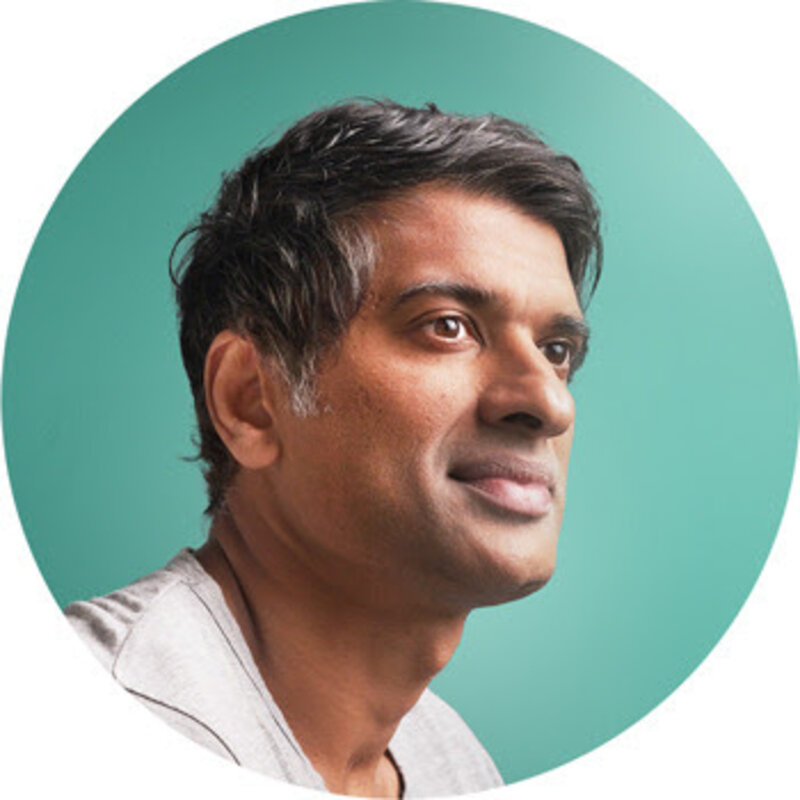
 Dr Rangan Chatterjee
Brain Expert: 'If You Have Brain Fog, Fatigue or Burnout — It Might Be Your Eyes!' | Bryce Appelbaum
Dr. Rangan Chatterjee and Dr. Bryce Appelbaum on how functional vision drives brain health, focus, and daily performance.
In this episode of Dr Rangan Chatterjee, featuring Dr. Rangan Chatterjee and Dr. Bryce Appelbaum, Brain Expert: 'If You Have Brain Fog, Fatigue or Burnout — It Might Be Your Eyes!' | Bryce Appelbaum explores how functional vision drives brain health, focus, and daily performance The conversation distinguishes eyesight (clarity on a chart) from vision (how eyes and brain coordinate to focus, track, converge, and process meaning), arguing many “eye problems” are actually brain-function problems expressed through the eyes.
At a glance
WHAT IT’S REALLY ABOUT
How functional vision drives brain health, focus, and daily performance
- The conversation distinguishes eyesight (clarity on a chart) from vision (how eyes and brain coordinate to focus, track, converge, and process meaning), arguing many “eye problems” are actually brain-function problems expressed through the eyes.
- Functional vision issues may show up as reading avoidance, losing place, skipping lines, headaches, dry/tired eyes, fatigue, brain fog, and even motion sickness due to mismatch between visual and vestibular signals.
- They claim modern screen-heavy living drives an evolutionary mismatch that increases myopia and keeps people in a chronic “visual fight-or-flight” state via tunnel vision, dilated pupils, and narrowed attention.
- Dr. Chatterjee describes a five-day “vision performance training” intensive that improved his uncorrected acuity from about 20/400 to ~20/70–20/60 and improved binocular performance with under-corrected contacts, which they attribute to better depth perception, peripheral processing, and accommodative flexibility.
- The episode offers actionable, low-barrier habits (20/20/20 breaks, near–far focusing, eye stretches, peripheral expansion drills) and critiques reactive eye care and screen-first schooling for ignoring root causes and long-term development.
IDEAS WORTH REMEMBERING
5 ideasEyesight is a measurement; vision is a coordinated brain skillset.
They frame 20/20 as only one output, while real-world performance depends on tracking, convergence, focusing flexibility, depth perception, and processing—functions that can be trained rather than only “corrected.”
Reading difficulty often signals eye-teamwork problems, not laziness or low attention.
Losing place, skipping words/lines, rereading for comprehension, and reading-induced fatigue can reflect tracking and focusing instability; people may switch to audiobooks simply because vision is taxing.
Brain fog, fatigue, and burnout can be downstream of visual overwork.
If the visual system is inefficient (especially during prolonged near work), the brain expends extra effort to maintain clarity and single vision, reducing cognitive stamina and productivity across the day.
Motion sickness frequently has a treatable visual component.
When visual input suggests “static” (e.g., staring at a screen as a passenger) while the vestibular system signals motion, the brain struggles to reconcile signals; driving often helps because visual-motor planning and focal/peripheral balance improve.
Screen environments can lock people into chronic tunnel vision and stress physiology.
They connect near-focused screen time to sympathetic activation (pupil dilation and narrowed peripheral awareness), arguing this reduces patience, empathy, and decision quality—effects that may extend beyond eye symptoms into behavior and relationships.
WORDS WORTH SAVING
5 quotesVision is the new microbiome. We're gonna look back on this in a few years and realize vision is responsible or at least influences so many aspects of longevity, consciousness, happiness, productivity, critical decision-making, even interpersonal connection, and none of us even had a file on it.
— Dr. Bryce Appelbaum
Eyesight is a symptom. Eyesight is glasses or contacts. Vision is brain, and vision problems are brain problems, and there are so many solutions and fixes out there for vision problems that extend way beyond just getting new glasses or new contacts.
— Dr. Bryce Appelbaum
When we're on screens, our vision, our thinking, our attention become tunneled.
— Dr. Bryce Appelbaum
The human visual system under stress, when the autonomic nervous system is in that fight or flight response, our pupils widen, and we lock in with this tunnel vision.
— Dr. Bryce Appelbaum
Grabbing the over-the-counter readers the first chance you get is the equivalent of your knee hurting and jumping into a wheelchair.
— Dr. Bryce Appelbaum
QUESTIONS ANSWERED IN THIS EPISODE
5 questionsWhat specific tests make up a “functional vision assessment,” and how does it differ from a standard refraction exam?
The conversation distinguishes eyesight (clarity on a chart) from vision (how eyes and brain coordinate to focus, track, converge, and process meaning), arguing many “eye problems” are actually brain-function problems expressed through the eyes.
In Chatterjee’s case, how much of the rapid 20/400 to ~20/70 change was improved focusing control vs true refractive change in the eye’s optics?
Functional vision issues may show up as reading avoidance, losing place, skipping lines, headaches, dry/tired eyes, fatigue, brain fog, and even motion sickness due to mismatch between visual and vestibular signals.
Which symptoms most reliably predict an eye-coordination problem (convergence/vergence, tracking) versus an accommodation problem (focusing stamina)?
They claim modern screen-heavy living drives an evolutionary mismatch that increases myopia and keeps people in a chronic “visual fight-or-flight” state via tunnel vision, dilated pupils, and narrowed attention.
You said many ADHD/dyslexia presentations have a visual component—what evidence base supports this, and when could that framing be misleading or risky?
Dr. Chatterjee describes a five-day “vision performance training” intensive that improved his uncorrected acuity from about 20/400 to ~20/70–20/60 and improved binocular performance with under-corrected contacts, which they attribute to better depth perception, peripheral processing, and accommodative flexibility.
For motion sickness, what at-home screening or simple experiment could someone do to test whether their symptoms are visually driven?
The episode offers actionable, low-barrier habits (20/20/20 breaks, near–far focusing, eye stretches, peripheral expansion drills) and critiques reactive eye care and screen-first schooling for ignoring root causes and long-term development.
Chapter Breakdown
Functional vision warning signs: reading, screens, headaches, and fatigue
Bryce outlines common symptoms that suggest a functional vision problem—especially in a screen-heavy world. He links reading struggles, eye strain, headaches, and dry/tired eyes to eyes not working well together as a team.
Vision vs eyesight: why 20/20 isn’t the whole story
They differentiate eyesight (clarity at a distance) from vision (how the brain controls eye movement, focus, teaming, and processing). Bryce argues eyesight is a symptom, while vision is a brain-based performance system that can often be trained.
Reactive eye care vs root-cause model: asking “why” your prescription changes
Rangan compares typical eye care (correct the symptom with lenses) to prescribing medicine for high blood sugar without addressing lifestyle drivers. Bryce emphasizes that repeated prescription changes are often a signal of functional strain and unmet visual demands.
Unexpected symptoms: motion sickness, night driving avoidance, and “reading makes me sleepy”
They expand the symptom list beyond blur: motion sickness, preference for audiobooks, trouble with ball sports, and night driving. Bryce explains motion sickness as a mismatch between visual input and vestibular signals, often improved when driving due to predictive motor planning.
Kids, mislabels, and learning: the visual component in ADHD/dyslexia-type profiles
Bryce argues many classroom “behavior” and learning labels are incomplete without functional vision testing. He links tracking across midline, eye control, and focusing stability to attention and comprehension, noting kids may rely on auditory input when visual processing is taxing.
Rangan’s 5-day intensive results: from 20/400 to ~20/60 unaided
Rangan shares measured changes from the clinic intensive: dramatic improvement in unaided distance acuity in five days, plus a richer “3D” experience of the world. Bryce attributes gains to targeted vision performance training—especially focusing system flexibility, eye coordination, and depth perception.
How compensations happen: one eye for near, one eye for far, and depth perception deficits
Bryce describes how Rangan’s brain had adapted over decades, sometimes suppressing one eye depending on distance. Training focused on reducing binocular rivalry and improving 3D depth perception as a key indicator of eyes working together.
Stress physiology and vision: tunnel vision, screens, and empathy
They connect visual stress to autonomic nervous system state: fight-or-flight widens pupils and narrows attention. They argue heavy screen time reinforces this stress pattern, potentially affecting patience, decision-making, social connection, and even societal polarization.
COVID as an inflection point: kids’ screen exposure and the ScreenFit program
Bryce explains how COVID lockdowns changed his professional approach and highlighted screen harms in his own children (behavioral outbursts, sleep disruption, early myopia signs). He created ScreenFit to provide structured at-home training for those without access to in-clinic intensives.
Myopia surge and school screens: risk factors and public health concern
Rangan criticizes widespread classroom screen adoption without adequate safety evidence, citing improved wellbeing when teens went tech-free. Bryce adds myopia epidemiology and key drivers: low outdoor time, poor lighting, and prolonged near/screen stress.
Screens vs books: closer distance, chaotic eye movements, glare, flicker, and “junk lighting”
They contrast paper reading with screens: closer working distance, more erratic scanning, contrast/glare, flicker, and high-energy light—all increasing visual load. Bryce emphasizes natural blue light is beneficial, while artificial light patterns can disrupt sleep and metabolism via circadian signaling.
Practical toolkit: 20/20/20 breaks, focus training, eye stretches, and peripheral pointing
Bryce provides entry-level daily practices to reduce strain and build visual flexibility. They discuss the 20/20/20 rule, “eye push-ups” for accommodative stamina, eye stretch routines for mobility, and peripheral pointing to expand ambient awareness and reduce sympathetic lock-in.
Beyond eyesight: movement, balance, concussion, and mental health links
They connect functional vision to posture, balance, and coordination—citing measurable gait/spinal rotation changes when activating convergence/divergence and peripheral gaze. Bryce notes head injuries almost always impact vision processing, and visual dysfunction can amplify anxiety, sensory overload, and relationship stress.
Closing reflections: “20 happy” over 20/20, and seeing the world differently
They end by reframing success as functional performance and wellbeing rather than a single acuity benchmark. Rangan highlights how improved visual processing changed his lived experience and suggests this broader perspective can foster compassion, since perception varies person-to-person.
EVERY SPOKEN WORD
Install uListen for AI-powered chat & search across the full episode — Get Full Transcript
Get more out of YouTube videos.
High quality summaries for YouTube videos. Accurate transcripts to search & find moments. Powered by ChatGPT & Claude AI.
Add to Chrome