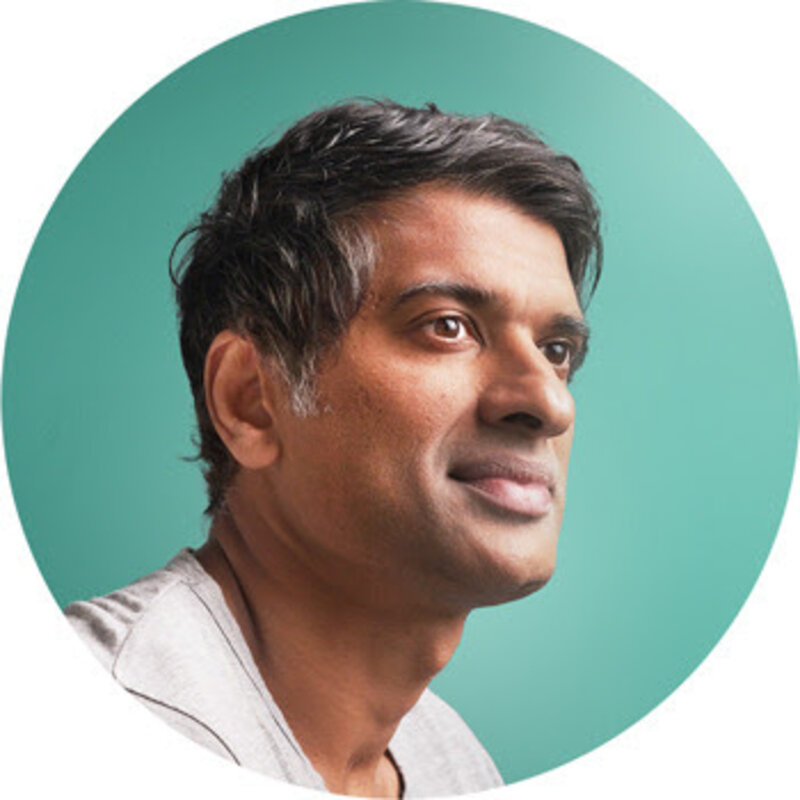
 Dr Rangan Chatterjee
I've been a doctor for 25 years - this is where the system fails
Dr. Rangan Chatterjee on a veteran doctor on medicine’s lifestyle blind spot and overmedication.
In this episode of Dr Rangan Chatterjee, featuring Dr. Rangan Chatterjee, I've been a doctor for 25 years - this is where the system fails explores a veteran doctor on medicine’s lifestyle blind spot and overmedication Chatterjee says medical training prioritizes diagnosing disease and prescribing drugs, while offering little education on lifestyle causation or how to support behavior change.
At a glance
WHAT IT’S REALLY ABOUT
A veteran doctor on medicine’s lifestyle blind spot and overmedication
- Chatterjee says medical training prioritizes diagnosing disease and prescribing drugs, while offering little education on lifestyle causation or how to support behavior change.
- He argues many modern conditions—often 80–90% of what clinicians see—are driven by contemporary lifestyle factors, leading to widespread polypharmacy without strong evidence on multi-drug interactions.
- Using depression as a case study, he questions the “chemical imbalance” narrative, highlights high antidepressant use in the UK, and warns diagnostic labels can sometimes disempower patients.
- He advocates informed consent that genuinely includes lifestyle-based options, but notes short appointment times and system incentives make prescriptions the default.
- He presents his “Four Pillars” framework—food, movement, sleep, relaxation—as a practical, high-control approach for improving mood and metabolic and cardiovascular symptoms through small, consistent changes.
IDEAS WORTH REMEMBERING
5 ideasMedical care often treats symptoms while missing root causes.
He argues clinicians are trained to diagnose and medicate disease rather than investigate lifestyle drivers, so many patients remain unwell despite multiple prescriptions.
Polypharmacy is rising faster than the evidence base.
Chatterjee notes medication trials commonly test single drugs, while real patients may take six or more—leaving uncertainty about safety and interactions.
Medications can help, but should not be the only option presented.
He emphasizes informed consent: patients can choose drugs, lifestyle change, or both—but the lifestyle path is frequently not explained or supported.
Depression is heterogeneous; causes and solutions differ by person.
He describes loneliness, purposeless work, indoor/sedentary living, ultra-processed diets, and excessive screen time as potential contributors requiring individualized understanding.
Diagnostic labels can be useful yet sometimes disempowering.
Labels may provide access to services, but can also lead people to identify as “broken” and reduce agency to try change.
WORDS WORTH SAVING
5 quotesI have literally seen thousands of patients struggle over the years, convinced that they were broken because the pills weren't working, when the truth is they were never the problem. In many cases, it was the system.
— Dr. Rangan Chatterjee
The diagnosis of disease is completely different from the creation of health.
— Dr. Rangan Chatterjee
Your depression is not a deficiency of Prozac, your Type II diabetes is not a deficiency of metformin, your weight gain is not a deficiency of Ozempic.
— Dr. Rangan Chatterjee
Labels are not neutral.
— Dr. Rangan Chatterjee
You simply do not know how many of your patients' symptoms are down to lifestyle until you correct their lifestyle.
— Dr. Rangan Chatterjee
QUESTIONS ANSWERED IN THIS EPISODE
5 questionsYou cite that 80–90% of modern medicine is lifestyle-driven—what specific categories of conditions are you including, and what evidence most convinced you?
Chatterjee says medical training prioritizes diagnosing disease and prescribing drugs, while offering little education on lifestyle causation or how to support behavior change.
In a 10-minute GP appointment, what is the most realistic way to offer a true lifestyle option without overwhelming the patient or the clinician?
He argues many modern conditions—often 80–90% of what clinicians see—are driven by contemporary lifestyle factors, leading to widespread polypharmacy without strong evidence on multi-drug interactions.
How do you decide when antidepressants are appropriate versus when to prioritize non-drug interventions first, especially for moderate to severe symptoms?
Using depression as a case study, he questions the “chemical imbalance” narrative, highlights high antidepressant use in the UK, and warns diagnostic labels can sometimes disempower patients.
You’re skeptical of the “chemical imbalance” framing—what alternative explanation do you find most clinically useful when talking with patients?
He advocates informed consent that genuinely includes lifestyle-based options, but notes short appointment times and system incentives make prescriptions the default.
If labels can be disempowering, how do you document and communicate symptoms to ensure patients still access needed services and accommodations?
He presents his “Four Pillars” framework—food, movement, sleep, relaxation—as a practical, high-control approach for improving mood and metabolic and cardiovascular symptoms through small, consistent changes.
Chapter Breakdown
Why patients feel “broken” when pills don’t work
Dr. Chatterjee reflects on 25 years inside healthcare and how many patients assume they’re the problem when treatments fail. He argues that the system often treats symptoms without addressing what’s driving them.
Medicine is trained to diagnose disease—not to create health
He explains that medical school equips doctors to identify disease and prescribe treatments, but not to build health. Since most modern illness is lifestyle-driven, this mismatch leads to ineffective care for many people.
Over-medicalization and polypharmacy: the hidden risk of “pill cocktails”
Prescription volume has surged, and many patients now take multiple medications at once. He highlights that drug studies often examine single medications, leaving real-world interactions and combined effects underexplored.
Informed consent gap: patients rarely get real lifestyle options
He argues patients deserve to hear both medication and lifestyle paths, but time constraints and training make this uncommon. With short appointments, prescribing is easier than exploring life context and behavior change.
Case study: depression and the scale of antidepressant use
Depression is used as a vivid example of system failure, noting that 1 in 5 UK adults take antidepressants. He questions what this indicates about modern life and whether medication use has become the default response to societal stressors.
Effectiveness and side effects: questioning the dominant depression narrative
He cites concerns about the strength of evidence for antidepressants and the “chemical imbalance” framing. He also notes that a significant portion of users report adverse effects, raising the need for better individualized decision-making.
The downside of labels: when a diagnosis becomes disempowering
He explains why he’s cautious about labeling patients with depression, since labels can shape identity and expectations. While diagnoses can unlock services, they can also reduce agency and willingness to try change.
Depression as a signal: different causes in different people
He stresses that “depression” can represent many underlying stories—loneliness, lack of purpose, poor environment, sedentary behavior, or diet. The goal is to understand what’s happening in someone’s life, not just apply a standardized fix.
Lifestyle tools that can improve mood (even with low motivation)
He outlines practical, evidence-backed interventions—movement, nature exposure, and other practices—that can shift mood. He acknowledges that motivation is often low in depression, but argues that doesn’t justify skipping lifestyle support.
A patient journey: small changes that build momentum and recovery
He describes a patient who cycled on/off antidepressants for years but eventually thrived without medication by stacking small habits. The transformation came from incremental steps that compounded into major life change.
The broader principle: lifestyle drives many conditions beyond mood
He generalizes the argument to type 2 diabetes, anxiety, weight gain, blood pressure, and hormonal symptoms. Creating health upstream can reduce downstream symptoms across multiple diagnoses.
The Four Pillars approach: food, movement, sleep, relaxation
He introduces his framework for sustainable health change and references his book(s). The pillars are portrayed as high-impact and largely within personal control, emphasizing balance over perfection.
How to start: pick one pillar and make small, consistent changes
He closes with a call to self-assess which pillar needs the most attention and to begin with manageable steps rather than a total overhaul. Consistency over days and weeks can produce noticeable change.
EVERY SPOKEN WORD
Install uListen for AI-powered chat & search across the full episode — Get Full Transcript
Get more out of YouTube videos.
High quality summaries for YouTube videos. Accurate transcripts to search & find moments. Powered by ChatGPT & Claude AI.
Add to Chrome