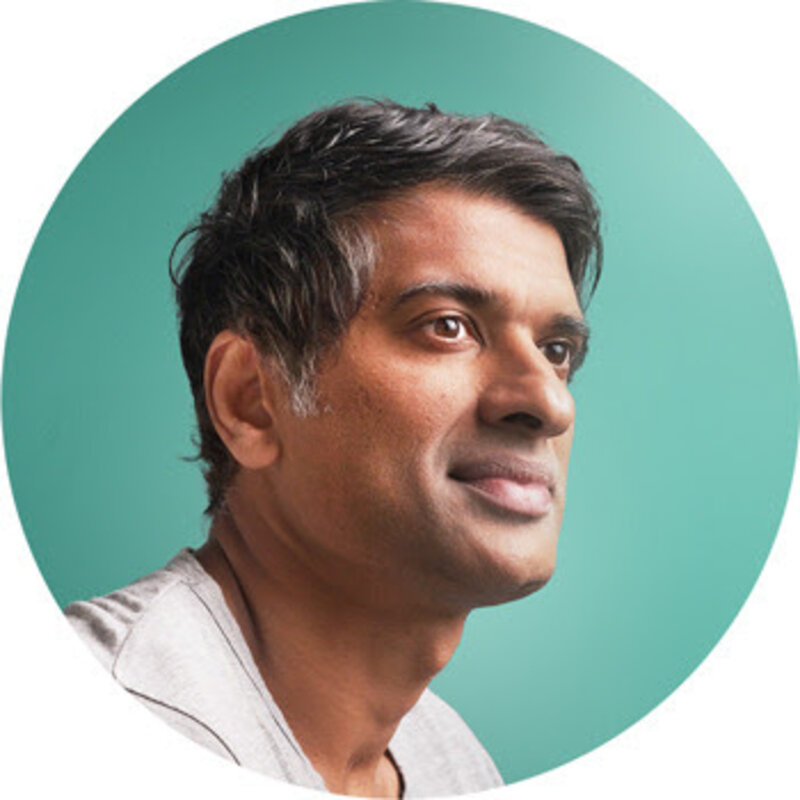
 Dr Rangan Chatterjee
Amazing Benefits Of Walking Backwards Everyday You Never Knew About (Heal Pain, Posture & Stress)
Dr. Rangan Chatterjee and Lawrence van Lingen on backward walking as calming, posture-fixing antidote to modern life.
In this episode of Dr Rangan Chatterjee, featuring Dr. Rangan Chatterjee and Lawrence van Lingen, Amazing Benefits Of Walking Backwards Everyday You Never Knew About (Heal Pain, Posture & Stress) explores backward walking as calming, posture-fixing antidote to modern life Backward walking is framed as an “antidote to modern life,” interrupting habitual sitting-based flexion patterns to open posture, decompress the spine, and create joint space.
At a glance
WHAT IT’S REALLY ABOUT
Backward walking as calming, posture-fixing antidote to modern life
- Backward walking is framed as an “antidote to modern life,” interrupting habitual sitting-based flexion patterns to open posture, decompress the spine, and create joint space.
- The practice may down-regulate the nervous system by shifting foot loading (heel contact, full-foot trust) and reducing movement tension, which can improve sleep and stress resilience.
- Lawrence links movement quality to psychology—trust, play, curiosity, and authenticity—arguing that how you move influences how you think, feel, and relate to others.
- Rather than simply strengthening weak areas (like glutes/core), he emphasizes restoring tonic–phasic muscle balance via breathwork, slow “somatovisceral” movement, and playful drills (flow rope, resisted/tire walking, happy hip hack).
- Modern screens and lifestyles are presented as posture- and breathing-disruptors (email apnea, narrowed peripheral vision, neck/hamstring tension), making simple movement and eye/breath practices a countermeasure.
IDEAS WORTH REMEMBERING
5 ideasStart with five minutes of backward walking to “reset” gait and stress.
They recommend ~5 continuous minutes because attention and coordination often degrade after ~90–120 seconds, and the refocus period may drive neuroplastic gains; many people notice calming effects and movement changes within a week.
Do backward walking barefoot on varied texture when possible, but prioritize consistency over perfection.
Ideal is skin-on-grass/sand for sensory input (many nerve endings in feet), yet carpet/astroturf/shoes are acceptable—“perfection is the enemy of progress.”
Technique matters: relax toes, load the heel, and keep the torso oriented to the lead leg.
Key cues are “soft toes,” heel down with full weight through the heel, and belly button/solar plexus pointing toward the front (lead) leg; reversing this pattern is common and may blunt benefits.
Pain during running isn’t a badge of honor—use a clear stop/adjust rule.
A guideline offered is that pain >3/10, pain that worsens during the run, or persistent pain warrants reconsidering training because joint inflammation can become systemic and cartilage damage is hard to reverse.
Improve movement first, then strengthen—otherwise you may reinforce dysfunction.
“Weak glutes” and “weak core” are often inhibited by tight reactive tonic muscles (e.g., psoas/hamstrings/diaphragm), so piling strength work on top can stall progress or increase issues.
WORDS WORTH SAVING
5 quotesIf I had to distill it out really simply, I think it's basically an antidote to modern life.
— Lawrence van Lingen
Emotion and motion cannot be separated, and your posture and your deportment and ... We see it in the lines of your face. You can see it in ... Y- you know, we're a reflection of what we habitually do.
— Lawrence van Lingen
If you're not curious and you don't have a sense of play, you're in a sympathetic state. So parasympathetic and curiosity and play go hand in hand.
— Lawrence van Lingen
You gotta start somewhere. You, you don't have to nail it. You know, perfection is the enemy of progress.
— Lawrence van Lingen
Come on in. The water's great.
— Lawrence van Lingen
QUESTIONS ANSWERED IN THIS EPISODE
5 questionsWhen you say backward walking activates the parasympathetic system, what signs should someone notice in real time (breath rate, tension, mood, sleep)?
Backward walking is framed as an “antidote to modern life,” interrupting habitual sitting-based flexion patterns to open posture, decompress the spine, and create joint space.
Can you clarify the most common “wrong pattern” in backward walking and how someone can self-check it without filming themselves?
The practice may down-regulate the nervous system by shifting foot loading (heel contact, full-foot trust) and reducing movement tension, which can improve sleep and stress resilience.
You recommend five minutes as the “magic number”—how would you progress (time, frequency, surface, speed) over 4–6 weeks for beginners or older adults?
Lawrence links movement quality to psychology—trust, play, curiosity, and authenticity—arguing that how you move influences how you think, feel, and relate to others.
For someone with knee osteoarthritis or low back pain, what modifications (surface choice, stride length, support, treadmill vs outdoors) make backward walking safer?
Rather than simply strengthening weak areas (like glutes/core), he emphasizes restoring tonic–phasic muscle balance via breathwork, slow “somatovisceral” movement, and playful drills (flow rope, resisted/tire walking, happy hip hack).
You argue most people’s weak glutes are inhibited by tonic muscles—what are the top two tonic culprits you see (psoas, diaphragm, hamstrings), and how do you test which one is driving the issue?
Modern screens and lifestyles are presented as posture- and breathing-disruptors (email apnea, narrowed peripheral vision, neck/hamstring tension), making simple movement and eye/breath practices a countermeasure.
Chapter Breakdown
Why backward walking is an “antidote to modern life”
Lawrence explains why he regularly prescribes backward walking to elite athletes and everyday people. He frames it as a playful, posture-opening counterbalance to sitting, flexion, and rushed modern movement patterns.
Calming the nervous system and decompressing joints
The conversation links backward walking to down-regulating the nervous system and reducing mechanical compression. Lawrence describes how it can create space in the lower back/pelvis and reduce tension in walking and running.
Movement as stress regulation: sympathetic vs parasympathetic states
They explore how modern life keeps many people chronically in “fight/flight” and how specific movement can shift the nervous system toward rest-and-digest. Lawrence argues that walking can be either rehabilitative or stress-amplifying depending on how you do it.
Why backward walking works: pattern interruption, heels, and ‘trust’
Dr. Chatterjee probes whether backward walking works partly because it interrupts habitual patterns. Lawrence explains the role of heel contact, whole-foot grounding, neuroplasticity, and how “trusting the ground” can soften hips and reduce tension.
Trust, injury fear, and the elite-athlete example (Taylor Knibb)
Lawrence shares how building trust in the body changes confidence and performance, using triathlete Taylor Knibb as an example. Reduced injury anxiety can transform how athletes show up in sport and life.
How to start: safety, surfaces, barefoot preference, and the 5‑minute rule
They move from theory to practical guidance on how to do backward walking. Emphasis is placed on safety, using familiar open spaces, and aiming for a short daily dose that supports learning and neuroplasticity.
Technique cues: soft toes, heel weighting, and correct trunk orientation
Lawrence gives simple verbal cues to avoid common pattern errors. The key is relaxed toes, full heel loading, and aligning the torso (belly button/solar plexus) toward the lead leg rather than the stepping-back leg.
Posture, personality, and ‘emotion and motion’ as one system
Dr. Chatterjee describes how improved posture has changed his confidence and expression (including writing his most confident book). Lawrence reinforces that posture is learned, and that movement, emotion, and identity are intertwined.
Reframing running: enjoyment, injury rates, and the Strava/comparison trap
They challenge the idea that running must be hard, painful, or ego-driven. Lawrence argues that many dislike running because of inefficient patterns, while Dr. C critiques the pressure of tracking, comparison, and personal best obsession.
‘Respect your joints’: biomechanics before strengthening
Lawrence explains that joints have natural coupled movement patterns and pain often signals pattern violation. He proposes learning pain-free mechanics first, then strengthening, rather than strengthening dysfunctional movement.
Marathon mindset: goals, identity, and knowing when to stop
As London Marathon approaches, Lawrence shares he’ll run for camaraderie rather than time. They discuss the danger of completing events while injured, and how identity-based goals can lead to long-term damage.
Tonic vs phasic muscles: why glutes/core stay ‘weak’ despite training
They unpack tonic (postural/breathing) vs phasic (movement) muscle systems and how dysfunction shows up. Lawrence argues most people try to strengthen inhibited muscles without first releasing tight reactive tonic muscles.
Breathing, polyvagal theory, and slow somatovisceral movement
Breathwork is presented as a gateway to improving autonomic balance and muscle tone. Lawrence introduces somatovisceral (spine/organ-centered) movement and argues modern life reduces these slow, internal, integrating patterns.
Practical movement tools: Flow Rope, tire/resisted walking, and the ‘happy hip hack’
They outline several playful practices that “fix things upstream” without obsessing over technical cues. Lawrence explains how each tool supports timing, symmetry, and tonic/phasic balance, with a simple description of the happy hip hack.
Screens and the body: posture, breathing (email apnea), vision, and stiffness
Lawrence and Dr. Chatterjee discuss screens beyond content and blue light—focusing on movement and physiology. They connect screen use to breath holding, eye-muscle/posture coupling, reduced peripheral vision, forward head posture, and downstream pain/fatigue.
Where to go next: community, AERI breathing app, and a gentle starting message
They close by sharing how to access Lawrence’s community, classes, and free AERI breathing app. The final takeaway is to start small, avoid perfectionism, and use simple playful practices (like backward walking) to rebuild trust, function, and long-term quality of life.
EVERY SPOKEN WORD
Install uListen for AI-powered chat & search across the full episode — Get Full Transcript
Get more out of YouTube videos.
High quality summaries for YouTube videos. Accurate transcripts to search & find moments. Powered by ChatGPT & Claude AI.
Add to Chrome