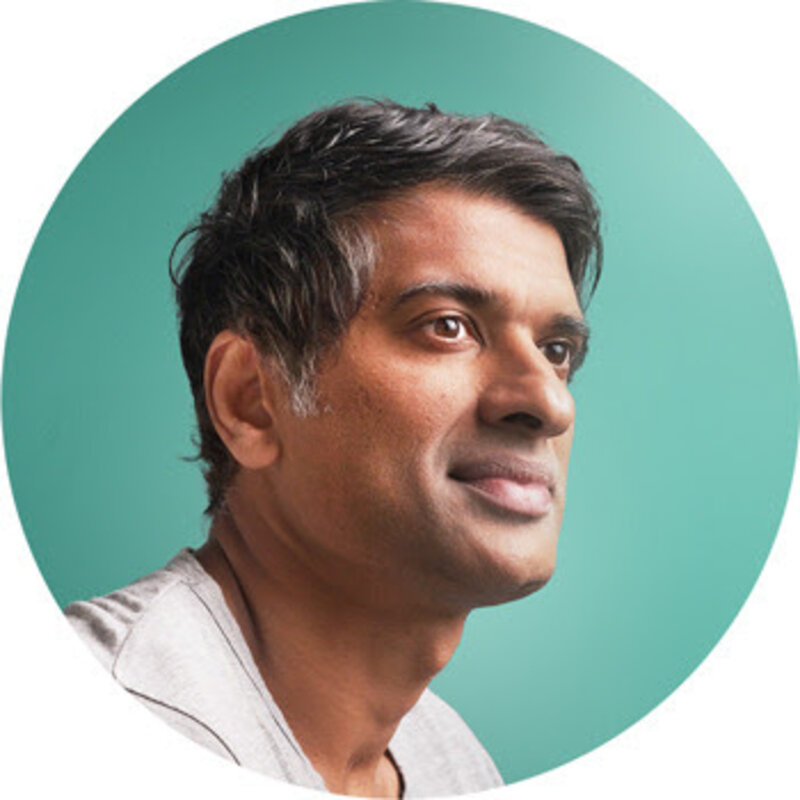
 Dr Rangan Chatterjee
The Uncomfortable Truth About Life Nobody Tells You...
Dr. Rangan Chatterjee on modern comfort quietly drains health, meaning, and resilience over time.
In this episode of Dr Rangan Chatterjee, featuring Dr. Rangan Chatterjee, The Uncomfortable Truth About Life Nobody Tells You... explores modern comfort quietly drains health, meaning, and resilience over time The video frames many chronic modern illnesses as “diseases of comfort,” arising when daily life lacks built-in movement and challenge.
At a glance
WHAT IT’S REALLY ABOUT
Modern comfort quietly drains health, meaning, and resilience over time
- The video frames many chronic modern illnesses as “diseases of comfort,” arising when daily life lacks built-in movement and challenge.
- Physical inactivity is presented as a major driver of premature death and chronic disease, with the emphasis that absence of movement is harmful rather than exercise being a mere “bonus.”
- Chatterjee claims intentional discomfort builds psychological resilience that transfers to non-physical stressors, illustrated through a patient case and supporting exercise research.
- He recommends replacing repeated willpower-based decisions with simple “rules for discomfort” (e.g., always taking stairs, no eating after 7pm) to automate healthier behavior.
- Beyond exercise, he highlights discomfort via cold exposure and learning new skills as tools to improve mood, reduce anxiety/brain fog, and protect cognition with age.
IDEAS WORTH REMEMBERING
5 ideasComfort is not neutral; too much of it can erode wellbeing.
The core claim is that removing everyday discomfort (movement, effort, challenge) reduces energy, meaning, and health, leaving people feeling flat, foggy, and disengaged.
Many “modern” health problems can be viewed through a comfort lens.
He uses type 2 diabetes as a prime example, arguing that constant availability of food and low movement make fat gain and metabolic dysfunction far more likely than in hunter-gatherer contexts.
The biggest risk may be insufficient movement, not lack of “workouts.”
He stresses that modern environments default to sitting and outsourcing movement (cars, lifts, deliveries), and that this absence contributes to higher risks of cardiovascular disease, cancer, obesity, stroke, and diabetes.
Regular discomfort trains resilience that generalizes to life stress.
Citing a 2021 study, he notes that 8 weeks of aerobic exercise (3x/week, 30–50 minutes) improved participants’ ability to react to non-exercise stressors—positioning exercise as resilience practice, not just fitness.
Small defaults can create identity-level change.
The “always take the stairs (barring exceptions)” rule is presented as a lever that builds self-trust and capability; in his patient story, it coincided with reduced anxiety, better mood, and weight loss.
WORDS WORTH SAVING
5 quotesModern life has sold you comfort as the goal, but what it's really done is rob you of meaning, energy, and purpose.
— Dr. Rangan Chatterjee
All modern diseases are diseases of comfort.
— Dr. Rangan Chatterjee
More and more I'm led to the conclusion that it's not necessarily that physical activity is good for us, it's that a lack of physical activity is really bad for us.
— Dr. Rangan Chatterjee
I would argue for me that the psychological benefits are even greater, that I'm actively choosing to do something uncomfortable when I don't need to.
— Dr. Rangan Chatterjee
In a quirk of psychology, people typically don't argue with personal rules. It turns out that rules can help us automate our behavior to put us in a position to achieve success and accomplish our goals.
— Shane Parrish
QUESTIONS ANSWERED IN THIS EPISODE
5 questionsChronic disease claim: Which specific “modern diseases” do you believe most clearly disappear in “a world of discomfort,” and what evidence best supports that?
The video frames many chronic modern illnesses as “diseases of comfort,” arising when daily life lacks built-in movement and challenge.
Practical design: How would you help someone with pain, disability, or fatigue create a “stairs alternative” rule that still builds controlled discomfort safely?
Physical inactivity is presented as a major driver of premature death and chronic disease, with the emphasis that absence of movement is harmful rather than exercise being a mere “bonus.”
Behavior change: What criteria should someone use to choose one high-leverage discomfort rule (movement, food timing, cold exposure, learning) based on their symptoms (anxiety, low mood, weight gain, brain fog)?
Chatterjee claims intentional discomfort builds psychological resilience that transfers to non-physical stressors, illustrated through a patient case and supporting exercise research.
Evening eating: For people who train late or have shift work, how would you adapt the “never eat after 7pm” rule without harming sleep or recovery?
He recommends replacing repeated willpower-based decisions with simple “rules for discomfort” (e.g., always taking stairs, no eating after 7pm) to automate healthier behavior.
Cold exposure: What’s your recommended minimum effective dose (e.g., 30 seconds cold finish) and who should avoid it due to medical risk?
Beyond exercise, he highlights discomfort via cold exposure and learning new skills as tools to improve mood, reduce anxiety/brain fog, and protect cognition with age.
Chapter Breakdown
The “comfort trap”: why life can feel flat after 40
Dr. Chatterjee frames a common midlife experience—feeling foggy, low-energy, and purposeless—as a predictable outcome of a comfort-optimized modern lifestyle. He argues the issue isn’t personal weakness; it’s a gradual loss of challenge that once gave life meaning.
Chronic illness through the lens of comfort (type 2 diabetes example)
He claims many modern chronic diseases can be understood as “diseases of comfort” that wouldn’t arise in environments requiring regular physical effort. Type 2 diabetes is used to illustrate how persistent ease and inactivity enable excess fat storage and metabolic dysfunction.
How today’s conveniences quietly remove everyday movement
He contrasts modern home-based work and on-demand delivery with earlier daily life that required movement. Comfort tech is portrayed as impressive but metabolically and psychologically expensive because it strips out low-level, consistent activity.
Why inactivity harms both body and mind
He emphasizes physical inactivity as a major driver of early death and chronic disease risk. He also stresses the immediate mental benefits of movement—better mood, perspective, and self-regard—suggesting the real problem is not moving enough rather than needing “more exercise.”
The balance has shifted: comfort is now weakening adults and kids
He argues modern comfort crossed a threshold in the last few decades, becoming harmful rather than helpful. A large study on children’s fitness is used to show a population-level decline in physical capability.
Intentional discomfort: practicing what evolution removed
He explains that seeking comfort is evolutionarily normal, so needing “motivation” is often misdiagnosed as a character flaw. The solution is to deliberately practice controlled discomfort to build capability now and resilience for the future.
A simple lever that changed a patient’s life: “always take the stairs”
He shares a patient story where introducing a small discomfort rule—taking stairs—became a catalyst for broad improvements. The rule builds both physical fitness and a deeper sense of capability and resilience.
Exercise as resilience training (research + transferable benefits)
He argues the biggest gains from exercise may be psychological: resilience and stress tolerance. He cites research showing that a modest routine improves the ability to handle non-exercise stressors, making movement practice for life’s pressures.
From decisions to rules: escaping willpower traps
He recommends replacing repeated moment-by-moment decisions with personal rules that automate behavior. Quoting Shane Parrish, he explains why people argue less with rules than with choices, reducing decision fatigue and self-sabotage.
Practical “rules for discomfort” you can adopt
He offers a menu of discomfort rules spanning movement, eating patterns, and consistency commitments. The aim is to choose one rule that fits your life and turns discomfort into a steady practice rather than an occasional burst.
Beyond movement: cold exposure and learning new skills
He expands discomfort beyond exercise to cold showers and cognitive challenges. Cold exposure is positioned as potentially helpful physically but especially powerful psychologically, while learning new skills is presented as a way to “wake up” the brain and reduce cognitive decline risk.
Closing message: choose one discomfort practice to reclaim meaning
He reiterates that comfort-as-a-goal can rob people of aliveness, resilience, and purpose. The prescription is simple: pick one intentional discomfort and practice it until it changes your baseline identity and daily experience.
EVERY SPOKEN WORD
Install uListen for AI-powered chat & search across the full episode — Get Full Transcript
Get more out of YouTube videos.
High quality summaries for YouTube videos. Accurate transcripts to search & find moments. Powered by ChatGPT & Claude AI.
Add to Chrome