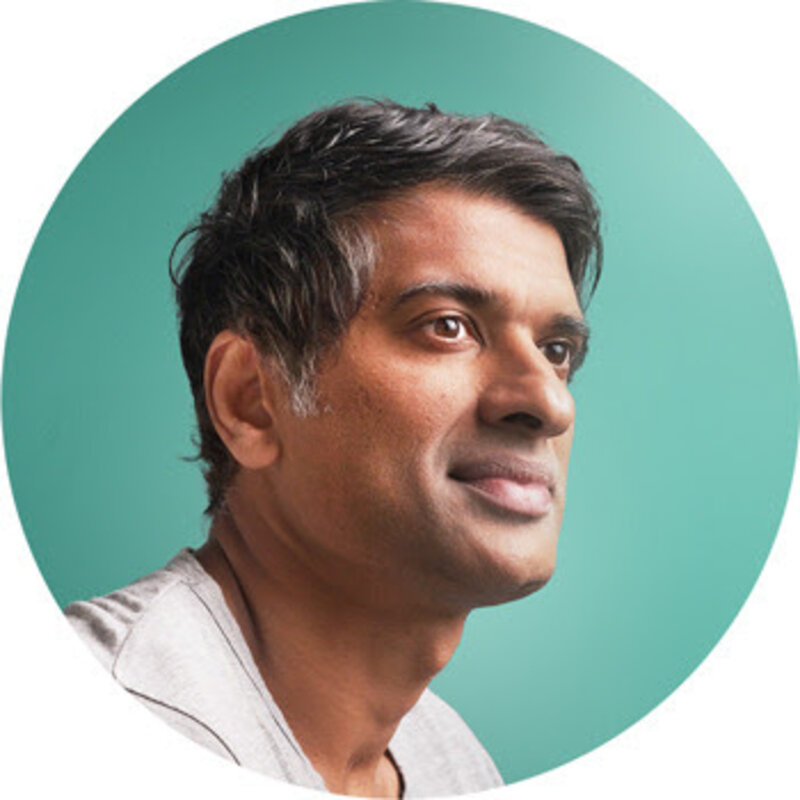
 Dr Rangan Chatterjee
Feel Behind in Life? Watch This Before It's Too Late
Dr. Rangan Chatterjee on stop feeling behind by redefining success, mindset, and daily habits.
In this episode of Dr Rangan Chatterjee, featuring Dr. Rangan Chatterjee, Feel Behind in Life? Watch This Before It's Too Late explores stop feeling behind by redefining success, mindset, and daily habits Feeling behind is usually created by comparing yourself to an external timeline you didn’t consciously choose.
At a glance
WHAT IT’S REALLY ABOUT
Stop feeling behind by redefining success, mindset, and daily habits
- Feeling behind is usually created by comparing yourself to an external timeline you didn’t consciously choose.
- Chatterjee contrasts a disempowering “victim mindset” with an “architect mindset” that treats setbacks and detours as sources of learning and meaning.
- He argues comparison—especially via social media highlights reels—is inherently inaccurate because you never see the true costs or full context of others’ lives.
- Gratitude and solitude are presented as practical tools to retrain attention away from lack, regain a sense of agency, and reconnect with what you actually value.
- He ends with specific actions: audit your “should” stories, adopt an empowering lens, practice daily gratitude, and take a four-week social media break with daily solitude.
IDEAS WORTH REMEMBERING
5 ideasYou can only feel “behind” relative to an assumed timeline.
Chatterjee’s core reframing is to ask “Who says?” and identify the reference point (career, money, relationships, health) that creates the painful gap between “where I am” and “where I think I should be.”
Many of your success standards are borrowed, not chosen.
He suggests the “shoulds” often come from parents, teachers, media, schooling, and online culture—so interrogating their origin is the first step to reducing shame and pressure.
Switching to an “architect mindset” restores agency.
Instead of viewing circumstances as proof you’re stuck (victim mindset), treat them as raw material: ask what the moment is teaching you and what you can implement going forward.
Detours can become the source of your later strengths.
Using his years caring for his father, he argues that challenging periods can build skills, wisdom, and meaning that later improve your work, relationships, and purpose.
Comparison is a rigged game because you lack full information.
You’re often comparing your internal “behind” story (including worst days) with others’ curated outcomes, and you rarely see the stress, relationship costs, or trade-offs behind their achievements.
WORDS WORTH SAVING
5 quotesWhat if I told you that feeling behind in life isn't a failure, it's a signal? A signal that the way you're measuring progress might be a little bit flawed.
— Dr. Rangan Chatterjee
So the first question I want you to ask yourself when you think that you're behind is who says? Who says you're behind?
— Dr. Rangan Chatterjee
In my view, there are two mindsets you can take to life. You can take an empowering or what I call an architect mindset, or you can take a victim mindset to life.
— Dr. Rangan Chatterjee
So you're basically comparing your worst day with someone else's best day, and you ain't ever gonna win that comparison.
— Dr. Rangan Chatterjee
When you focus on what you lack, you lose what you have, and when you focus on what you have, you gain what you lack.
— Greg McKeown
QUESTIONS ANSWERED IN THIS EPISODE
5 questionsWhat are three specific “I should have done X by now” beliefs in my life—and exactly where did each one come from (family, school, social media, culture)?
Feeling behind is usually created by comparing yourself to an external timeline you didn’t consciously choose.
In your architect vs victim framing, how would you apply the architect mindset to someone dealing with chronic illness, disability, or caregiving with no clear end date?
Chatterjee contrasts a disempowering “victim mindset” with an “architect mindset” that treats setbacks and detours as sources of learning and meaning.
You cite research on gratitude improving anxiety, sleep, and mood—what’s the simplest evidence-based gratitude exercise you’d recommend for someone who finds gratitude practices “fake” or irritating?
He argues comparison—especially via social media highlights reels—is inherently inaccurate because you never see the true costs or full context of others’ lives.
If someone can’t quit social media for four weeks due to work, what rules (time windows, content curation, device boundaries) most effectively reduce comparison while keeping their job functioning?
Gratitude and solitude are presented as practical tools to retrain attention away from lack, regain a sense of agency, and reconnect with what you actually value.
How do you distinguish healthy ambition from the toxic “behind” narrative—what are the signs that a goal is values-aligned rather than comparison-driven?
He ends with specific actions: audit your “should” stories, adopt an empowering lens, practice daily gratitude, and take a four-week social media break with daily solitude.
Chapter Breakdown
Feeling behind isn’t failure: it’s a signal your progress metric is flawed
Dr. Chatterjee reframes the “I’m behind” feeling as useful feedback rather than proof of inadequacy. He previews a new way to think about time, success, and self-worth based on clinical experience and personal struggle.
His personal story: caregiving, pressure, and the zero-sum belief
He shares how he felt behind in 2008–2009 while working as a doctor, supporting his family, and caring for his father with lupus. Watching others do what he wanted to do amplified stress and a “zero-sum” mindset.
The core question: “Who says you’re behind?” (and where your timeline came from)
He argues you can only feel behind relative to an internalized timeline. Many timelines are inherited from parents, school, culture, and media—not chosen intentionally.
Late-blooming success: the Gabor Maté example and the myth of one right schedule
Using Dr. Gabor Maté as an example, he highlights that public “success” can arrive in late life. This challenges the assumption that achievement must happen early to be valid.
Looking successful, feeling miserable: what patients taught him about external achievement
He explains that outward markers—money, marriage, status—don’t guarantee inner wellbeing. Many people pay hidden costs to “keep up,” harming health and relationships.
Victim mindset vs. architect mindset: reclaiming agency
He introduces two lenses for interpreting life: victim (life happens to me) and architect (what can I learn/build from this?). The architect mindset restores control and forward motion.
Turning hardship into meaning: caregiving as training for a better life and career
He revisits caring for his father, describing how it deepened empathy and understanding of the human experience. Those lessons, he believes, improved his work as a doctor, author, and podcast host.
Gratitude as a practical tool to strengthen the architect mindset
He advocates a daily gratitude practice, citing research linking it to lower anxiety/depression and better sleep and focus. Gratitude counteracts negativity bias and restores a sense of control when you feel stuck.
The comparison trap: why it’s distortive (and how “highlights reels” fuel it)
He explains that social media accelerates unhealthy comparison by showing curated best moments. Comparing your worst day to someone else’s highlight reel makes “behind” feel inevitable.
The hidden price of “being like them”: why comparison isn’t real
He argues you can’t selectively copy someone’s visible success without inheriting the costs that produced it. Idolizing public figures ignores the trade-offs and struggles behind performance.
A healthier alternative: turn idols into inspiration via one trait
He offers an exercise: pick one quality you admire in someone and practice developing that trait yourself. This converts envy into actionable growth and reduces total-life comparisons.
Reset your inputs: take 4 weeks off social media and add daily solitude
He recommends a four-week social media break to interrupt narratives that reinforce feeling behind. Pair it with daily solitude—walks, journaling, meditation, silent coffee—to reconnect with your own values and direction.
Alignment: the real source of contentment and a personal definition of success
He frames “behind” as a mismatch between inner values and outer actions. Contentment grows when your life reflects what matters most—he cites family time and saying no to ‘more success’ as examples of chosen alignment.
Action plan recap: rewrite the story, practice gratitude, quit comparison inputs
He closes with a structured set of steps: identify your “shoulds,” question their origins, adopt the architect mindset, practice daily gratitude, and step away from social media while building solitude. The message: you’re not behind—your story is still unfolding on your terms.
EVERY SPOKEN WORD
Install uListen for AI-powered chat & search across the full episode — Get Full Transcript
Get more out of YouTube videos.
High quality summaries for YouTube videos. Accurate transcripts to search & find moments. Powered by ChatGPT & Claude AI.
Add to Chrome