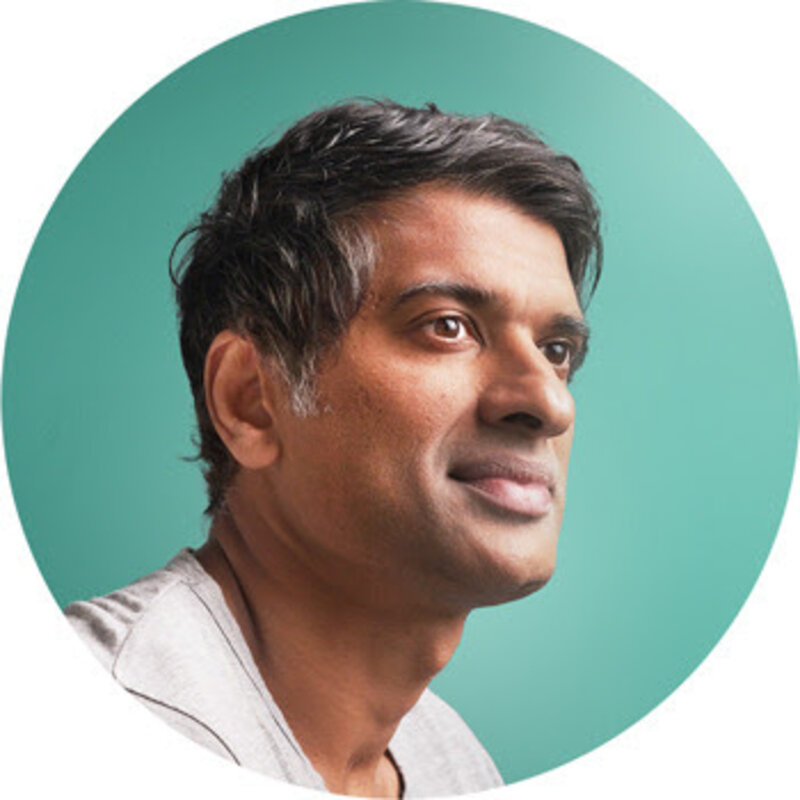
 Dr Rangan Chatterjee
How This One Habit Built a Life of Confidence, Resilience & Success | Warren Smith
Dr. Rangan Chatterjee and Warren Smith on preparation builds confidence: biomechanics, mindset, nature, and safer skiing decisions.
In this episode of Dr Rangan Chatterjee, featuring Dr. Rangan Chatterjee and Warren Smith, How This One Habit Built a Life of Confidence, Resilience & Success | Warren Smith explores preparation builds confidence: biomechanics, mindset, nature, and safer skiing decisions Smith’s journey from a council estate in Hemel Hempstead to elite ski coaching began with accessible local facilities and pivotal adults who redirected his energy toward constructive goals.
At a glance
WHAT IT’S REALLY ABOUT
Preparation builds confidence: biomechanics, mindset, nature, and safer skiing decisions
- Smith’s journey from a council estate in Hemel Hempstead to elite ski coaching began with accessible local facilities and pivotal adults who redirected his energy toward constructive goals.
- A central theme is that technique fails without biomechanical readiness, especially left-right asymmetries in hip rotation that limit performance and increase injury risk across many sports.
- Confidence and calmness are framed as outcomes of preparation—small daily mobility and strength habits create trust in the body and reduce fear in high-pressure moments.
- Smith explains practical fear-management coaching by breaking intimidating challenges into small, achievable steps and choosing tactics that leverage an individual’s stronger side.
- Nature, elevation, and panoramic views are presented as powerful tools for perspective and nervous-system regulation, while mountain risk highlights the need for education, humility, and restraint amid social-media-driven ego.
IDEAS WORTH REMEMBERING
5 ideasOpportunity often comes from accessible local infrastructure and one timely mentor.
Smith credits a council-funded dry ski slope and a police officer’s restorative approach (work at the slope) for channeling youthful frustration into a lifelong skill and career pathway.
Technique coaching is limited by your body’s available movement.
Smith argues many learners struggle not from lack of instruction but from restricted ranges—especially hip internal rotation—making certain turns or movements biomechanically impossible until addressed.
Most people are asymmetrical; your “weak side” sets your ceiling.
From testing ~2,000 people, Smith reports a common pattern of ~65° hip rotation one way and ~35° the other; performance (and safety) is constrained by the smaller number, not the larger.
Confidence is built through small, consistent preparation habits.
Both men emphasize that 5–10 minutes a day—scheduled and repeated—creates self-trust; Smith’s sprint to catch a train became a real-world “tolerance test” validating his rehab and fitness.
Injuries are rarely isolated; compensation travels up the chain.
Smith’s snapped Achilles later contributed to back surgery due to altered gait and alignment, reinforcing the need to address early warning signs rather than pushing through recurring discomfort.
WORDS WORTH SAVING
5 quotesEverything I learned for my career was accessed locally in the UK at a council dry ski slope.
— Warren Smith
Preparation is everything.
— Warren Smith
You’re only as good as your weakest link.
— Dr. Rangan Chatterjee
Preparation of the preparation… sounds ridiculous, but it’s actually… the only way you’re gonna get it.
— Warren Smith
True wealth is knowing what is enough.
— Dr. Rangan Chatterjee
QUESTIONS ANSWERED IN THIS EPISODE
5 questionsCan you list the six Ski Technique Lab functional movement patterns and what each one predicts about on-snow performance or injury risk?
Smith’s journey from a council estate in Hemel Hempstead to elite ski coaching began with accessible local facilities and pivotal adults who redirected his energy toward constructive goals.
You cite an ideal of ~70° hip rotation and a common 65°/35° split—what are the most effective 5-minute daily drills to raise the 35° side, and how quickly do people typically see change?
A central theme is that technique fails without biomechanical readiness, especially left-right asymmetries in hip rotation that limit performance and increase injury risk across many sports.
For non-skiers, what are the clearest “blue slope” warning signs in everyday movement that signal hidden asymmetry before it becomes a “black slope” injury?
Confidence and calmness are framed as outcomes of preparation—small daily mobility and strength habits create trust in the body and reduce fear in high-pressure moments.
When a client freezes on steep terrain, how do you decide whether to proceed, retreat, or change the route—what are your non-negotiable safety criteria?
Smith explains practical fear-management coaching by breaking intimidating challenges into small, achievable steps and choosing tactics that leverage an individual’s stronger side.
You mentioned EMDR helped after your cycling accident—what symptoms told you you needed therapy, and how did your ‘balcony view’ visualization change your recovery?
Nature, elevation, and panoramic views are presented as powerful tools for perspective and nervous-system regulation, while mountain risk highlights the need for education, humility, and restraint amid social-media-driven ego.
Chapter Breakdown
From a council estate to elite ski coaching in Verbier
Warren shares how growing up on a council estate in Hemel Hempstead shaped his values and resilience, eventually leading him to coach in Verbier and work with high-profile clients. He emphasizes that his roots and early environment taught him principles that still underpin his calm, grounded coaching style.
The dry ski slope that changed everything (and the skateboard park that disappeared)
Hemel’s skatepark was demolished and replaced with a dry ski slope—something Warren and his friends initially resented. That change, plus a run-in with the police, unexpectedly became the doorway into skiing and a future career.
A policeman’s intervention: redirecting energy instead of punishing it
After being caught, a local policeman steered Warren toward working at the ski slope rather than a harsher consequence. Warren reflects on how one supportive adult can change a young person’s trajectory—teachers and mentors included.
Natural crossover: why cycling and skate balance translated to skiing
Warren explains why skiing felt intuitive: cycling-like leg pressure and balance patterns transferred well. He stresses that many top athletes began on accessible UK dry slopes, reinforcing that elite pathways can start locally.
Early work, family hardship, and the calm that comes from responsibility
Warren links his calmness under stress to childhood responsibilities: financial strain, a broken home, and working young to support basics like electricity. Those experiences built resilience, independence, and a drive to “go out and get it.”
The core principle: biomechanics before technique (and why most people are uneven)
Warren and Rangan discuss why coaching fails if the body can’t perform the movement required. Warren argues most people have meaningful left-right asymmetries, and that addressing the “blocked” side is often the biggest unlock for performance and comfort.
The hip-rotation ‘weak link’: 70° ideal vs a 65°/35° national average
They drill into a specific test: hip/leg internal rotation required for effective turning. Warren shares data from testing thousands of people—showing many have one side near optimal and the other severely restricted—creating predictable performance breakdowns.
Confidence is built: preparation for skiing becomes ‘fitness for life’
A real-life story—Warren sprinting for trains after Uber failures—becomes a metaphor for being prepared. Rehab, consistent conditioning, and daily movement practice translate into confidence not only for sport, but also for unpredictable life demands.
Make the habit stick: five-minute sessions, calendar prompts, and ‘prepare the preparation’
They explore why people don’t follow through even when they agree with the logic. Warren describes tactics that worked on their tour: immediate calendar scheduling, tiny daily sessions, and rehearsing movements (even in ski boots) to build automaticity.
Injuries and the chain reaction: Achilles rupture, compensation, and back surgery
Warren recounts snapping his Achilles in Japan and later needing lumbar surgery due to compensation patterns. The conversation highlights how one injury can cascade up the chain, especially with age, making prevention and early correction crucial.
Fear on the mountain (and in life): breaking big threats into small, doable steps
Warren explains how he calms fearful clients by mapping a route into bite-sized actions—step here, side-slip there, then basic turns. Rangan connects this to everyday overwhelm: tackling the next small unit rather than the entire problem at once.
Mountains as medicine: elevation, nature, peripheral vision, and perspective
Warren describes how altitude and expansive views help him switch off mentally and recover emotionally, including during personal challenges. They discuss Snow Camp charity work and how taking young people into the Alps can rapidly change demeanor, performance, and self-belief.
Avalanches, loss, and the danger of ego: respecting a changing mountain
Warren shares being caught in an avalanche and how it shifted his relationship with risk, gratitude, and longevity. They discuss increased avalanche risk from temperature swings, the influence of social media/ego, and the need for education and conservative decision-making.
The best coaches (and doctors) listen: tailoring the experience to the person
Asked about the most important coaching skill, Warren chooses listening—beyond words, reading expectations, confidence, history, and readiness. Rangan mirrors this as a physician, emphasizing listening without preconceived narratives.
Closing advice and where to find Ski Technique Lab
Warren shares how people can access Ski Technique Lab resources, online coaching, and in-person options in Verbier and UK indoor snow centers. He closes by encouraging non-skiers to try sports with smart preparation—identify asymmetries, address them, and keep moving for life.
EVERY SPOKEN WORD
Install uListen for AI-powered chat & search across the full episode — Get Full Transcript
Get more out of YouTube videos.
High quality summaries for YouTube videos. Accurate transcripts to search & find moments. Powered by ChatGPT & Claude AI.
Add to Chrome