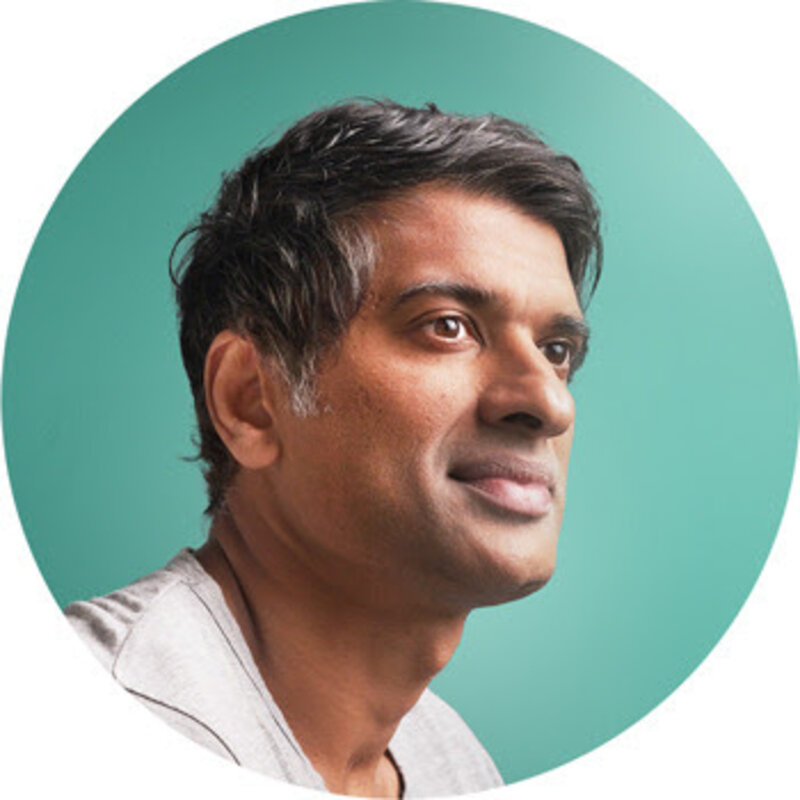
 Dr Rangan Chatterjee
Always Tired? No Wonder Your Life’s Falling Apart — Watch This!
Dr. Rangan Chatterjee on wake earlier, reduce micro-stress, regain control with a morning routine.
In this episode of Dr Rangan Chatterjee, featuring Dr. Rangan Chatterjee, Always Tired? No Wonder Your Life’s Falling Apart — Watch This! explores wake earlier, reduce micro-stress, regain control with a morning routine A common “always tired” cycle—late-night Netflix, snoozing, and immediate phone/news checking—creates a reactive day that feels out of control.
At a glance
WHAT IT’S REALLY ABOUT
Wake earlier, reduce micro-stress, regain control with a morning routine
- A common “always tired” cycle—late-night Netflix, snoozing, and immediate phone/news checking—creates a reactive day that feels out of control.
- He introduces “micro stress doses” (small stress hits that accumulate) and a personal “stress threshold,” explaining why minor triggers feel overwhelming when you start the day already stressed.
- Waking earlier isn’t about a specific time (like 5am) but about reclaiming a controllable window to nourish body and mind, creating resilience for inevitable daily pressures.
- A simple 3M framework—mindfulness, movement, mindset—can be scaled to five minutes and still create a “ripple effect” that drives broader positive habit changes.
- He emphasizes balancing earlier wake times with sleep needs by shifting bedtime gradually, reducing evening screens, and avoiding all-or-nothing thinking when routines slip.
IDEAS WORTH REMEMBERING
5 ideasHow you start the day determines how close you live to your stress limit.
Checking emails, social media, and news in bed can stack “micro stress doses” before you’ve even begun, shrinking your “headroom” so small issues trigger outsized reactions later.
Waking earlier works because it creates a controllable space, not because it’s 5am.
The benefit comes from intentionality—choosing actions that set your tone instead of reacting to other people’s agendas or crises first thing.
A five-minute routine can meaningfully reduce stress and spark wider change.
His patient examples show that 1 minute breathing + 2 minutes movement + 2 minutes uplifting reading (or even one element) can initiate a “ripple effect” into walks, journaling, better coping, and symptom improvement.
Use the 3M framework to build a routine that fits your life constraints.
Mindfulness (e.g., 3-4-5 breathing), Movement (any simple exercise), and Mindset (uplifting reading/intentional focus) are modular—pick one and keep it easy enough to repeat daily.
Protecting sleep is part of making earlier mornings sustainable.
If you wake earlier, you eventually need an earlier bedtime; he recommends aiming for an “eight-hour sleep opportunity” and adjusting gradually rather than expecting instant transformation.
WORDS WORTH SAVING
5 quotesThe principle of the matter is if you feel like you're a passenger in your own life, one way to put yourself back in the driver's seat is to intentionally get up a little bit earlier than you currently are getting up.
— Dr. Rangan Chatterjee
The world is uncontrollable. What's gonna happen in the future is uncontrollable. You may think you can control it, but you can't. So it's really important that you give yourself a sense of control.
— Dr. Rangan Chatterjee
A micro stress dose is a small dose of stress that in isolation you can handle no problem, but if they keep accumulating and building up one by one, they get you closer and closer to your stress threshold.
— Dr. Rangan Chatterjee
It's very rarely the situation that you're reacting to that's the problem. It's the buildup of what I'm calling micro stress doses throughout the day.
— Dr. Rangan Chatterjee
No one is ever gonna do something because somebody else told them to.
— Dr. Rangan Chatterjee
QUESTIONS ANSWERED IN THIS EPISODE
5 questionsIn your “micro stress dose” model, what are the highest-impact morning MSDs to eliminate first—snooze, phone, email, or news—and why?
A common “always tired” cycle—late-night Netflix, snoozing, and immediate phone/news checking—creates a reactive day that feels out of control.
Can you give a few “5-minute routine” examples tailored to different realities (shift workers, parents with babies, people commuting early)?
He introduces “micro stress doses” (small stress hits that accumulate) and a personal “stress threshold,” explaining why minor triggers feel overwhelming when you start the day already stressed.
How would you recommend someone adjust bedtime if evenings are their only couple/family bonding time and Netflix is part of that routine?
Waking earlier isn’t about a specific time (like 5am) but about reclaiming a controllable window to nourish body and mind, creating resilience for inevitable daily pressures.
What evidence (or clinical signals) do you rely on for the claim that a stronger sense of control correlates with higher income, longevity, and lower anxiety?
A simple 3M framework—mindfulness, movement, mindset—can be scaled to five minutes and still create a “ripple effect” that drives broader positive habit changes.
For people with insomnia, could “waking earlier” backfire by increasing sleep pressure/stress—how would you adapt the approach safely?
He emphasizes balancing earlier wake times with sleep needs by shifting bedtime gradually, reducing evening screens, and avoiding all-or-nothing thinking when routines slip.
Chapter Breakdown
The tired-evening → chaotic-morning loop (Alexandra’s story)
Rangan opens with a familiar pattern: exhaustion after work, late-night Netflix, a jolting alarm, and phone-scrolling in bed that starts the day already stressed. He frames this as feeling like a “passenger” in your own life—reacting rather than choosing. The goal of the episode is to break that loop at the start of the day.
Why “getting up earlier” isn’t about 5am—it’s about control
He introduces the core principle: waking up a bit earlier than you currently do can restore autonomy, regardless of the exact time. For him, 5am was transformative because it created protected time before family responsibilities began. The real benefit is the intentionality and the control it gives you over the first part of your day.
The science-backed value of feeling in control
Rangan explains why control is a health and happiness lever. Research links a strong sense of control with better mood, lower stress/anxiety, higher productivity, higher earnings, and even longevity. An intentional morning routine doesn’t remove life’s stressors, but changes how you experience and handle them.
Personal stress threshold & “micro stress doses” (MSDs)
He introduces his model: each person has a stress threshold, and tiny stressors accumulate throughout the day. These “micro stress doses” are manageable alone, but together push you close to your threshold—making small triggers feel huge. Alexandra’s morning is used to illustrate how MSDs stack up before you’ve even left bed.
Why it’s rarely ‘the email’—it’s your nervous system state
He reframes common overreactions as a byproduct of accumulated MSDs, not the final trigger. When you’re near your threshold, you’re more likely to snap at colleagues and spill stress into family interactions. A consistent, intentional morning routine reduces baseline load and increases “headroom.”
The ripple effect: small morning actions change identity
Rangan connects morning routines to behavior change and identity (referencing Atomic Habits). Small proactive acts are “votes” for the person you want to become—someone who values themselves and chooses deliberately. This identity shift can trigger a ripple effect of healthier downstream choices without forcing them.
Case study: the single mum with skin flare-ups—5 minutes that changed everything
He shares a patient story: a busy single mother with stress-related skin problems who believed she had no time. He negotiated a five-minute routine and taught his “3M framework,” which quickly reduced anxiety and led to broader lifestyle improvements. Her symptoms improved dramatically alongside the stress reduction.
The 3M framework in practice (mindfulness, movement, mindset)
Rangan breaks down the 3Ms with concrete examples and emphasizes flexibility. Mindfulness can be breathwork or silent presence; movement can be any brief activity; mindset can be reading something uplifting. The point is to nourish body/mind/soul before the day starts.
Responding to backlash: ‘This is unrealistic for mums’ + making it accessible
He reads a critical message claiming morning routines are privileged and unrealistic for parents, and responds with empathy and practical reframing. He argues most people can find five minutes, even if it’s while the kettle boils, and that the approach is free and adaptable. If mornings truly can’t work, he suggests using another time—but challenges the belief that there’s “no time anywhere.”
Balancing earlier wake-ups with sleep: trade-offs, circadian rhythm, and ‘night owls’
He addresses the sleep concern directly: waking earlier requires gradually shifting bedtime. He explains “sleep opportunity,” adaptation over days/weeks, and the role of circadian rhythm and light exposure. He also challenges overreliance on “night owl” identity, noting screens and late light often drive delayed sleep.
Evening choices: the hidden trade when you press ‘next episode’
Rangan spotlights the often-unseen cost of late-night Netflix: less sleep, more cravings, poorer mood, and worse relationships the next day. He cites evidence that short sleep increases calorie intake and reduces empathy and creativity. The key practice is pausing to ask, “What trade am I making right now?”
How to start (and not fail): small, consistent, and weekends included
He outlines the biggest mistakes: doing too much too soon, quitting before adaptation, not shifting bedtime, and undoing progress on weekends. He recommends committing for 7–10 days, starting with something as small as one minute of movement, and keeping wake times consistent to stabilize body clocks. Shift workers can still benefit by protecting the first 5–10 minutes after waking.
Upstream levers, burnout prevention, and staying consistent with self-compassion
He frames morning intentionality as an “upstream lever” that creates many downstream benefits (calm, productivity, relationships). He links it to burnout prevention by restoring self-awareness and emotional reserves. Finally, he warns against all-or-nothing thinking and encourages balancing discipline with occasional compassion when extra sleep is truly needed.
EVERY SPOKEN WORD
Install uListen for AI-powered chat & search across the full episode — Get Full Transcript
Get more out of YouTube videos.
High quality summaries for YouTube videos. Accurate transcripts to search & find moments. Powered by ChatGPT & Claude AI.
Add to Chrome