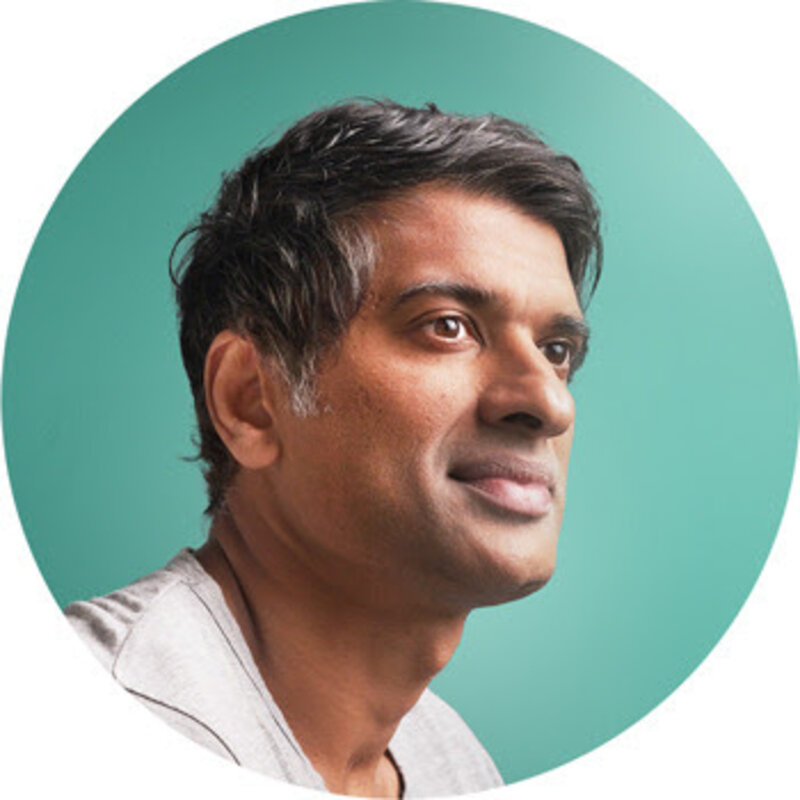
 Dr Rangan Chatterjee
Why Does No One Talk About This??!
Dr. Rangan Chatterjee on three toxic self-help myths that sabotage health, purpose, joy.
In this episode of Dr Rangan Chatterjee, featuring Dr. Rangan Chatterjee, Why Does No One Talk About This??! explores three toxic self-help myths that sabotage health, purpose, joy Much of modern self-help is designed for clicks and optimization, but can dysregulate your nervous system and worsen burnout—especially after 40.
At a glance
WHAT IT’S REALLY ABOUT
Three toxic self-help myths that sabotage health, purpose, joy
- Much of modern self-help is designed for clicks and optimization, but can dysregulate your nervous system and worsen burnout—especially after 40.
- The belief that you are “broken” fuels fear-, guilt-, and shame-based change that rarely lasts and traps people in perpetual dissatisfaction.
- Hustle culture can function as avoidance of stillness and emotion, and chronic stress/poor sleep in midlife carries serious health consequences.
- Extreme routines often become control disguised as growth, driving unfair comparisons and reinforcing self-criticism when real life doesn’t allow them.
- Sustainable change is more likely when driven by self-acceptance, supported by daily micro-rest, weekly true rest, and selectively adopting routines that fit your actual life.
IDEAS WORTH REMEMBERING
5 ideasAudit the emotional driver behind self-improvement.
If your change efforts are powered by fear, shame, or “not enough,” you may get short-term compliance but poor long-term sustainability; acceptance-based motivation tends to stick.
Separate “something in my life needs changing” from “something is wrong with me.”
Chatterjee argues many self-help frameworks imply personal defectiveness; reframing reduces chronic dissatisfaction and self-sabotage cycles.
Practice gratitude directed at yourself, not just your circumstances.
He recommends writing daily qualities you like about yourself (start with one, build to five) and notes research on self-compassion letters improving well-being months later.
Treat hustle as a warning sign, not a virtue.
Constant striving can be running from stillness and emotional discomfort; without recovery time, midlife overwork and undersleeping can carry significant health risks.
Protect recovery with “micro-rest” daily and a full rest day weekly.
He suggests 30 minutes of true shutdown each day (book, stretching, laughter, low-stimulation evening routine) plus one full day off weekly to restore capacity and resilience.
WORDS WORTH SAVING
5 quotesA lot of the self-help world these days is built for clicks and not actually built for your nervous system.
— Dr. Rangan Chatterjee
There may be something wrong with your life that you want to change, but that does not mean that there's something actually wrong with you.
— Dr. Rangan Chatterjee
It is just not possible to achieve long-term health or happiness if you hate yourself.
— Dr. Rangan Chatterjee
Hustle culture does not always represent ambition. It sometimes can be a slow form of torture.
— Dr. Rangan Chatterjee
Extreme routines are often control disguised as growth.
— Dr. Rangan Chatterjee
QUESTIONS ANSWERED IN THIS EPISODE
5 questionsHow can someone tell whether their self-improvement is driven by fear/shame versus self-acceptance in day-to-day decisions?
Much of modern self-help is designed for clicks and optimization, but can dysregulate your nervous system and worsen burnout—especially after 40.
In your clinical experience, what are the earliest signs that “healthy striving” has tipped into obsessive self-optimization or burnout?
The belief that you are “broken” fuels fear-, guilt-, and shame-based change that rarely lasts and traps people in perpetual dissatisfaction.
You cite midlife undersleeping being correlated with dementia risk—what sleep behaviors matter most (duration, consistency, timing, quality)?
Hustle culture can function as avoidance of stillness and emotion, and chronic stress/poor sleep in midlife carries serious health consequences.
What does a realistic “one full day off” look like for parents or carers who can’t truly stop responsibilities?
Extreme routines often become control disguised as growth, driving unfair comparisons and reinforcing self-criticism when real life doesn’t allow them.
If someone feels cringe or resistance to writing self-compassion letters, what are lower-friction alternatives that still build self-acceptance?
Sustainable change is more likely when driven by self-acceptance, supported by daily micro-rest, weekly true rest, and selectively adopting routines that fit your actual life.
Chapter Breakdown
Self-help hype after 40: when “optimize everything” backfires
Rangan sets up the problem: much of modern self-help is designed for clicks, not for your nervous system—especially in midlife. He previews three popular ideas that can quietly erode health, happiness, and purpose if taken too literally.
Toxic idea #1: The belief that you are broken
He argues that many improvement programs are built on an implicit premise: you’re not okay now, but you will be once you reach a future milestone. This frames life as an endless project and trains chronic dissatisfaction.
How fear-based change fails: the weight-loss pattern
Using weight loss from his medical practice, he explains how shame, fear, and “I’m not enough” can motivate change briefly but rarely sustain it. People who change from self-acceptance tend to maintain results longer.
Self-compassion as a health intervention (not a “soft” idea)
He cites research linking self-compassion with measurable health outcomes and lasting increases in happiness. He also notes cultural resistance to self-love and why that resistance can be a barrier to change.
His meditation story: perfectionism, inner criticism, and a new relationship with self
Rangan describes how he used to set rigid meditation goals, miss a day, then spiral into self-attack—making the habit unsustainable. With more self-compassion, meditation becomes flexible, reflective, and easier to maintain.
Practical reset: gratitude directed toward yourself
He recommends shifting gratitude inward by writing a “love letter” to yourself—listing qualities you appreciate. This practice helps move motivation from fear toward acceptance and makes change more sustainable.
Toxic idea #2: Hustle culture as avoidance, not ambition
He reframes hustle as a way to outrun stillness and uncomfortable feelings, not just a path to success. In midlife, the ‘always push’ mindset often produces serious health consequences.
Health risks of chronic pushing: sleep loss, stress, and long-term consequences
He shares clinical patterns (e.g., burnout and autoimmune issues) and references circadian research linking midlife sleep deprivation to later dementia risk. The message: this isn’t neutral lifestyle advice; it can be medically consequential.
What to do instead: micro-rest daily + one full day off weekly
He offers two concrete countermeasures: a daily 30-minute ‘micro-rest’ and protecting one full day each week without work. He suggests using environment and enjoyable activities to downshift the nervous system.
Toxic idea #3: Extreme routines that become control disguised as growth
Rangan warns that elaborate routines can morph into a form of self-avoidance and rigid control. When routines dominate more than values, they can increase shame and reinforce the ‘broken’ story.
Stop unfair comparisons: filter influencer advice through your real life
He argues that copying online routines is a fundamentally unfair comparison because you don’t see the full context or hidden costs. The healthier approach is selective adoption: take what fits, leave what doesn’t.
Wrap-up: the 3 toxic ideas and the healthier replacements
He summarizes the three traps—brokenness, hustle, and extreme routines—and reiterates practical alternatives grounded in self-acceptance and recovery. He closes by inviting comments on which idea resonated most and teases the next video.
EVERY SPOKEN WORD
Install uListen for AI-powered chat & search across the full episode — Get Full Transcript
Get more out of YouTube videos.
High quality summaries for YouTube videos. Accurate transcripts to search & find moments. Powered by ChatGPT & Claude AI.
Add to Chrome