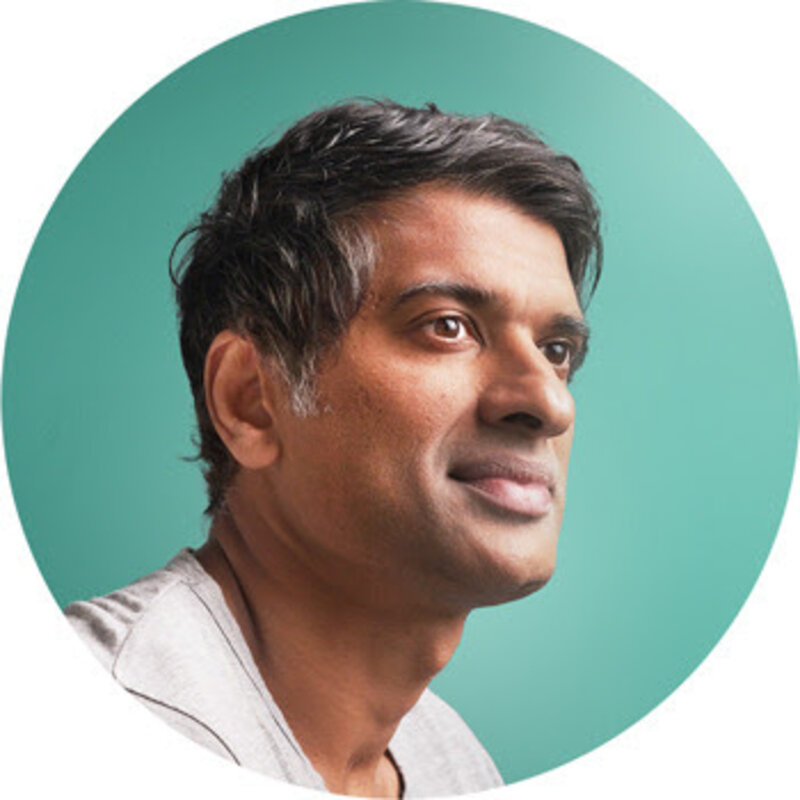
 Dr Rangan Chatterjee
50 Days Alone In Antarctica: "How Solitude Revealed Life’s True Meaning & Purpose" | Erling Kagge
Dr. Rangan Chatterjee and Erling Kagge on erling Kagge on silence, walking, time, and inner meaning revealed.
In this episode of Dr Rangan Chatterjee, featuring Dr. Rangan Chatterjee and Erling Kagge, 50 Days Alone In Antarctica: "How Solitude Revealed Life’s True Meaning & Purpose" | Erling Kagge explores erling Kagge on silence, walking, time, and inner meaning revealed Kagge argues that modern “noise” includes not just sound but constant distraction—especially smartphones—which keeps people living through others and away from themselves.
At a glance
WHAT IT’S REALLY ABOUT
Erling Kagge on silence, walking, time, and inner meaning revealed
- Kagge argues that modern “noise” includes not just sound but constant distraction—especially smartphones—which keeps people living through others and away from themselves.
- He describes 50 days alone skiing to the South Pole without radio contact as a transition from initial restlessness to deep presence, inner silence, and a more loving, respectful engagement with life and other people.
- Both speakers link the discomfort of early silence (and device withdrawal) to addiction-like patterns, suggesting that calm and social connection often increase after a few difficult days without tech.
- Kagge reframes time as an experience rather than a clock measure, claiming walking and novelty expand perceived time while screens and rushing compress it.
- Polar exploration becomes a metaphor for meaning: the North Pole had “no there there,” emphasizing journey over destination, while hardship (cold, hunger, exhaustion) reawakens gratitude and purpose.
IDEAS WORTH REMEMBERING
5 ideasNoise is often an escape from self; silence is a return to self.
Kagge treats distractions—phones, screens, constant stimulation—as “noise” that centers other people and prevents self-knowledge; inner silence supports a richer, happier life because you can be content in your own company.
Silence commonly feels uncomfortable before it feels nourishing.
He notes restlessness during the first days of Antarctic solitude, mirrored by children’s tech withdrawal in a 21-day experiment; the initial friction is part of the process, not a sign you’re doing it wrong.
You don’t need ideal conditions—inner silence is available anywhere.
Kagge claims you can access inner silence even at a busy intersection (e.g., Piccadilly Circus), emphasizing that the skill is internal and can be practiced in ordinary moments like showers, stairs, or short walks.
Walking is a practical gateway to stillness, presence, and better thinking.
He frames walking without a phone as meditation: movement reduces overthinking, reconnects you to senses, and can “expand” time and space compared with driving or scrolling.
“I don’t have time” is usually a values-and-habits problem, not a time problem.
Kagge argues most people do have 5–50 minutes, and points out how hours of daily social media can add up to many years of life—creating the felt scarcity people then blame on busyness.
WORDS WORTH SAVING
5 quotesAll this noise is about running away from yourself, running away from who you are, forgetting yourself, living through other people, other devices, while silence, inner silence, is about you. It's about who you are.
— Erling Kagge
Silence is not about turning your back to the world. It's not about living a more egocentric life. It's about the opposite. It's about seeing the Earth from a different perspective.
— Erling Kagge
That's the only way to find meaning in life, to make it more difficult.
— Erling Kagge
When people say they're short on time, um, I don't say it straight to them because it could be upsetting, but, you know, in general it's bullshit because, um, we have a lot of time.
— Erling Kagge
I have walked, skied, climbed, and sailed in many parts of the world. I've been able to compare all the mountains, plateaus, forests, plains, and oceans I have seen with somewhere else. But I've only experienced one place that is unlike anywhere else, the North Pole, because when I finally got there, I realized there was no there there.
— Dr. Rangan Chatterjee
QUESTIONS ANSWERED IN THIS EPISODE
5 questionsKagge says ‘silence is within’—what are specific exercises to access inner silence in a noisy environment without relying on headphones or apps?
Kagge argues that modern “noise” includes not just sound but constant distraction—especially smartphones—which keeps people living through others and away from themselves.
In your South Pole trip, what exactly happened mentally between days 1–3 and day 10—what thoughts faded, what sensations or insights increased?
He describes 50 days alone skiing to the South Pole without radio contact as a transition from initial restlessness to deep presence, inner silence, and a more loving, respectful engagement with life and other people.
You argue people should make life ‘more difficult’ to find meaning—how do you distinguish healthy chosen difficulty from harmful stress or burnout?
Both speakers link the discomfort of early silence (and device withdrawal) to addiction-like patterns, suggesting that calm and social connection often increase after a few difficult days without tech.
What boundaries with smartphones (location, timing, social rules) do you now consider most high-impact, especially for families with teenagers?
Kagge reframes time as an experience rather than a clock measure, claiming walking and novelty expand perceived time while screens and rushing compress it.
Your gratitude model depends on contrast (cold/hunger/exhaustion). What are safe, modern equivalents that recreate contrast without extreme expeditions?
Polar exploration becomes a metaphor for meaning: the North Pole had “no there there,” emphasizing journey over destination, while hardship (cold, hunger, exhaustion) reawakens gratitude and purpose.
Chapter Breakdown
Noise vs. inner silence: why silence helps you meet yourself
Erling Kagge contrasts modern ‘noise’ (not just sound, but constant distraction) with inner silence as a way to reconnect with who you are. He argues that noise is often a form of avoidance, while silence builds self-knowledge and a richer, calmer life.
50 days alone to the South Pole: from restlessness to deep calm
Kagge describes skiing solo for roughly 1,300 km in Antarctica with no companionship or incoming communication. The first days are restless, but adaptation brings presence, reduced need for social contact, and a surprising inner richness.
Why solitude strengthens relationships rather than contradicting them
The conversation addresses whether solitude conflicts with humans being social creatures. Kagge argues that being at ease alone is a foundation for appreciating others—many social difficulties arise from people forgetting how to be with themselves.
Pre-smartphone life, boredom, and addiction by design
They explore how the smartphone changed availability and entertainment expectations. Kagge distinguishes between old boredom (nothing happening) and modern existential boredom (too much happening), and how platforms intentionally cultivate dependency.
Choosing real solitude: throwing away the radio batteries
Kagge explains he carried a radio for safety compliance but discarded the batteries to remove temptation. This becomes a broader lesson: merely having an ‘escape hatch’ (like a phone nearby) consumes willpower and dilutes the depth of solitude.
Simple routines, motion as meditation, and becoming present
Daily life on the ice is repetitive but psychologically powerful—routine, movement, and reduced choice create a meditative state. Kagge describes how the mind quiets, past/future thinking fades, and presence becomes the dominant experience.
‘I don’t have time’: time, social media, and the illusion of scarcity
They challenge the common claim of being too busy for solitude. Kagge argues many people do have time but spend it on screens; he also explains how novelty and variety expand our felt sense of time, while screen life compresses it.
Walking as a lens: exploring LA on foot and NYC from below
Kagge shares urban walking experiments: crossing Los Angeles along major avenues and traversing New York via tunnels. Walking changes perspective—slowness reveals social texture, invites unexpected encounters, and makes cities feel newly legible.
Whiskey, hunger, and gratitude: why the simple life becomes meaningful
Kagge explains why he carried whiskey to celebrate but never drank it—life felt sufficiently satisfying without intoxication. They discuss how real hunger makes bland food delicious and how hardship restores gratitude for warmth, food, and rest.
Returning to civilization after silence: sensory shock and frustration
After reaching the South Pole base, re-entry to social life felt abrupt and overwhelming. Kagge describes needing time alone in his tent and experiencing stomach pain from frustration—highlighting how modern communication can prevent true solitude.
Daily practices for inner silence: micro-solitude in real life
Kagge insists silence is accessible even in busy places because the key is inner silence. He recommends small, practical changes—leaving the phone, walking, taking stairs, shower stillness—while warning that discomfort at first is normal.
North Pole revelations: ‘no there there’ and time as a construct
Kagge unpacks his line that the North Pole has ‘no there there’: the place is mostly indistinguishable from surrounding ice, and the goal is largely an idea. He also explains why the pole is geometrically and psychologically elusive, reshaping how we think about time and destinations.
Fear, calm, and a charging polar bear: suppressing emotion to survive
Kagge recounts a near-North-Pole polar bear encounter that forced them to shoot in self-defense. He explains how fear can be temporarily suppressed to stay rational, only to surface afterward as shaking—illustrating courage as function, not bravado.
Father-son longing, masculinity, and exploration as an ancient story
The conversation turns intimate: Kagge links his North Pole drive to a desire for his father’s respect and love. He connects this to classic literature (The Odyssey) and a pattern among explorers, and shares how the relationship softened into mutual forgiveness over time.
Feeling stuck: practical meaning-making through movement, nature, and self-belief
To close, Kagge offers guidance for people who feel lost or purposeless. He emphasizes that many underestimate their capacity, and that meaning is rebuilt through small, sometimes ‘brutal’ choices—movement, nature exposure, less screen time, and more variety.
EVERY SPOKEN WORD
Install uListen for AI-powered chat & search across the full episode — Get Full Transcript
Get more out of YouTube videos.
High quality summaries for YouTube videos. Accurate transcripts to search & find moments. Powered by ChatGPT & Claude AI.
Add to Chrome