9 HRT and Menopause Podcasts
Curated by Ahaan Ugale · Last reviewed Apr 29, 2026
In late 2025 the FDA removed the boxed warning from low-dose vaginal estrogen products, narrowing a decades-old caution that had been applied broadly across menopausal hormone therapies — and reopening a public conversation that, for two decades, told women hormone therapy was too risky to consider. These nine long-form interviews bring in the OB-GYNs, neuroscientists, and orthopedic surgeons actually doing the research: Dr. Mary Claire Haver and Dr. Sara Gottfried on the endocrinology of perimenopause, Dr. Lisa Mosconi on what menopause does to the brain, Dr. Rachel Rubin on the genitourinary syndrome of menopause and the boxed-warning history, and Dr. Vonda Wright on bone, muscle, and joint changes after estrogen loss. For the broader hub on women's health — covering PCOS, fertility, mental health, and the musculoskeletal syndrome — see /channels/topic/womens-health. None of these episodes prescribes a single 'right answer' on hormone therapy: they explain the mechanisms, the trade-offs, and the updated evidence so you can have a more informed conversation with your own clinician.
How to Navigate Menopause & Perimenopause for Maximum Health & Vitality | Dr. Mary Claire Haver
Guest: Dr. Mary Claire Haver
The anchor of the page. OB-GYN Dr. Mary Claire Haver with Andrew Huberman on perimenopause as a 'zone of chaos,' the endocrinology of declining estrogen, and the discussion around HRT timing — covering brain, bone, cardiometabolic, and sleep effects across the transition.
The #1 Menopause Doctor: How to Lose Belly Fat, Sleep Better, & Stop Suffering Now
Guest: Dr. Mary Claire Haver
Start here for the most accessible version. Dr. Mary Claire Haver with Mel Robbins covers the same territory as the Huberman primer — estrogen's reach across the body, hormone therapy concepts, and lifestyle foundations — at a slower pace that's the better entry if the topic is new.

How to Optimize Female Hormone Health for Vitality & Longevity | Dr. Sara Gottfried
Guest: Sara Gottfried
OB-GYN Dr. Sara Gottfried with Andrew Huberman on a lifespan strategy for female hormones — teens through menopause — covering how stress, gut microbiome, and the HPA-cortisol axis shape midlife symptoms, plus the discussion around oral contraceptives, IUDs, and HRT.
The pick when menopause symptoms are mostly above the neck. Neuroscientist Dr. Lisa Mosconi presents brain-imaging research showing menopause as a neuroendocrine transition that rewires the female brain — and discusses Alzheimer's risk, hormone therapy timing, and 'designer estrogen' approaches.
The Most Important Conversation You’ll Ever Hear About Women’s Health | Dr. Rachel Rubin
Guest: Dr. Rachel Rubin
The most directly on-topic for the 2026 HRT conversation. Dr. Rachel Rubin walks through the genitourinary syndrome of menopause, her four-bucket framework for hormone care (systemic estrogen, progesterone, testosterone, vaginal hormones), and the history behind the FDA's boxed warning — including its recent removal for vaginal estrogen products.

Hormone & Fertility Experts: We've Been Lied To About Women's Health! If This Happens, Call A Doctor
Guests: Dr Natalie Crawford, Dr Vonda Wright, Dr Stacy Sims, Dr Mary Claire Haver
Four specialists — fertility, sports medicine, orthopedics, and menopause — on the systemic underfunding of women's health research. Useful for situating the menopause conversation inside the broader hormonal lifespan: cycle physiology, PCOS, endometriosis, and the perimenopause-to-menopause transition.
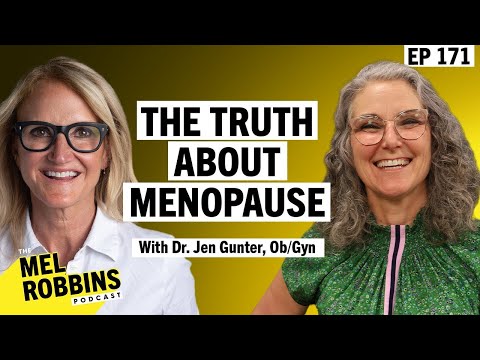
How to Balance Your Hormones: What Your Doctor Isn’t Telling You About Menopause
Guest: Dr. Jen Gunter
OB-GYN Dr. Jen Gunter with Mel Robbins on the difference between FDA-approved menopausal hormone therapy and unregulated compounded 'bioidentical' pellet products — and how clinicians weigh the documented risks and benefits around breast cancer, heart disease, osteoporosis, and dementia.

The shortest reference on the page. Andrew Huberman's 'Essentials' summary of how testosterone and estrogen work across the lifespan and the behaviors that shape them — with a dedicated section on menopause and hormone therapy.

Orthopedic surgeon Dr. Vonda Wright on the musculoskeletal side of estrogen loss — the bone, muscle, and joint changes that arrive with the menopausal transition — plus exercise, mobility, and bone-health strategies to extend healthspan rather than treating decline as inevitable.
How we picked these
We searched every transcript in our catalog of 6,000+ podcast episodes for substantive discussion of HRT and menopause, then ranked by relevance — not popularity, recency, or paid placement. Summaries and topic tags are AI-generated from the full transcripts.



