Curated by Ahaan Ugale · Last reviewed Apr 29, 2026
In April 2026 the White House signed a federal executive order on psychedelics with Joe Rogan in the room, and within a week the FDA granted priority review vouchers for psilocybin in treatment-resistant depression and major depressive disorder, plus methylone for PTSD — regulatory action is now moving faster than most listeners realize, while the FDA's August 2024 rejection of Lykos's MDMA-PTSD application is also still part of the picture. These eleven long-form interviews bring in the researchers and journalists who have spent decades on the question: Michael Pollan, Dr. Matthew Johnson (then at Johns Hopkins, now at Sheppard Pratt), UCSF's Robin Carhart-Harris, MAPS founder Rick Doblin, mycologist Paul Stamets, and chemist-journalist Hamilton Morris. The scope covers psilocybin, MDMA, DMT, the science of set-and-setting, indigenous and ritual containers, and where risk and contraindications actually sit. These are research-and-journalism conversations, not clinical guidance — treatment decisions belong with a qualified clinician. For the executive order timeline see /channels/topic/psychedelics-executive-order, and for the ibogaine-specific list see /channels/topic/ibogaine.
Start here for the broadest, most accessible entry. Michael Pollan walks Joe Rogan through This Is Your Mind on Plants — humanity's tangled relationship with psilocybin, mescaline, caffeine, and tobacco — covering the end of the drug-war paradigm, set and setting, screening for psychosis, and indigenous ritual containers as models that some researchers cite when discussing what regulated adult use could look like.
Michael Pollan’s journalistic approach to psychedelics and his new book *This Is Your Mind on Plants*The end of the drug war paradigm and emerging decriminalization/legalization modelsMedical, therapeutic, and religious pathways for integrating psychedelics into societyRisks of psychedelics, set and setting, screening for psychosis, and addiction mythsIndigenous and ritual use (peyote, ayahuasca, mescaline) as models for safe containers
The mechanism deep-dive. UCSF's Dr. Robin Carhart-Harris (who founded the Centre for Psychedelic Research at Imperial) with Andrew Huberman on how psilocybin selectively activates the 5-HT2A receptor and reorganizes default-mode-network connectivity — and what that actually means for the trials in depression, addiction, and end-of-life anxiety. Pick this if you want neuroscience-of-psilocybin first.
Definition, history, and pharmacology of classic psychedelics (psilocybin, LSD, DMT)Unconscious material, ego dissolution, and the role of subjective experience in therapyClinical trials of psilocybin for depression, anorexia, fibromyalgia, and healthy volunteersMicrodosing versus macrodosing: evidence, placebo, and methodological challengesBrain mechanisms: serotonin 2A receptors, global connectivity, entropy, and neuroplasticity
Dr. Matthew Johnson (then at Johns Hopkins, now at Sheppard Pratt) with Andrew Huberman on psilocybin, LSD, and ayahuasca in the clinic — what the trials in tobacco addiction, treatment-resistant depression, and existential distress have actually shown, plus how the trial protocols (screening, preparation, integration) differ from non-clinical use — discussed as research methodology, not a how-to.
Definitions and pharmacology of psychedelics (classic, NMDA antagonists, MDMA, salvinorin A)Serotonin, dopamine, and how psychedelics alter perception, self, and predictive modelsClinical psilocybin therapy protocol: screening, preparation, dosing, monitoring, and integrationMacrodosing versus microdosing: evidence, claims, and safety concernsRisks and contraindications: psychosis, bipolar disorder, bad trips, HPPD, and safety monitoring
Chemist-journalist Hamilton Morris on the actual pharmacology behind the headlines — psychoactive plants and synthetics, the Hamilton's Pharmacopeia throughline, why drug myths persist, and how regulatory and supply-chain context shapes whether a substance ends up dangerous, useful, or both.
COVID-19, lockdowns, and the social/economic decay of major citiesPublic health messaging, personal health (vitamins, obesity), and politicized treatmentsDrug policy, prohibition, and the politicization of molecules (e.g., hydroxychloroquine)Opioids, benzodiazepines, dependence, and withdrawal (including Jordan Peterson’s case)Psychedelic science: psilocybin, ketamine, iboga/ibogaine, 5‑MeO‑DMT, microdosing
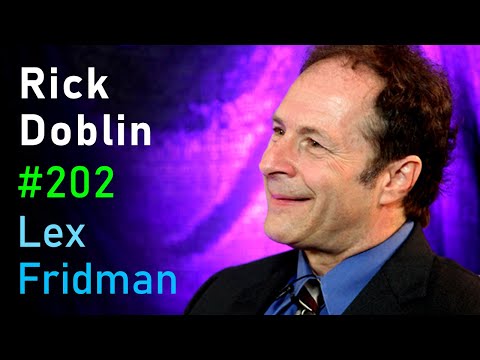
MAPS founder Rick Doblin with Lex Fridman on a four-decade campaign to move MDMA-assisted therapy through the FDA pipeline. Covers the early underground research, the political and regulatory history that shaped the rescheduling fight, and how MAPS thinks about training, ethics, and access — recorded in 2021, before the FDA's August 2024 rejection of Lykos's MDMA-PTSD application reset the timeline.
Definition and broad concept of psychedelics as ‘mind-manifesting’ states and toolsDifferences between classic psychedelics and MDMA, including mechanisms and subjective effectsMDMA‑assisted psychotherapy for PTSD and the pivotal phase III clinical trial resultsHistory and politics of psychedelics: MKUltra, Timothy Leary, the drug war, and cultural backlashFuture of psychedelic medicine: new molecules, benefit corporations, and for‑profit vs nonprofit models
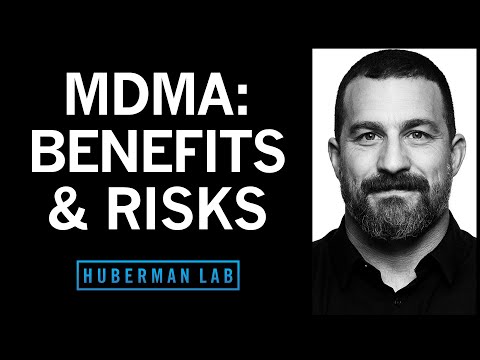
Andrew Huberman on MDMA's pharmacology — why it's an empathogen-stimulant that simultaneously elevates dopamine, norepinephrine, and serotonin, the trial evidence in PTSD, and the neurotoxicity, contraindication, and dosing variables Huberman walks through (note: MDMA remains Schedule I; there is no FDA-approved clinical use). Useful background for the Doblin and Johnson conversations.
MDMA pharmacology: dopamine, serotonin, and receptor-specific actionsDifferences between MDMA, classic psychedelics (LSD/psilocybin), and ketamineBrain circuit changes: amygdala, insula, hippocampus, nucleus accumbens, default mode networkEmpathy, prosocial behavior, and the role of serotonin 1B, dopamine, and oxytocinNeurotoxicity, safety variables, and limitations of existing toxicity data
Brian Muraresku with Lex Fridman on the Immortality Key thesis — how psychedelic compounds may have been embedded in the Eleusinian Mysteries, early Christian rites, and other ancient ritual containers. The historical-context pick for understanding why religious-freedom and ritual-use framings matter in the current regulatory debate.
Philosophical views of God, mysticism, and the divine withinAncient Greek mystery religions (Eleusis, Dionysus) and their ritualsArchaeological and biochemical evidence for psychoactive use in antiquityEarly Christianity, sacramental wine, and continuity with pagan cultsModern psychedelic science (psilocybin, DMT) and mystical experiences
The most recent pick on the page. Mycologist Paul Stamets with Joe Rogan on the therapeutic claims being investigated for psilocybin and on microdosing (where the controlled-trial evidence remains thin), set against a regulatory thaw that's moving more compounds into actual clinical trials. Useful for orienting to where the field stood the moment the executive order landed.
Modern psilocybin renaissance and therapeutic uses (PTSD, addiction, end-of-life care)Ancient and religious connections to psychedelic mushrooms (Christianity, Egypt, Mazatec, Eleusis)Fungi, ecology, and immunology (bees, viral pandemics, agarikon, mycelium)AI, ethics, and “random acts of kindness” in machine learningRegulation, pharma economics, and vaccine transparency vs natural medicine
The complement to the Rogan conversation. Hamilton Morris with Chris Williamson on his curiosity-driven approach to drug science, the chemistry-and-storytelling craft behind Hamilton's Pharmacopeia, and the future of legal, well-characterized psychedelic compounds — sharper on the science-communication side than the Rogan hang.
Morris’s multidisciplinary identity (chemist, writer, filmmaker) and making chemistry accessiblePublic neglect of chemistry versus the cultural glamour of physics and astrophysicsPhilosophical views on consciousness as a label for many processes, not a single thingPsychedelics’ value, sacred narratives, and the psychology of set, setting, and expectationEcology, tradition, and ethics around toad venom, peyote, and synthetic alternatives
Michael Pollan with Steven Bartlett — the mainstream-business framing. Pollan ties psychedelics into a broader argument about disrupting rigid mental patterns, then extends the same lens to caffeine dependence, breath work, and travel as everyday tools for cognitive flexibility. The pick for non-academic listeners new to the topic.
Pollan’s writing career, immersive journalism, and topic selectionSystems thinking versus symbolic gestures (meat industry, BLM, social change)Caffeine’s benefits, mechanisms, cultural role, and hidden costsPlant intelligence, plant–animal relationships, and psychoactive evolutionPsychedelics: therapeutic potential, spiritual experiences, and mental rigidity
Neuroscientist Dr. Heather Berlin with Chris Williamson on consciousness as the frame underneath the rest of the page — how subjective experience arises from the brain, how mushrooms and meditation alter the boundaries of self, and why a more rigorous theory of consciousness changes how we think about the psychedelic experience itself.
Definitions and theories of consciousness (subjective experience, integrated information theory, animal consciousness)Unconscious processes, thought generation, and the limits of conscious controlNeural basis of psychiatric disorders and the stigma of mental illnessPsychedelic-assisted psychotherapy (psilocybin, MDMA, ketamine) and one-trial learningFree will, determinism, and the adaptive illusion of agency
How we picked these
We searched every transcript in our catalog of 6,000+ podcast episodes for substantive discussion of psychedelics, then ranked by relevance — not popularity, recency, or paid placement. Summaries and topic tags are AI-generated from the full transcripts.