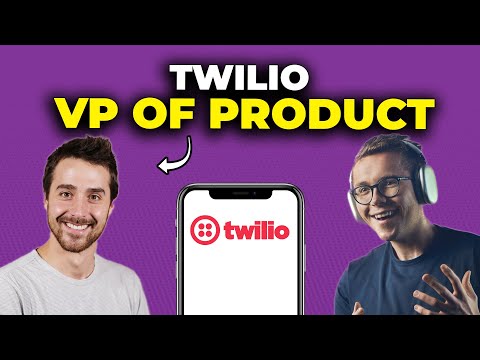
Kevin Niparko: Big Mistakes Founders Make When Hiring Product Teams | E1066
Kevin Niparko (guest), Harry Stebbings (host)
In this episode of The Twenty Minute VC, featuring Kevin Niparko and Harry Stebbings, Kevin Niparko: Big Mistakes Founders Make When Hiring Product Teams | E1066 explores kevin Niparko Reveals How Great Product Teams Hire, Ship, and Lead Kevin Niparko, longtime Segment product leader and now at Twilio, unpacks how to build high-impact product teams, avoid common hiring mistakes, and create a culture of fast, learning-focused shipping. Drawing on experiences from Bridgewater and Segment, he emphasizes systematic thinking, radical honesty, and constraints as creativity boosters. He explains his four-state model for product teams, how to run demos and product reviews that actually drive outcomes, and why writing and product ‘memes’ often matter more than roadmaps. Throughout, he offers practical guidance for founders and product leaders on hiring, portfolio allocation, second products, and knowing when to kill failing bets.
Kevin Niparko Reveals How Great Product Teams Hire, Ship, and Lead
Kevin Niparko, longtime Segment product leader and now at Twilio, unpacks how to build high-impact product teams, avoid common hiring mistakes, and create a culture of fast, learning-focused shipping. Drawing on experiences from Bridgewater and Segment, he emphasizes systematic thinking, radical honesty, and constraints as creativity boosters. He explains his four-state model for product teams, how to run demos and product reviews that actually drive outcomes, and why writing and product ‘memes’ often matter more than roadmaps. Throughout, he offers practical guidance for founders and product leaders on hiring, portfolio allocation, second products, and knowing when to kill failing bets.
Key Takeaways
Ship fast to learn fast; speed and quality are not opposites.
By getting product into customers’ hands quickly (while being responsible about stability), teams expose their wrong assumptions sooner and can iterate toward higher quality; perfection via slowness rarely justifies the delay.
Get the full analysis with uListen AI
Evaluate product teams on both shipping velocity and impact.
Kevin’s four-state model (fast/slow shipping vs. ...
Get the full analysis with uListen AI
Hire product leaders for spikes and craft, not logos or narrow domain skills.
Founders often over-weight brand and specific domain expertise; Kevin argues the best product leaders are strong generalists with clear strengths (strategy, culture, GTM partnership, execution) that complement the founding team.
Get the full analysis with uListen AI
Use demos, writing, and product reviews as forcing functions for clarity.
Weekly demos with pre-committed goals, well-structured PRDs focused on customer problems, and on-demand product reviews with clear decision questions all compress feedback loops and sharpen thinking without excessive process.
Get the full analysis with uListen AI
Treat ‘product memes’ as a primary alignment tool across the company.
Because few people read long PRDs or roadmaps, simple, memorable narratives and project names (e. ...
Get the full analysis with uListen AI
Use constraints and deadlines to unlock creativity and focus.
At Segment, giving a struggling product three months to work or die forced ruthless prioritization, removal of nonessential features, and ultimately a clearer, more compelling product that customers actually wanted.
Get the full analysis with uListen AI
Be ruthless about product-market fit for new products—and willing to kill.
If customers aren’t metaphorically “ripping the product out of your hands,” and you’ve exhausted creative GTM efforts, it’s a strong signal to stop investing rather than succumbing to sunk-cost bias.
Get the full analysis with uListen AI
Notable Quotes
“The faster that you ship, the faster you learn all of the ways in which you are wrong.”
— Kevin Niparko
“Most people are never going to read your PRD or your 20-page roadmap. Product memes are this concept of really simplifying your thinking down into the shortest, simplest, most memorable perception of your product.”
— Kevin Niparko
“Go listen to your smartest customers. Sit next to them. Really learn what they are doing with your product, because that can really inform and give you early signal as to what's gonna be big.”
— Kevin Niparko
“Always listen to their problems, but rarely listen to their solutions unless they've built something that is a working solution and are willing to show you it.”
— Kevin Niparko
“Science is a helpful start, but at the end of the day it comes down to creative thinking and ways in which you can solve problems across the organization.”
— Kevin Niparko
Questions Answered in This Episode
How can an early-stage startup practically introduce weekly demos and PRDs without overwhelming a tiny team?
Kevin Niparko, longtime Segment product leader and now at Twilio, unpacks how to build high-impact product teams, avoid common hiring mistakes, and create a culture of fast, learning-focused shipping. ...
Get the full analysis with uListen AI
What signals should a founder watch for to know their product team is stuck in ‘shipping but low impact’ versus ‘not shipping at all’?
Get the full analysis with uListen AI
How do you design and test effective ‘product memes’ for your own company without them becoming cringey or ignored?
Get the full analysis with uListen AI
In a resource-constrained environment, how should leaders decide between building in-house versus partnering with another company?
Get the full analysis with uListen AI
With AI changing the tooling landscape, how should the role and skill set of future product managers evolve to remain relevant?
Get the full analysis with uListen AI
Transcript Preview
I think the key learning is go listen to your smartest customers. Sit next to them. Really learn what they are doing with your product, because that can really inform and give you early signal as to what's gonna be big. (instrumental music plays)
Kevin, I am so excited for this. As I said, it's so unfair. I hear so many stories about you before, uh, but I'm so ready for this. So thank you so much for joining me first.
Absolutely. Thanks for having me on.
Not at all. But I wanna start with your beginning, because you started as an analyst. So how did you make the move from analyst to product? Let's start there.
Yeah, yeah, yeah. Absolutely. So, you know, happy to be on, and really ex- excited to share some of the stories around building Segment over the years. Uh, yeah, so I actually started as Segment's first data analyst, so I was really helping their early team figure out the business model, product direction, and go-to-market strategy through our own internal data. I joined right around the Segment Series A, and, you know, being the lone data analyst at a very small data company means you're often the internal customer who's using the product every day, sort of the frontline tester for a lot of the new ideas, the dog eating the dog food. And so, you know, I developed this perspective on how the product should work, specifically geared towards analysts, uh, business intelligent use cases. And so, uh, I had really formulated a, a perspective on the opportunities that were sitting around the data that Segment was helping our customers collect. And as Peter and the CEO and, uh, fo- co-founders were formulating the product, he made the hop over to, uh, product from a- analytics.
Can I ask, did you find it an easy transition to make?
Yeah, yeah. It's a great question. I like to think analysts make incredible, uh, product managers, largely because, uh, you're forced to think broadly about the business, really dive deep into data, both quantitative and qualitative, and the signals that you can gather to really inform strategy. And so, you know, I felt like there was a great foundation there. I also think being, uh, you know, in the early stages of a company, you end up playing a lot of different roles, uh, and seeing a lot of different parts of the business. So analytics took on the role of growth at times, of partnerships, of sales ops, and so you really get a unique lens across the business sitting in analytics.
I think it's so important to have that multifaceted view so you can have the empathy for each part of the organization. But before we dive into kind of products and a lot of the products, you were also at Bridgewater, which does shape so many people's perspectives in many ways. Calvin told me I had to ask this one. What are one to two of your biggest takeaways from your time at Bridgewater?
Install uListen to search the full transcript and get AI-powered insights
Get Full TranscriptGet more from every podcast
AI summaries, searchable transcripts, and fact-checking. Free forever.
Add to Chrome