Dave CEO, Jason Wilk: The Best Performing Fund Would Only Back YC Founders on Their Second Time
Harry Stebbings (host), Jason Wilk (guest)
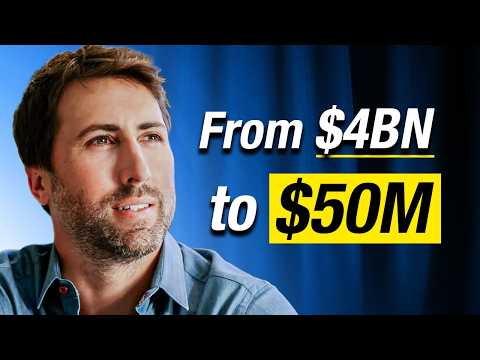
In this episode of The Twenty Minute VC, featuring Harry Stebbings and Jason Wilk, Dave CEO, Jason Wilk: The Best Performing Fund Would Only Back YC Founders on Their Second Time explores from SPAC Crash To AI-Powered Comeback: Dave’s Neobank Rebirth Story Jason Wilk, CEO and founder of neobank Dave, recounts the company’s dramatic arc from a $4B SPAC listing to a $50M “fallen angel” and back to a unicorn through ruthless focus and AI-driven profitability. He argues that second-time, capital-secure founders are disproportionately successful and that neobanks can be highly profitable when they target poorly served, lower‑income consumers with lean, tech-first models. The conversation dissects SPACs, preference stacks, going public, and the trade-offs between growth and profitability, as well as how AI has transformed Dave’s underwriting and support economics. Wilk also contrasts US and European neobanks, criticizes regulatory overreach, and lays out why he believes neobanks will increasingly disrupt legacy banks on both costs and credit.
From SPAC Crash To AI-Powered Comeback: Dave’s Neobank Rebirth Story
Jason Wilk, CEO and founder of neobank Dave, recounts the company’s dramatic arc from a $4B SPAC listing to a $50M “fallen angel” and back to a unicorn through ruthless focus and AI-driven profitability. He argues that second-time, capital-secure founders are disproportionately successful and that neobanks can be highly profitable when they target poorly served, lower‑income consumers with lean, tech-first models. The conversation dissects SPACs, preference stacks, going public, and the trade-offs between growth and profitability, as well as how AI has transformed Dave’s underwriting and support economics. Wilk also contrasts US and European neobanks, criticizes regulatory overreach, and lays out why he believes neobanks will increasingly disrupt legacy banks on both costs and credit.
Key Takeaways
Second-time YC founders with prior exits are unusually strong bets.
Wilk contends that a fund backing every successful exited YC founder on their second company—without even seeing the idea—would be one of the best-performing funds, because financial security and scar tissue let them swing for much bigger markets.
Get the full analysis with uListen AI
Large preference stacks quietly trap founders and kill exit optionality.
He argues that companies that raised hundreds of millions in preferred capital often can’t accept realistic acquisition offers, creating a class of “stuck” startups where founders and early teams are deeply misaligned with capital structure realities.
Get the full analysis with uListen AI
SPACs are structurally sound but reputationally damaged by low-quality issuers.
Wilk still likes SPACs’ price and capital certainty for earlier-stage companies, but says going public via SPAC in January 2022—amid fintech, SPAC, and unprofitable-growth backlash—was fatally mistimed; he believes they should have listed 6–12 months earlier.
Get the full analysis with uListen AI
Clear internal profitability milestones create focus and credibility with markets.
Dave aligned the company and investors around a specific threshold—2. ...
Get the full analysis with uListen AI
AI can radically reshape both risk and service economics in fintech.
By using AI on cash-flow data from ~12M linked accounts, Dave drove loss rates from >10% to ~1. ...
Get the full analysis with uListen AI
Serving lower-income, poorly banked consumers can be a great business with the right cost structure.
Wilk contrasts big banks’ ~$300 annual cost to serve a checking customer versus Dave’s ~$40, arguing that a fully digital stack plus low CAC and AI underwriting make “banking for people poorly served by incumbents” a high-margin, scalable opportunity.
Get the full analysis with uListen AI
Founder psychology and mission clarity are critical in extreme downturns.
During the 98% drawdown, Wilk coped by ignoring daily stock moves, doubling down on Dave’s mission, and using long-dated performance stock units to keep the team engaged—minting more millionaires in the recovery than at IPO and limiting attrition.
Get the full analysis with uListen AI
Notable Quotes
“If you wrote a blank check into every successful exited YC founder on their second company, you’d have one of the best VC funds on the planet.”
— Jason Wilk
“We were, we were fucked. I had no support in my stock.”
— Jason Wilk
“Banking for people poorly served by incumbent banks is an amazing opportunity because you can bank them with a highly scalable, highly efficient platform that is inexpensive to operate.”
— Jason Wilk
“Our loss rates when we started the company were north of 10%. Today the average amount we’re giving out is $180 and our loss rates are 1.2%.”
— Jason Wilk
“It was never real because you guys never even got to the lockup… All you can think about is the path forward.”
— Jason Wilk recounting a friend’s advice
Questions Answered in This Episode
How should founders today decide whether to pursue a SPAC, traditional IPO, or stay private given the current capital and regulatory environment?
Jason Wilk, CEO and founder of neobank Dave, recounts the company’s dramatic arc from a $4B SPAC listing to a $50M “fallen angel” and back to a unicorn through ruthless focus and AI-driven profitability. ...
Get the full analysis with uListen AI
What practical steps can early-stage companies take to avoid being trapped by an unworkable preference stack while still accessing necessary growth capital?
Get the full analysis with uListen AI
How can non-fintech startups replicate Dave’s disciplined use of AI to both improve product outcomes and transform unit economics, rather than just bolting on chatbots?
Get the full analysis with uListen AI
In serving lower-income or underserved segments, where is the ethical line between fair fees for risk and exploitative pricing, and who should define it?
Get the full analysis with uListen AI
If neobanks gain enough scale and credit data advantage, what new forms of credit products or pricing models might emerge that materially displace traditional credit cards?
Get the full analysis with uListen AI
Transcript Preview
$4 billion to $50 million market cap. Today, I have the founder of Dave, one of the U.S.'s leading neobanks, on the show. In 2022, they SPACed and went public at $4 billion. Excitement soon waned though, and their market cap dropped to just $50 million.
All of our PIPE investors from our IPO bailed before our mockup expired. Fintech became a bad word. SPAC became a bad word.
They lost an incredible 98% of their value.
I had no support in my stock. We were, we were fucked.
But the turnaround has been one of the best on Wall Street. They've increased market cap by over 900%.
The investments, again, in AI is really what led to a lot of the profitability.
Is there anything you would have done differently about the process?
Honestly, I don't regret going out via SPAC. I think we just went public too late.
You went public too late?
I think the company, realistically, was ready to go public probably six to 12 months earlier, and...
Ready to go? (instrumental music) Jason, dude, it is such a pleasure to have you on the show. I've heard so many great things from Imran and from Ash, so thank you for joining me, man.
Yeah. Thanks, Harry. Great to be here.
Now, I would love to start, you sold your first business for $85 million reportedly. I'm just always oscillating on the fact that... Bluntly, do richer founders make better founders? I think this a lot with investors. When you think about it, do richer founders make better founders?
I'd say yes. You know, I, I, I don't think it's the case every single time, but I think about this quite often. If you were to have a blank check VC fund and you just wrote a check, blank, not looking at the idea, uncapped convertible note into every successful exited YC founder for their second company, you'd have probably one of the best VC funds on the planet. I look at some of the guys on my own YC class, 'cause that company I sold wasn't, wasn't Y Combinator. My second company was Dave, the founder of Opendoor, he had a small real estate company he sold to, I think, Trulia at the time. Stripe was in my class. They had sold a previous company for, like, $6 million, some eBay tools business. Like, it just amazing the, the swing for the fences that some of the second-time founders go for once they have a little bit of money in their pocket who otherwise were, went a little more conservative the first time around.
I remember meeting Erik Glyman from Paribus at the time just after he'd sold it to Capital One.
Right.
And he was like, "I'm about to start something in the fintech space. Uh, anyway, I'll tell you more soon." And he then founded Ramp a month later.
Install uListen to search the full transcript and get AI-powered insights
Get Full TranscriptGet more from every podcast
AI summaries, searchable transcripts, and fact-checking. Free forever.
Add to Chrome