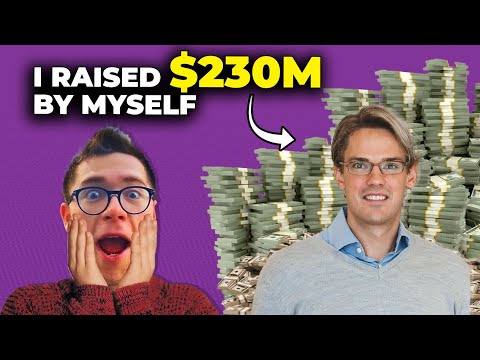
Tomasz Tunguz: How I Raised $230M; ChatGPT vs. Google; How LLMs Work; Trump vs DeSantis | E1004
Tomasz Tunguz (guest), Harry Stebbings (host), Narrator, Narrator
In this episode of The Twenty Minute VC, featuring Tomasz Tunguz and Harry Stebbings, Tomasz Tunguz: How I Raised $230M; ChatGPT vs. Google; How LLMs Work; Trump vs DeSantis | E1004 explores vC Tomasz Tunguz Builds Theory: Concentrated Bets Amid AI Upheaval Harry Stebbings interviews investor Tomasz Tunguz about leaving Redpoint to found his new, highly concentrated, thesis-driven firm, Theory, and how he raised a $230M first fund in a brutal LP market. Tunguz details his fundraising playbook, portfolio construction math, and why he believes focus and execution beat sheer diversification in venture. They then dive into the AI landscape: foundation models vs applications, enterprise readiness, data and content ownership, regulation, and why Google has stumbled vs Microsoft in the LLM era. The conversation closes with macro views, politics, and reflections on misses, hits, and what really creates moats in an AI-first world.
VC Tomasz Tunguz Builds Theory: Concentrated Bets Amid AI Upheaval
Harry Stebbings interviews investor Tomasz Tunguz about leaving Redpoint to found his new, highly concentrated, thesis-driven firm, Theory, and how he raised a $230M first fund in a brutal LP market. Tunguz details his fundraising playbook, portfolio construction math, and why he believes focus and execution beat sheer diversification in venture. They then dive into the AI landscape: foundation models vs applications, enterprise readiness, data and content ownership, regulation, and why Google has stumbled vs Microsoft in the LLM era. The conversation closes with macro views, politics, and reflections on misses, hits, and what really creates moats in an AI-first world.
Key Takeaways
Treat fundraises like a structured software sales process.
Tunguz ran his LP outreach with a pipeline, a target close rate (~15%), DocSend tracking, and clear qualification criteria, using frequent momentum updates and rolling commits to create a sense of inevitability and urgency.
Get the full analysis with uListen AI
Design portfolio construction explicitly—don’t wing it.
He used historical venture data and Monte Carlo simulations to back into a $230M fund with 12–15 companies, heavy concentration (40–50% of capital in the top three), and meaningful ownership built over multiple rounds rather than only at entry.
Get the full analysis with uListen AI
In today’s environment, LPs care deeply about your “business model.”
Unlike the last bull market, LPs now press hard on assumptions around stage mix, loss rates, follow-on multiples, and reserves, so emerging managers need a rigorous, explicit fund P&L in their decks.
Get the full analysis with uListen AI
Execution, not just data or models, is still the core moat in AI.
Asked about AI moats, Tunguz rejects “it’s just a data moat” as sufficient, arguing that better execution—like Snowflake or Notion vs incumbents—still determines who wins even when everyone has access to strong models.
Get the full analysis with uListen AI
The biggest underexplored AI opportunity is enterprise readiness.
He sees large businesses needing tools for compliance, security, deployment models, legal shielding, and on-prem/virtual-private deployments, predicting multiple significant companies will be built just to make LLMs acceptable to the Global 2000.
Get the full analysis with uListen AI
Foundation models will be few; application-layer winners will be many.
Tunguz expects a small number of massive infrastructure players (like today’s clouds) but a wide distribution of value across 100+ application companies, making app-layer investing structurally more favorable for VCs.
Get the full analysis with uListen AI
Customer demand is the antidote to thesis confirmation bias and bad timing.
He manages the risk of being “too in love” with a thesis by relentlessly looking for real pipelines and buyers; if you can’t find broad, repeatable demand, the thesis is either wrong or too early and should be shelved.
Get the full analysis with uListen AI
Notable Quotes
“Any time we talk about machine learning, there's always this question around, like, 'What is the moat?' I think the answer is the one that it's always been, which is better execution is the moat.”
— Tomasz Tunguz
“I really believe in thesis-driven investing... spending six, nine, twelve months researching a space and really understanding it.”
— Tomasz Tunguz
“The sophisticated fundraisers are always in market. They're referencing LPs, they are building pipeline—that’s a full-time job.”
— Tomasz Tunguz
“The odds of success are going to be significantly higher at the application layer because the diversity of needs there is greater.”
— Tomasz Tunguz
“I think the answer is: the startups are the ones who create the markets. If you have a rabid user base in a really early market, it will most of the time surprise you on the upside.”
— Tomasz Tunguz
Questions Answered in This Episode
How should an emerging solo GP practically implement Monte Carlo-style portfolio modeling for their own first fund?
Harry Stebbings interviews investor Tomasz Tunguz about leaving Redpoint to found his new, highly concentrated, thesis-driven firm, Theory, and how he raised a $230M first fund in a brutal LP market. ...
Get the full analysis with uListen AI
In an environment where incumbents like Microsoft are shipping AI faster than startups, what specific execution advantages can a new company realistically cultivate?
Get the full analysis with uListen AI
What concrete product features or architectures will define the winners in “enterprise readiness” for AI (e.g., specific compliance, deployment, or legal structures)?
Get the full analysis with uListen AI
How might data and content attribution arrangements between LLM operators and publishers actually work in practice, and who will have the negotiating leverage?
Get the full analysis with uListen AI
If regulation structurally favors incumbents in AI, what types of startup business models are most resilient to regulatory drag and dependence on a few hyperscalers?
Get the full analysis with uListen AI
Transcript Preview
Any time we talk about machine learning, there's always this question around, like, "What is the moat?" I think the answer is the one that it's always been, which is better execution is the moat.
Tom, it is such a joy to have you on the show. I just checked, and it is, uh, 2016 when you were last on the show, so seven years ago. I've missed you dearly, my friend. But thank you so much for joining me today.
Uh, thanks for having me back, Harry. I can't believe it's been seven years. Time flies. Look at you, huge audience, new font. I mean, look how far you've come. It's incredible.
I mean, that is so, so kind. But I wanna start with, uh, you, bluntly, which is obviously we recently founded Theory, such an exciting time. I wanna dive in and say, first, why did you decide to leave Redpoint and why did you decide to start on your own?
Yeah, I had, I had a great time at Redpoint. I was there for 15 years, learned from many wonderful people. And, uh, after, after that amount of time, I decided that after seeing so many founders start companies, that I really wanted to start one of my own. When I was, when I was about 17, I started a little, little company. And, uh, over the last 15 years, maybe more, 20 years, I've watched all these startups grow and, uh, I really, I, I wanted to have that feeling for myself, and I also wanted to experiment a bit more and try a little bit... You know, everybody has an idea about how they wanna create their own business, and, uh, as you know, I've been a startup, uh, student of startups for a long time, and so I really wanted to, to build a venture firm in, in a slightly different way. Uh, and so in September of last year, jumped in and, uh, and we were off to the races.
Man, uh, there's nothing more special than having your own firm. I couldn't agree with you more. You mentioned that, like, the learnings in the 15 years. If there are one or two big takeaways for you from your time at Redpoint, I'm asking you to distill 15 years of lessons-
(laughs) Yeah.
... into, you know (laughs) , a short sound bite, but what would they be and how does that influence how you think about building Theory moving forward?
Yeah, so I really believe in thesis-driven investing, and what that means is going deep into space and spending six, nine, 12 months researching it and really understanding it. Uh, as a board member, I will never know about, uh, as much about a space as a founder, but if, if I can deeply understand a space, then I think I can be a very helpful board member, and that's one of the reasons why Theory is called Theory. The other reason or the other sort of difference is I, I really believe in concentration. Like, uh, venture capital, the industry is governed by a power law, and the more dollars you can have closer to the Y axis, so to speak, on the power law, the better your returns will be. And so I wanted to set up a firm that was set up for thesis-driven concentration. That was the whole idea.
Install uListen to search the full transcript and get AI-powered insights
Get Full TranscriptGet more from every podcast
AI summaries, searchable transcripts, and fact-checking. Free forever.
Add to Chrome