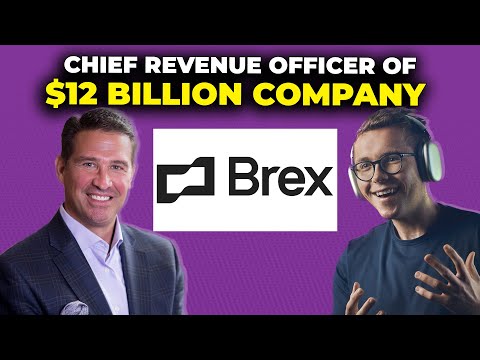
Doug Adamic: Why Discounting is BS; How to Reduce Sales Cycles and Create Urgency | E1058
Harry Stebbings (host), Doug Adamic (guest), Narrator
In this episode of The Twenty Minute VC, featuring Harry Stebbings and Doug Adamic, Doug Adamic: Why Discounting is BS; How to Reduce Sales Cycles and Create Urgency | E1058 explores doug Adamic Dismantles Discounting Myths And Redefines Modern Enterprise Sales Doug Adamic, CRO at Brex and long-time Concur/SAP executive, breaks down how to run high-quality, value-driven sales organizations that scale from startup to global enterprise. He argues that discounting is a weak lever compared with strong discovery, crystal-clear value propositions, and constructive tension with buyers. Doug details how to create and qualify pipeline, shorten sales cycles, build multiple champions, and structure playbooks, deal reviews, and CS handoffs for predictable revenue. Throughout, he emphasizes treating sales as a rigorous, outcome-focused consulting profession rather than a feature-pitching or relationship-entertainment game.
Doug Adamic Dismantles Discounting Myths And Redefines Modern Enterprise Sales
Doug Adamic, CRO at Brex and long-time Concur/SAP executive, breaks down how to run high-quality, value-driven sales organizations that scale from startup to global enterprise. He argues that discounting is a weak lever compared with strong discovery, crystal-clear value propositions, and constructive tension with buyers. Doug details how to create and qualify pipeline, shorten sales cycles, build multiple champions, and structure playbooks, deal reviews, and CS handoffs for predictable revenue. Throughout, he emphasizes treating sales as a rigorous, outcome-focused consulting profession rather than a feature-pitching or relationship-entertainment game.
Key Takeaways
Prioritize value-based selling over discounting to create real urgency.
Urgency should come from clear financial and operational impact—saving or making money, or avoiding risk—not from last-minute price cuts that undermine perceived value and train customers to wait for discounts.
Get the full analysis with uListen AI
Treat pipeline as “air” and make demand creation everyone’s job.
Rather than relying solely on marketing, Doug ties his entire GTM org to three objectives—demand creation, profitable conversion, and customer growth—and optimizes pipeline by source, quality, and conversion, not raw volume.
Get the full analysis with uListen AI
Use deep discovery to change buying criteria, not to push features.
Great sellers listen obsessively, understand how a business actually operates, and then reframe the problem so the prospect’s ideal solution naturally aligns with their product, instead of leading with demos and functionality.
Get the full analysis with uListen AI
Create constructive tension and multi-thread deals with precision.
Winning modern deals means “threading multiple needles with one toss”: aligning and challenging multiple stakeholders, being exact with every interaction, and accepting some tension as necessary to drive real change and multi-champion support.
Get the full analysis with uListen AI
Design a rigorous, step-by-step sales playbook and enforce it.
Doug breaks sales into defined stages with checklists; skipping steps shows up as surprises at the end of the deal, so he constantly refines the playbook based on field feedback and only rolls changes at controlled cadences (e. ...
Get the full analysis with uListen AI
Build a seamless lifecycle from awareness to CS-driven outcomes.
Information gathered in discovery must flow into implementation and customer success, so CS is simply executing on a clear, promised outcome; delivering that outcome is what unlocks renewals, expansions, and upsell opportunities.
Get the full analysis with uListen AI
Measure and improve speed via “lengthen your stride and quicken your step.”
To hit higher quotas with shrinking territories, reps must increase effectiveness per unit of effort—better targeting, tighter cycles, stronger deal qualification—rather than just working more hours, supported by tooling and enablement.
Get the full analysis with uListen AI
Notable Quotes
“Pipeline is our air. Without it, we die.”
— Doug Adamic
“Discounting and playing shenanigans is only going to demean the value you’ve established.”
— Doug Adamic
“You’re tossing thread through multiple needles. That’s how precise we need to be.”
— Doug Adamic
“There are only three reasons an organization will buy: they’re in trouble now, they see trouble coming, or someone wants to be a hero.”
— Doug Adamic
“If you’re surprised you lost a deal, that’s inexcusable. A properly run campaign should never end in surprise.”
— Doug Adamic
Questions Answered in This Episode
How can a sales team practically shift from feature-led demos to true value-based conversations without losing momentum in live deals?
Doug Adamic, CRO at Brex and long-time Concur/SAP executive, breaks down how to run high-quality, value-driven sales organizations that scale from startup to global enterprise. ...
Get the full analysis with uListen AI
What concrete metrics should leaders track to distinguish high-quality pipeline from the “5–7x coverage” myth Doug criticizes?
Get the full analysis with uListen AI
In your organization, where are you currently avoiding constructive tension with prospects, and what impact might that be having on deal size and cycle time?
Get the full analysis with uListen AI
How robust is your current sales-to-CS handoff in terms of capturing promised outcomes, and what changes would be needed to make renewals and expansions a true byproduct of success?
Get the full analysis with uListen AI
What signals should founders and sales leaders use to know it’s time to evolve their sales playbook, and how can they do it without disrupting in-flight quarters?
Get the full analysis with uListen AI
Transcript Preview
You scaled orgs to over 600 people.
During the time at Brex, I built eight new business departments that didn't exist.
Doug, I am so excited for this. I spoke to many, many people ahead of this conversation, so thank you so much for joining me today.
No, thank you, Harry. It's awesome to be here, and I'm so psyched to, uh, have a chat with you.
That is very, very kind of you. Now, I- I love a little bit of context, and I think, you know, sales is something that often I hear people fall in love with. And I wanted to start, when did you fall in love with sales first, and what was that entry point for you?
I didn't get into sales coming out of college. I was actually in finance and accounting, and I worked in a finance and an accounting organization, uh, coming out, and then one of my buddies said, "Hey, you know what? I think you'd be awesome in sales. Why don't you talk to a recruiter?" So, I spoke with a recruiter, and my very first sales job was at a company called Cintas. They rent uniforms and they do programs like that, and it was an incredible journey. They had an incredible training program. And the second I got into that organization, met the people, and started to understand what sales was all about, I fell in love immediately. It was amazing.
Can I ask you a bit of a weird one? Do you think sales-
Yeah, sure.
... is something you fall in love with and it's very obvious, or do you think it's something you learn to love when you see the intricacy and the detail and nuance of it?
It's probably the latter. I think you need to be, have an entrepreneurial spirit in general to go into sales, um, but I think once you understand what sales is all about, improving a- a customer's business by driving specific outcomes, you recognize how complex it is, how intricate it is, and how rewarding it can be. So, I definitely think it's something that can be learned over time.
Now, 16 years at SAP. I mean, Doug, this is like a feat that not many people do in terms of longevity-
(laughs)
... at one company. My question is, what are one to two of your biggest takeaways from 16 years at SAP?
So, the 16 years was broken up into two, like, distinct chapters. One chapter was growing up in, uh, a company called Concur, um, and, um, I joined when we were about 500 people and about $50 or $60 million in sales, um, and we grew that to almost a billion dollars before we were bought by SAP. And then, SAP held us as a wholly owned subsidiary, and then started to integrate us in. So, I felt like I had this, um, journey where I grew with a very, very disruptive organization, and then I joined a massive company to understand how to really scale that business globally and take advantage of it. So, it was amazing, but I don't think it was like 16 years at the same company doing the same thing. I felt like I had really distinct chapters along that 16 years. So, um, that's how I sort of broke it up and- and- and sort of continued down doing that.
Install uListen to search the full transcript and get AI-powered insights
Get Full TranscriptGet more from every podcast
AI summaries, searchable transcripts, and fact-checking. Free forever.
Add to Chrome