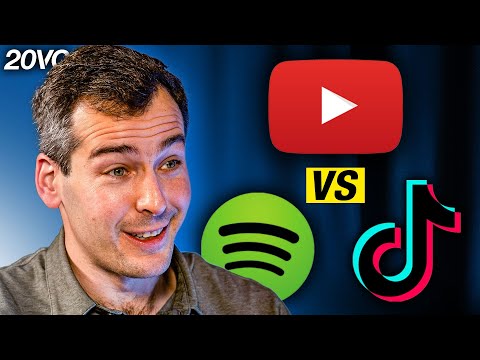
Mikey Shulman, CEO @Suno: The Future of Music, What is Gonna Happen? | E1244
Mikey Shulman (guest), Harry Stebbings (host)
In this episode of The Twenty Minute VC, featuring Mikey Shulman and Harry Stebbings, Mikey Shulman, CEO @Suno: The Future of Music, What is Gonna Happen? | E1244 explores suno CEO Predicts Interactive, AI-Powered Music Will Eclipse Streaming Mikey Shulman, CEO of Suno, explains how the company aims to transform music from a passive listening activity into an interactive, game-like experience where everyone can be a creator. He argues that in music, scale alone won’t solve AI quality because taste is subjective, so the real challenge is aligning models to human preferences and building great products, not just bigger models.
Suno CEO Predicts Interactive, AI-Powered Music Will Eclipse Streaming
Mikey Shulman, CEO of Suno, explains how the company aims to transform music from a passive listening activity into an interactive, game-like experience where everyone can be a creator. He argues that in music, scale alone won’t solve AI quality because taste is subjective, so the real challenge is aligning models to human preferences and building great products, not just bigger models.
Shulman discusses Suno’s rapid move from an enterprise audio tool to a consumer music creation platform, its decision to charge from day one, and how business model, UX, and taste-alignment—not model specs—will define winners. He also addresses the RIAA lawsuit, data training norms, and why collaboration with incumbents would unlock a much larger music ecosystem.
Looking ahead, he outlines possible good and bad futures for AI music: from participatory, social, creator-centric worlds with new monetization models, to dystopian hyper-personalized or fully impersonated music streams that cut artists out. Throughout, he emphasizes judgment, product focus, and building a bigger overall “pie” for music rather than fighting over today’s limited streaming economics.
Key Takeaways
Music AI is a product and taste problem, not just a scaling problem.
Unlike text, music quality is driven by subjective taste, so simply building larger models is insufficient; Suno focuses on small transformer models, better audio representations, and techniques like RLHF-style alignment to human preferences.
Get the full analysis with uListen AI
Charging from day one gave Suno both validation and critical product data.
Introducing a paywall early proved users valued the product and created clear segmentation—who pays, who hits the paywall and doesn’t—which informs product decisions and interviews far better than a fully free model would.
Get the full analysis with uListen AI
UI and time-to-wow are central to adoption of generative tools.
Suno learned that a dedicated web app massively outperformed a Discord-only interface and that first-session experience (e. ...
Get the full analysis with uListen AI
Future AI products will abstract away models; users will buy experiences, not versions.
Shulman predicts there will be a “last model release” after which users no longer track model versions or specs—only product releases and whether the experience makes them feel something.
Get the full analysis with uListen AI
The most valuable future of music is broader participation, not just cheaper content.
While AI increases supply and lowers the average value per track, Suno’s bet is that enabling billions to create, remix, and socially engage with music will grow the overall economic and cultural value of the music ecosystem.
Get the full analysis with uListen AI
There’s a strategic opportunity to partner with, not just disrupt, incumbents.
Shulman argues that lawsuits reflect a fixed-pie mindset; a better path is for labels, platforms, and AI companies to collaborate on rights, new business models (e. ...
Get the full analysis with uListen AI
The biggest risk isn’t AI itself, but how we choose to deploy it.
He contrasts positive futures (artists licensing models of themselves, fans co-creating, social musical experiences) with negative ones (unpaid impersonation models, hyper-personalized antisocial streams), emphasizing that none are inevitable—they depend on deliberate choices by builders, policymakers, and incumbents.
Get the full analysis with uListen AI
Notable Quotes
“We’re not making music, we’re making musicians.”
— Mikey Shulman
“At some point there will be a last model release, and everything else is just product releases.”
— Mikey Shulman
“OpenAI is amazing. They did every AI company a huge disservice because everybody thinks that just an empty textbox is now the right interface. And it is for ChatGPT and it is incorrect for basically everything else.”
— Mikey Shulman
“It seems crazy that music should not be as engaging as Fortnite.”
— Mikey Shulman
“We can build a good future of music with AI, and we can build a bad future of music with AI, or we can sit back and let someone else do it.”
— Mikey Shulman
Questions Answered in This Episode
How should rights, royalties, and ownership be structured in a world where artists license AI models of themselves and fans can legally create “fan-fiction” music in their style?
Mikey Shulman, CEO of Suno, explains how the company aims to transform music from a passive listening activity into an interactive, game-like experience where everyone can be a creator. ...
Get the full analysis with uListen AI
What guardrails or industry standards are needed to prevent the dystopian scenario of unlimited, unpaid impersonation tracks of famous artists?
Shulman discusses Suno’s rapid move from an enterprise audio tool to a consumer music creation platform, its decision to charge from day one, and how business model, UX, and taste-alignment—not model specs—will define winners. ...
Get the full analysis with uListen AI
If prompts and text boxes are the wrong interface for most AI products, what might the next-generation interaction model for creative tools actually look like?
Looking ahead, he outlines possible good and bad futures for AI music: from participatory, social, creator-centric worlds with new monetization models, to dystopian hyper-personalized or fully impersonated music streams that cut artists out. ...
Get the full analysis with uListen AI
How can platforms like Spotify, YouTube, TikTok, and Suno practically integrate so users don’t experience a fragmented world of “AI music” versus “traditional music”?
Get the full analysis with uListen AI
As AI reduces the skill barrier for creation, how should society and the industry recognize and reward “taste” and curation as forms of creative work in their own right?
Get the full analysis with uListen AI
Transcript Preview
OpenAI is amazing. They did every AI company a huge disservice because everybody thinks that just, like, empty textbox is now the right interface. And it is for ChatGPT and it is incorrect for basically everything else. At some point, I don't know if it's version four or version five, there will be a last model release that is released as a model, and everything else is just product releases.
Ready to go? (upbeat music plays) Mikey, I am, like, the biggest fanboy of Suno, and I have created like 25 songs in the last few days. So, I'm so excited for this. Thank you for joining me.
So good to be here. Thank you for having me.
Now, I would love to just start with, for those that don't know what Suno is, what is Suno and what is Suno not?
Uh, yeah, Suno is a way, um, for everybody to experience, uh, all of the joys of music, meaning not just background listening to music, but, uh, losing yourself in the process of making music, sharing music, of editing music, um, of being a much more active participant in music. You know, I like to think we're not making music, we're making musicians.
I love that as, like, a tagline. But I actually spoke to, uh, Minjano before the show, and he was like, "Dude, you gotta ask him about the origin." Because it was an enterprise AI audio tool and it wasn't what you see today. Can you talk to me about that pivot?
I think... I- I wouldn't call it a pivot. You know, we always knew that, um, audio is really far behind the world of text. You know, that's wh- where we came from. Uh, our backgrounds are all NLP. And we thought it would actually be a lot harder to do good generative stuff, and so we thought the first product would be, um, more sense-making. You know, try to, try to scratch your head and think back to, like, GPT-2. Um, no one was really making interesting text with GPT-2, but GPT-2 was, like, this interesting tool for understanding text. And that's where we thought we would be stuck, uh, for a couple of years until we learned to scale these things up, and it turned out we were wrong, and that good generative capabilities came out much, much sooner. And so, um, we- we- we... The- the interesting thing here is the ability to generate stuff, and so we- we kind of very quickly threw out the sense-making tool.
Dude, I- I already just love chatting to you 'cause, uh, we just go off in many different directions. Do you think scaling laws will continue? You said there about the generative improvements.
For music, it's very different from text, and I think people will very sloppily look at the world of OpenAI and Anthropic and the hyperscalers and say, um, "Audio is just a couple years behind," which it is, but that scale is gonna solve all these things. But unlike those domains where you're trying to just get more and more answers to objective problems, like I wanna get a better SAT score, I wanna do better on this benchmark, music is totally subjective. And, uh, so scale is not the answer to all the problems. So, the models stay relatively small, um, and there are other techniques that you have to use to actually have these things have good taste.
Install uListen to search the full transcript and get AI-powered insights
Get Full TranscriptGet more from every podcast
AI summaries, searchable transcripts, and fact-checking. Free forever.
Add to Chrome