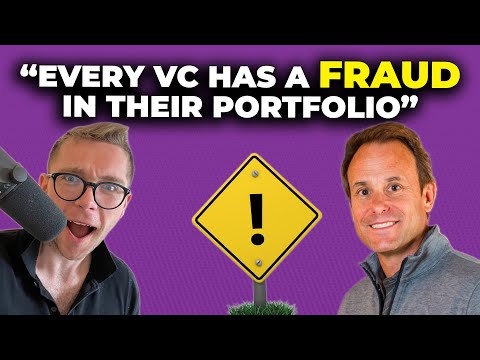
Jason Lemkin: Every VC has a FRAUD in their portfolio; The IPO market is about to EXPLODE | E1046
Jason Lemkin (guest), Harry Stebbings (host)
In this episode of The Twenty Minute VC, featuring Jason Lemkin and Harry Stebbings, Jason Lemkin: Every VC has a FRAUD in their portfolio; The IPO market is about to EXPLODE | E1046 explores jason Lemkin Predicts IPO Surge, Slams Seed Hype and VC Complacency Jason Lemkin reflects on his early VC career, arguing new investors should deploy quickly into their strongest networks while also accepting they are apprentices inside someone else’s fund. He explains why true seed remains overheated and fragmented, while Series A/B are in a painful correction and late‑stage growth is cautiously reopening around disciplined 15x ARR valuations.
Jason Lemkin Predicts IPO Surge, Slams Seed Hype and VC Complacency
Jason Lemkin reflects on his early VC career, arguing new investors should deploy quickly into their strongest networks while also accepting they are apprentices inside someone else’s fund. He explains why true seed remains overheated and fragmented, while Series A/B are in a painful correction and late‑stage growth is cautiously reopening around disciplined 15x ARR valuations.
He urges founders to be realistic about valuations, warning that many hot seeds are now structurally uninvestable for classic seed funds and that founders with 10+ years of runway and no product‑market fit should even consider offering capital back to investors. Lemkin also contends that every major VC has at least one fraud, because most due diligence is confirmatory rather than truly skeptical.
On market structure, he expects a strong IPO window in the back half of 2024 driven by large, high‑quality SaaS and AI companies, though not at 2021 bubble multiples. He is increasingly skeptical of the current tech workforce’s work ethic, arguing that low effort expectations post‑2021 make true high performers unusually valuable but rare.
Key Takeaways
New VCs should lean into their early ‘hot hand’ instead of waiting a year.
Conventional advice to avoid doing deals in year one protects the fund more than the new partner; if you have a strong network or brand, you should aggressively back the founders and markets you deeply understand, then learn portfolio construction and ownership discipline from more experienced colleagues.
Get the full analysis with uListen AI
Define a narrow investment sweet spot and valuation playbook to manage risk.
Lemkin only backed founders better than him, in markets he intuitively understood, at stages where revenue signals existed (e. ...
Get the full analysis with uListen AI
Seed is oversupplied and splintered; insiders can raise party rounds without leads.
Operator angels and multi‑stage funds have flooded seed with capital, especially for well‑connected ‘insider’ founders, making party‑style rounds with 20–30 small checks common again despite the narrative that conviction‑led rounds are back; traditional seed funds often can’t compete on price or speed here.
Get the full analysis with uListen AI
Series A and B are the real bottleneck as expectations and reality diverge.
Founders still expect fast, ‘hot’ As within 12–18 months at high step‑ups, while A/B investors want disciplined valuations, efficiency, and real traction; companies that miss the window will either fail, reset expectations and burn, or eventually raise from patient investors who wait for post‑hype acceleration.
Get the full analysis with uListen AI
Growth is back but capped: strong SaaS names see ~15x ARR and heavy secondary interest.
For efficient companies at $30–60m+ ARR, growth funds are actively offering term sheets around 10–15x ARR and aggressively buying early‑investor secondary stakes when founders won’t raise primaries—cleaning up cap tables at valuations the companies themselves find premature or unnecessary.
Get the full analysis with uListen AI
Every major VC likely has at least one fraud due to ‘confirmatory’ diligence.
Lemkin notes that many diligence calls merely rubber‑stamp pre‑decided deals; investors downplay red flags, compress timelines on hot rounds, and end up backing companies with misreported ARR, margins, or pipeline quality—misrepresentations that may not all be criminal but are economically fraudulent.
Get the full analysis with uListen AI
Founders should respect capital more, especially when over‑funded without product‑market fit.
He argues founders with extreme runways (e. ...
Get the full analysis with uListen AI
Work ethic complacency is widespread, creating a huge edge for genuinely driven talent.
Lemkin believes many knowledge workers post‑2021 want high salaries and big teams with minimal effort; for founders, this means scrutinizing hires far more deeply and prioritizing people with adversity or pre‑boom experience—while ambitious newcomers can differentiate simply by working harder and smarter.
Get the full analysis with uListen AI
The IPO window should reopen strongly in late 2024 with ‘solid’ not crazy multiples.
He expects several large, high‑quality IPOs (e. ...
Get the full analysis with uListen AI
Notable Quotes
“If you have a hot hand or a great network, go do those deals. You only live once.”
— Jason Lemkin
“Seed investors can’t participate in hot startups anymore. You can’t make money in seed investing in hot seed rounds.”
— Jason Lemkin
“Every VC has a fraud in their portfolio. The truth is they only do confirmatory due diligence.”
— Jason Lemkin
“Founders today don’t respect venture capital anymore. They have no respect for money.”
— Jason Lemkin
“2024 will be rich with IPOs. It will be a good year with solid multiples—not 2021, but solid.”
— Jason Lemkin
Questions Answered in This Episode
How should an emerging VC practically define and test their ‘sweet spot’ within the first 12 months, without over‑concentrating risk?
Jason Lemkin reflects on his early VC career, arguing new investors should deploy quickly into their strongest networks while also accepting they are apprentices inside someone else’s fund. ...
Get the full analysis with uListen AI
If you’re a well‑connected founder with access to $3m in operator checks but no lead, how do you weigh speed and control versus long‑term signaling from a top institutional seed investor?
He urges founders to be realistic about valuations, warning that many hot seeds are now structurally uninvestable for classic seed funds and that founders with 10+ years of runway and no product‑market fit should even consider offering capital back to investors. ...
Get the full analysis with uListen AI
Given Lemkin’s view that hot seeds are often structurally uninvestable for seed funds, what should a ‘classic’ seed fund’s strategy be over the next five years?
On market structure, he expects a strong IPO window in the back half of 2024 driven by large, high‑quality SaaS and AI companies, though not at 2021 bubble multiples. ...
Get the full analysis with uListen AI
For founders sitting on 5–10 years of runway without product‑market fit, what concrete decision framework should they use to decide between pivoting, slowing burn, or offering to return capital?
Get the full analysis with uListen AI
How can VCs and boards design a diligence process that actually surfaces and acts on red flags, rather than defaulting to confirmatory checks on already‑made decisions?
Get the full analysis with uListen AI
Transcript Preview
I'm not saying we're bouncing to 2021. It's gonna take 20 years to experience that moment again. It will happen again. It's every 20 years, right? But 2024 will be rich with IPOs and it will be a good year with solid multiples, solid multiples.
Jason, I am so excited for this. I always so enjoy our chat, so thank you so much for joining me today, my friend.
Thanks, uh, thanks for having me back, Harry. It's always a pleasure.
Now, you know the normal start of that how did you get into venture malarkey, I wanted to start with if you could call yourself up the night before you started as a venture investor and give yourself a piece or two of advice, what advice would you give yourself knowing all you do now?
Yeah, well, the first... It's an interesting question. The first one I tell everyone that's a new manager, especially anyone abo- above the analyst level, and what I was told when I w- went into venture, and I think, I think you might have been told the same thing, was, "Don't worry about doing a deal your first year." Don't worry about doing a deal... I'm not talking about an angel check for f- 10K or 15K. I'm talking about don't worry about writing an enormous check and... This is what the traditional GPs tell you, because the last thing they want you to do is to meet with 28 pretty good companies and burn the fund, right? They know how rare the outliers are, right? And so this is the advice I got, "Don't invest your first year." And I did five real unicorns in my first 13 months, right? I did Pipedrive, which exited for, like, 1.25 billion, and then Algolia was my second. That's worth 2.5 billion. It will IPO next year. I did Talkdesk worth 10 billion. I did, um, Parklet Greenhouse, which will IPO next year. They're at 200 million, and I did SalesLoft, which sold for two and a half billion of cash. Um, those were my first five deals. And it's interesting how it happened, but I tell everyone, "If you have something, if you have a hot hand, if you have a brand, like, like, a 20 VC or anything behind you, or a great network, if you came out of Datadog or Stripe or wherever, MongoDB, and you have a network, go do those deals." Like, you may not know venture, but that's what the other guys are for, right? They will teach you ownership. They will teach you some discretion to some extent, but, um, leverage it. And I, and I am... It's interesting how many great VCs had a great investment their first six or 12 months. The first friend I had that became a VC was David Hornik, right, who's now at Lobby, was at August, and he tells a story how this first deal he, like, blew 10 million, which back in the day was, like, a career-ender, right, as a kid going into venture, but his second was Splunk. I think his second one was PayCycle, which then he did Bill, right, which was Rene's second one. So the first one exited for 100, the second one's worth 20 billion, I think Splunk was his third, and he did those all the first year in a downturn, in a massive downturn. And, and I, the more... I mean, you talked a lot more VCs than I can, but I wou- I wouldn't be surprised if a lot of the best VCs had a few, at least one big winner their first 12 months, and so that canonical advice is great for the fund. Trust me, it's great for the fund. Don't blow it all, kid, right? Just because you are a, a SVP of, uh, engineering at New Relic does not mean you know how to find a great seed investment. That is true, but... So th- and I tell it to everybody and I say to them also because, "E- e- even if it's not perfect for the fund, it's great for you to get into a winner your first year. That winner lasts forever." The great thing about venture is your w- your winners last, you can talk about them for a decade. You can literally... And so the earlier you get a winner, and a winner really being, like, the, the person on the board, the first investor, like an iconic winner where the founders will back you, the earlier you get in your career, you could probably raise three funds on the back of that, even if they, all the rest of your investments are dogs, right? So you only live once, so that's the main advice. That's the number one which we get to give you, and the second one is the opposite, which is, I tell folks, um, "U- unless you're starting your own fund really from scratch," right? Um, and even you didn't do that, Harry. You, you had a stint a- at another fund, right, before you started.
Install uListen to search the full transcript and get AI-powered insights
Get Full TranscriptGet more from every podcast
AI summaries, searchable transcripts, and fact-checking. Free forever.
Add to Chrome