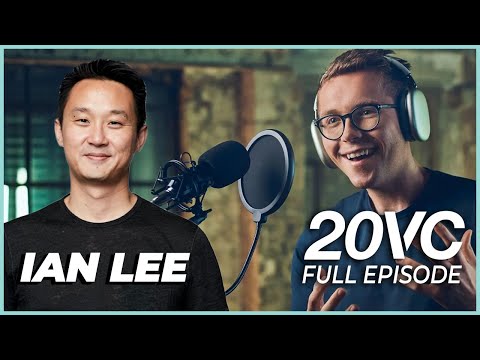
Ian Lee: Why DAOs Will Replace Venture Capital; Biggest Threat to Web3 | 20VC #893
Narrator, Harry Stebbings (host), Ian Lee (guest), Narrator
In this episode of The Twenty Minute VC, featuring Narrator and Harry Stebbings, Ian Lee: Why DAOs Will Replace Venture Capital; Biggest Threat to Web3 | 20VC #893 explores ian Lee Predicts DAOs Will Transform Venture Capital and Web3 Ian Lee, co-founder of Syndicate and long-time Web3 operator, explains why he believes DAOs (decentralized autonomous organizations) are the logical next step in a decades-long shift toward more decentralized, community-based investing.
Ian Lee Predicts DAOs Will Transform Venture Capital and Web3
Ian Lee, co-founder of Syndicate and long-time Web3 operator, explains why he believes DAOs (decentralized autonomous organizations) are the logical next step in a decades-long shift toward more decentralized, community-based investing.
He contrasts traditional VC structures with DAO-enabled models that can coordinate financial and human capital natively on the internet, arguing these will both transform existing funds and enable entirely new internet-native organizations.
Lee frames Web3 as the next iteration of the internet, where value and ownership can accrue directly to users and communities rather than only founders and institutional investors, while acknowledging the technology can also exacerbate inequality if misapplied.
The conversation covers the current limitations of DAOs, UX and storytelling gaps in crypto, regulatory and speculative threats, and why Web3 needs more pragmatic, first-principles thinkers rather than short-term “tourists.”
Key Takeaways
DAOs extend a long-running shift toward decentralized, community-based investing.
From AngelList syndicates to solo capitalists banding together, investing has been moving away from centralized funds toward networks of individuals; DAOs formalize and accelerate this by letting communities coordinate capital and work natively on-chain.
Get the full analysis with uListen AI
Purposeful, narrowly focused DAOs work better than vague, generic ones.
Early evidence shows DAOs with a clear, specific mandate (e. ...
Get the full analysis with uListen AI
Web3 investors must build native capabilities or risk becoming irrelevant.
Crypto networks often require investors to custody tokens, stake, run nodes, and participate in governance; traditional funds that can’t do this tend to dump tokens, hurt projects, and lose long-term access to the best founders.
Get the full analysis with uListen AI
Web3’s core innovation is business-model and ownership change, not just tech.
Lee argues the real disruption is shifting value capture from centralized Web2 platforms to protocols and user-owned networks, enabling models where drivers, creators, or community members own meaningful stakes in the platforms they power.
Get the full analysis with uListen AI
Web3 can either alleviate or worsen inequality depending on design choices.
Like social media, the technology is neutral; token models, governance, and distribution mechanisms can either decentralize wealth and control or concentrate them even more tightly among early insiders and capital holders.
Get the full analysis with uListen AI
Mainstream adoption hinges on consumer-grade UX and better narratives.
Current wallets, key management, and on-ramps are too complex and intimidating for most people; at the same time, dominant crypto stories focus on trading and speculation rather than empowering, inclusive use cases that resonate with broader audiences.
Get the full analysis with uListen AI
Timing is hard: underestimated primitives like NFTs can accelerate change suddenly.
Lee misjudged NFTs as being 5–10 years away, but culture-driven NFT communities proved their relevance much earlier, pulling forward opportunities like NFT-powered commerce, media, and social platforms into the near term.
Get the full analysis with uListen AI
Notable Quotes
“DAOs are a technology in Web3 that enable financial capital and human capital to coordinate natively on the internet together very quickly, very cheaply, and very efficiently.”
— Ian Lee
“What Web3.0 does is it actually enables the protocols of the internet, the networks of the internet, to start to create and capture value.”
— Ian Lee
“You can’t take the same strategies from Web2 and then just think that because of that you can win in Web3.”
— Ian Lee
“Technologies don’t give a shit about people… it’s really up to us how these technologies are applied for human beings and society.”
— Ian Lee
“What we need, the industry needs, are people who can look at this from a first principles perspective and grok what is actually meaningful here and what of it is not.”
— Ian Lee
Questions Answered in This Episode
In practical terms, what specific DAO structures and governance models are proving most effective for early-stage investing today?
Ian Lee, co-founder of Syndicate and long-time Web3 operator, explains why he believes DAOs (decentralized autonomous organizations) are the logical next step in a decades-long shift toward more decentralized, community-based investing.
Get the full analysis with uListen AI
How can Web3 projects intentionally design token and ownership distributions that avoid simply recreating Web2-style wealth concentration?
He contrasts traditional VC structures with DAO-enabled models that can coordinate financial and human capital natively on the internet, arguing these will both transform existing funds and enable entirely new internet-native organizations.
Get the full analysis with uListen AI
What concrete capabilities should a traditional VC firm build first if it wants to become genuinely Web3-native rather than performative?
Lee frames Web3 as the next iteration of the internet, where value and ownership can accrue directly to users and communities rather than only founders and institutional investors, while acknowledging the technology can also exacerbate inequality if misapplied.
Get the full analysis with uListen AI
Which user-owned alternatives to platforms like Uber, Airbnb, or Spotify seem most feasible in the next 5–10 years, and what are their biggest blockers?
The conversation covers the current limitations of DAOs, UX and storytelling gaps in crypto, regulatory and speculative threats, and why Web3 needs more pragmatic, first-principles thinkers rather than short-term “tourists.”
Get the full analysis with uListen AI
How can founders and builders craft narratives around Web3 that appeal to skeptical or marginalized communities without leaning on speculative hype?
Get the full analysis with uListen AI
Transcript Preview
(beeping) Three, two, one, zero. You have now arrived at your destination.
Ian, I'm so excited for this show. I heard so many great things. I said to Avichal after our show, "Who must I have on?" And he was like, "You gotta have Ian. Ian would be amazing." So thank you so much for joining me today, Ian.
I'm looking forward to this. I, I listened to Avichal's, uh, podcast with you and I, I feel like about 40 to 50% of it was talking about DAS. So I was thinking to myself, this is, this is a great setup for our conversation today.
Totally. I mean, that was just purely prep for this. This was my ultimate goal and I thought he could be the warm-up. Um- (laughs)
Oh, come on man. He, he's, he's, he's a, he's a hero. He's a legend, so...
He's a total hero. But I wanna start, and before we like dive into the meat of the show, how did you make your way into the world of investing and come to found Syndicate most recently?
Okay, so one thing I've, I've learned about you before coming onto this show is that you're, you're a no bullshit guy.
Yeah.
So I figured I, I might as well follow suit and be as authentic as possible. I'll be honest, I dabbled in venture about 15 years ago, and from that experience I realized that I never wanted to be an investor.
(laughs)
Uh, (laughs) so, so it's kind of odd that about a decade ago-
Pause, pause, pause. Why?
Well, I always viewed myself as more of a builder. I, I, I, like for example, I used to be an art- an artist, and I, I loved getting my hands dirty and going into the details and just the craft of like creating something from scratch, right? And, and working on things with my hands on like the shop floor. Uh, I was a consultant for about a decade, and my most rewarding experiences were actually ones where I was in places like Texas and Michigan and Ohio on the factory floors, uh, figuring out how to optimize manufacturing systems and stuff like that. So I just like loved that stuff and, um, when I got exposed to investing, it, for me, was very removed, I guess, from the process of building. It was like at least one or two derivatives off from the actual work that was happening. And so, at the time, this was, again, 15 years ago, I think I was still very young obviously and, and pretty naive, I, I think I intuitively understood that it was important, but I, I didn't quite grok like the actual, uh, impact of the work that investing had. And, and it was only about 10 years later when I actually got into it that I became much more fascinated by it and appreciative of it. But yeah, initially I did not wanna go be- become an investor. It was actually about eight years ago when I came in primarily through the operating lens when I joined Citigroup's venture capital arm, City Ventures, where I was hired to work on emerging technologies as part of the venture arm and figure out how we might be able to commercialize and scale these technologies and these startups that we were investing in. So it was, it was from that angle that I got into investing and then as I got more exposed to the actual work of investing and, and the impact of it, that's when I started getting more into it and ultimately became a full-time VC for a number of years.
Install uListen to search the full transcript and get AI-powered insights
Get Full TranscriptGet more from every podcast
AI summaries, searchable transcripts, and fact-checking. Free forever.
Add to Chrome