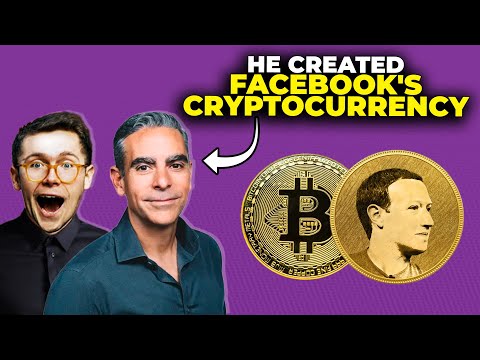
David Marcus: How I Came to Lead PayPal; Why FB's Crypto Failed; How AI Fixes Inequality | E1001
David Marcus (guest), Harry Stebbings (host)
In this episode of The Twenty Minute VC, featuring David Marcus and Harry Stebbings, David Marcus: How I Came to Lead PayPal; Why FB's Crypto Failed; How AI Fixes Inequality | E1001 explores david Marcus on PayPal, Libra’s Demise, Crypto’s Future, and AI David Marcus traces his journey from dropping out of college in Switzerland, disrupting telecoms, and founding Zong, to leading PayPal and spearheading Facebook’s ill‑fated Libra project.
David Marcus on PayPal, Libra’s Demise, Crypto’s Future, and AI
David Marcus traces his journey from dropping out of college in Switzerland, disrupting telecoms, and founding Zong, to leading PayPal and spearheading Facebook’s ill‑fated Libra project.
He explains why Libra failed politically, the structural challenges facing crypto today—especially regulation and banking access—and why the U.S. risks losing fintech leadership through regulatory ambiguity and overuse of sanctions.
Marcus outlines his new company Lightspark’s vision: a low-cost, real-time, open protocol for money on the internet built on Bitcoin’s Lightning Network.
He is optimistic about AI as a new computing platform that can democratize opportunity, narrow inequality, and let very small teams build massive companies, while also reshaping how individuals access power and services.
Key Takeaways
Naivete can be a powerful asset for founders.
Marcus argues that not knowing all the reasons something ‘can’t be done’ lets entrepreneurs attempt what incumbents consider impossible, which is often where true disruption happens.
Get the full analysis with uListen AI
Timing and exits matter as much as execution.
His first company’s sale in stock right before the acquirer collapsed taught him to respect market cycles, avoid missing ‘the turn,’ and favor cash over stock in certain exits.
Get the full analysis with uListen AI
Culture at scale can be changed—but usually only with shock therapy.
At PayPal he intentionally made abrupt, ‘brutal’ changes—new products, acquisitions like Braintree/Venmo—to jolt the organization, drive out cultural misfits, and restore an innovation mindset.
Get the full analysis with uListen AI
Regulatory clarity is the single biggest lever for healthy crypto growth.
He criticizes ‘regulation by enforcement’ in the U. ...
Get the full analysis with uListen AI
A neutral, open protocol for money on the internet is still missing.
Lightspark is built on the belief that value should move online like email—cheap, instant, and interoperable—and that Bitcoin’s Lightning Network can underlie that global payment fabric.
Get the full analysis with uListen AI
AI could reduce inequality by giving individuals ‘super powers’.
Marcus sees AI as a mass-market tool that lets ordinary people draft legal letters, build products, and start companies previously out of reach, potentially offsetting some of its job-displacement risks.
Get the full analysis with uListen AI
Never compromise on early hires; lowering the bar compounds mediocrity.
He warns founders against filling key roles with ‘good enough’ candidates just to move faster, emphasizing that patience and maintaining a high bar for talent is critical to long-term company quality.
Get the full analysis with uListen AI
Notable Quotes
“If you know too much for your own good, then you know all the things that are not possible.”
— David Marcus
“When I decided it was not worth fighting for [Libra] anymore, I felt really good that we had tried everything in our power, and then some.”
— David Marcus
“You need an open, interoperable, dirt cheap protocol for payments on the internet that settles in real time.”
— David Marcus
“It feels a little bit like we’re on the path of an end of an empire of sorts.”
— David Marcus
“I think this is the beginning of a new computing platform… a nonlinear step change.”
— David Marcus on AI
Questions Answered in This Episode
What specific governance model or structure could have made Libra more acceptable to regulators without Facebook at the perceived center?
David Marcus traces his journey from dropping out of college in Switzerland, disrupting telecoms, and founding Zong, to leading PayPal and spearheading Facebook’s ill‑fated Libra project.
Get the full analysis with uListen AI
How should entrepreneurs practically ‘read the room’ to know whether to persist with a vision or pivot/stop, beyond just watching revenue metrics?
He explains why Libra failed politically, the structural challenges facing crypto today—especially regulation and banking access—and why the U. ...
Get the full analysis with uListen AI
If the U.S. continues with regulatory ambiguity, which regions or jurisdictions are best positioned to become the new hubs for crypto and payment innovation?
Marcus outlines his new company Lightspark’s vision: a low-cost, real-time, open protocol for money on the internet built on Bitcoin’s Lightning Network.
Get the full analysis with uListen AI
What are the biggest technical and adoption challenges Lightspark faces in turning the Lightning Network into a mainstream global payment protocol?
He is optimistic about AI as a new computing platform that can democratize opportunity, narrow inequality, and let very small teams build massive companies, while also reshaping how individuals access power and services.
Get the full analysis with uListen AI
In what concrete ways might AI destabilize traditional white-collar professions while simultaneously broadening access to entrepreneurship and legal/financial tools?
Get the full analysis with uListen AI
Transcript Preview
When I think about the Facebook adventure with Libra, I still call it Libra because it's a better name than DM, when I, I basically decided it, it was not worth fighting for it anymore, I felt really good, like, really, really good that we had tried everything in our power, and then some, to convince regulators and, and, you know, world powers basically, that this was something of merit and that the world needed. But, uh, it just wasn't going to happen.
What was the core reason it wasn't gonna happen?
It, it was just really hard for regulators and others to accept that Facebook would be at the center of, uh, a protocol for money for the internet. And that's why we devolved so much power into this consortium that we didn't control, that we were just a member of. But that wasn't enough.
David, I am so excited for this. I heard so many great things from Dana at Matrix, from Shaq, of course, Frederic at Felix. But thank you so much for joining me today.
Thank you for having me. It's great to finally connect.
Now, I'd love to go back to the very beginning. Um, you founded your first company, (laughs) I didn't know whether to say this, in the year I was born, in 1996.
(laughs)
Um, how did you come to found your first company, David?
Well, I think it was a series of events, uh, on, in my personal life, uh, as well as, uh, a deeply rooted, uh, frustration about, uh, a monopoly, um, you know, one of telecom and internet service providers in Switzerland, where I was at the time. Uh, but basically, uh, I was forced to drop out of college because of a family situation where, you know, the family lost everything, and then I had to go, uh, try to figure out, um, how to make money, which, uh, took me to working in a bank, which I really didn't like. Uh, but that's what you do with... when you're in Switzerland. Uh, and, um, and then after a year at that bank, uh, I decided I was frustrated enough with, uh, the state of the, the telecoms industry in Switzerland that was, uh, a monopoly basically at the time, and decided that, uh, knowing almost nothing, or actually nothing about, uh, the telecoms business, I was going to try to go and build a company to compete with, uh, the incumbent at the time. And, uh, and that's how I started.
David, there are so many things for me to unpack there. You said about losing everything. I hope it's okay for me to ask. My, my family did too, and it, it really, it gave me a ferociousness that I would never, ever let that happen again. Um, wha- w- how did it impact you seeing your family lose everything?
Yeah, I think, you know, the s- same deal here. I think that, you know, I'm, uh, I'm actually thankful that this happened in my life, because I think it, uh, it, you know, put me on a very different trajectory that I would've been otherwise. So, uh, you know, it definitely, it definitely, uh, pushed me to rebuild from scratch at a, at, at a perfect age actually. So, you know, I'm actually thankful that, that this happened to me.
Install uListen to search the full transcript and get AI-powered insights
Get Full TranscriptGet more from every podcast
AI summaries, searchable transcripts, and fact-checking. Free forever.
Add to Chrome