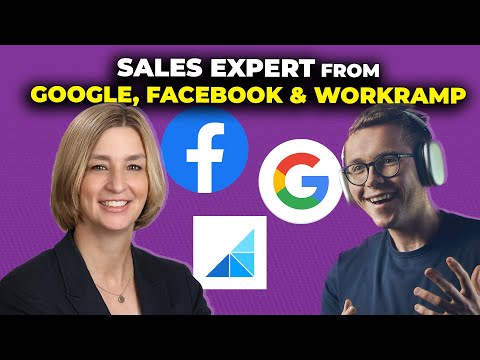
Lori Jiménez: How to Increase Sales; Hiring Tips from Google; Best Way to Grow Sales Teams | E1043
Lori Jiménez (guest), Harry Stebbings (host)
In this episode of The Twenty Minute VC, featuring Lori Jiménez and Harry Stebbings, Lori Jiménez: How to Increase Sales; Hiring Tips from Google; Best Way to Grow Sales Teams | E1043 explores lori Jiménez Reveals How To Build, Hire, And Scale Sales Teams Lori Jiménez, veteran sales leader (Google, Facebook, Box, Navan, WorkRamp), shares how to design sales playbooks, hire early sales talent, and build predictable revenue organizations.
Lori Jiménez Reveals How To Build, Hire, And Scale Sales Teams
Lori Jiménez, veteran sales leader (Google, Facebook, Box, Navan, WorkRamp), shares how to design sales playbooks, hire early sales talent, and build predictable revenue organizations.
She argues founders must own the first sales playbook, avoid over-indexing on ‘logo hires,’ and instead prioritize curiosity, grit, and coachability in early reps.
The conversation goes deep on interviewing and compensation for sales roles, onboarding, discovery and active listening, deal reviews, discounting, and forecasting in volatile markets.
Throughout, she stresses genuine human connection, cross-functional collaboration, and a revenue-team mindset that tightly links sales, implementation, and customer success.
Key Takeaways
Founders should own the first sales playbook before hiring sales leaders.
Because they know the product, customer problem, and ‘why’ more deeply than anyone else, founders are best placed to craft the initial narrative, iterate based on feedback, and then hand a proven motion to a head of sales.
Get the full analysis with uListen
Don’t overvalue ‘logo hires’; prioritize scrappy, curious, and adaptable talent.
Big-brand résumés can mask rigidity and misfit; early-stage companies need people energized by ambiguity, willing to build from scratch, and open to new ways of selling rather than importing a single ‘right way’ from a prior employer.
Get the full analysis with uListen
Interview for ‘how’ they win and lose, not just that they win.
Dig into losses, team collaboration, and specific metrics; shallow, scripted answers and excessive ‘I, I, I’ are red flags, while detailed stories with data and cross-functional teamwork indicate mature, repeatable performance.
Get the full analysis with uListen
Active listening and structured discovery are core sales superpowers.
Great reps ask layered questions, listen for both desired and undesired answers, and adjust in real time; managers should coach this by reviewing calls, highlighting ‘perfect’ discovery examples, and discouraging robotic scripts.
Get the full analysis with uListen
Align SDR incentives with quality, not just volume.
Using clear qualification frameworks (e. ...
Get the full analysis with uListen
Treat sales, implementation, and CS as one revenue team to avoid dehumanized handoffs.
Involving implementation managers on late-stage calls, having AEs attend QBRs, and keeping shared incentives around upsell/retention preserves the relationship and shows customers they’re supported beyond the close.
Get the full analysis with uListen
Forecasting accuracy comes from consistent rigor, not crisis-driven inspection.
Use a common qualification framework, maintain the same level of deal scrutiny in good and bad quarters, and approach every deal with healthy skepticism to avoid surprises—especially in turbulent macro environments.
Get the full analysis with uListen
Notable Quotes
“One of the most important characteristics of a great salesperson is being curious.”
— Lori Jiménez
“Think of a sales playbook as a GPS, not a script.”
— Lori Jiménez
“You can’t do anything on your own at Google… the stakeholder partnerships you make are critical to how you get work done.”
— Lori Jiménez
“We don’t operate as a sales organization, an implementation organization, and a success organization—it’s one revenue organization.”
— Lori Jiménez
“Forecast inspection needs to happen in the best of quarters and in the worst quarters; if you only do it when you’re down, it’s fear-based.”
— Lori Jiménez
Questions Answered in This Episode
If you’re a first-time founder who dislikes selling, how long should you personally own sales before hiring your first reps or head of sales?
Lori Jiménez, veteran sales leader (Google, Facebook, Box, Navan, WorkRamp), shares how to design sales playbooks, hire early sales talent, and build predictable revenue organizations.
Get the full analysis with uListen AI
How do you balance the desire for ‘up-and-coming’ talent with the need for credibility and domain expertise in complex enterprise sales?
She argues founders must own the first sales playbook, avoid over-indexing on ‘logo hires,’ and instead prioritize curiosity, grit, and coachability in early reps.
Get the full analysis with uListen AI
What concrete steps can a small startup take to build a unified revenue organization when sales, CS, and support are still just a few people?
The conversation goes deep on interviewing and compensation for sales roles, onboarding, discovery and active listening, deal reviews, discounting, and forecasting in volatile markets.
Get the full analysis with uListen AI
Where is the line between healthy discounting for land-and-expand versus damaging your long-term pricing power and perceived value?
Throughout, she stresses genuine human connection, cross-functional collaboration, and a revenue-team mindset that tightly links sales, implementation, and customer success.
Get the full analysis with uListen AI
How should sales leaders adapt qualification and forecasting frameworks like MEDDIC in an era of tighter budgets, more stakeholders, and slower approvals?
Get the full analysis with uListen AI
Transcript Preview
One of the most important characteristics, in my opinion, with a great salesperson is being curious. It's someone who can ask a question, who can ask the next question that's connected to that first question, really listen to the first answer, not just for the answer you want to hear, (laughs) but the answer you maybe don't want to hear.
(music) Laurie, I am so excited for this. I- I heard so many great things from many past guests, especially the wonderful Rich. So thank you so much for joining me today.
Oh, thanks for having me. Appreciate it.
Now, I always love to start with some context. So tell me, how did you make your way into the world of sales and come to lead some of the most incredible sales orgs as you have done?
Oh, thank you. Um, great questions. I discovered sales at the ripe age of 15 and a half, um, which was the day I got a worker's permit and could get a job. So I was fired up to get a job and make some money. I, uh, applied for a few retail jobs in my hometown, and the owner of two kind of neighboring boutiques met me and said, "You're hired. Start tomorrow." So, so excited. So I march in on my first day, ready to get working, and he said, "Here are the keys to the other store. Uh, go open it up. Um, there's a shoebox of cash in the back. Use that for the cash register. I'll show up in a few hours and teach you what to do." And I was terrified (laughs) . So he's like, "Open the store and get going." So I'm like, "All right, I'm gonna do this." I go and open the store, and soon after opening the door, customers started coming in. So I had to start selling. (laughs) I did a terrible job. Um, I don't think I charged sales tax to anyone that day. I'm sure there were some very (laughs) good deals made. But what I got from it was the energy of working with customers, like how fun that is, how energizing that is. Um, it's a thrill of partnering with someone, even in- even in the retail capacity in a small boutique. So I got energized by it, and I stayed in retail throughout high school and college. Um, and then fast-forward, I graduated from college during, um, the s- recession in the early '90s. So not a lot of jobs. I was still working in retail, and I was at a barbecue and talking to my oldest sister's friend who had been in the workforce for a number of years ahead of me, and she said, "Hey, Laurie, I work at a software company. Um, we're doing kind of this group call interview for salespeople. Are you interested?" And I was like, "Both hands up." (laughs) "I will... Let me get a, like, a job with a career path sounds good." I knew nothing about the company. I didn't know what they sold. I didn't know how they did it. I didn't know anything about the market. I just really wanted to just get in and get a- get a, you know, kind of a firm job. So I went to the interview, I got the job, and that company was Remedy Corporation, which was later, you know, became part of BMC. I think their software's still on the (laughs) still askew at BMC, which is amazing. And, um, was really, like Harry, so fortunate. It was a formative part of my career, not just 'cause it was my first, but I met mentors and friends that I still talk to just a- as recently as this week from that company and was super fortunate to experience an IPO with them. So just saw, like, what high growth was all about from the start. So that- that was my story. That's how I got here.
Install uListen to search the full transcript and get AI-powered insights
Get Full TranscriptGet more from every podcast
AI summaries, searchable transcripts, and fact-checking. Free forever.
Add to Chrome