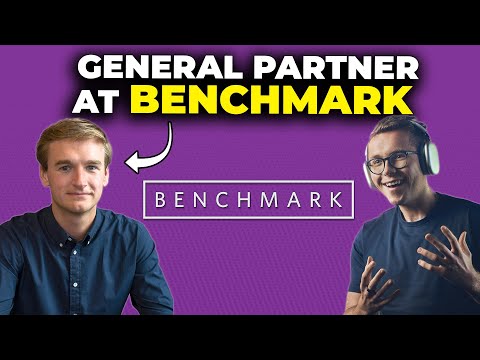
Miles Grimshaw: The 5 Pillars of Venture Capital & Why Co-Pilot is an Incumbent Strategy | E1061
Miles Grimshaw (guest), Harry Stebbings (host)
In this episode of The Twenty Minute VC, featuring Miles Grimshaw and Harry Stebbings, Miles Grimshaw: The 5 Pillars of Venture Capital & Why Co-Pilot is an Incumbent Strategy | E1061 explores miles Grimshaw Redefines Venture, AI Copilots, And Founder Partnership Miles Grimshaw, Benchmark partner and former Thrive investor, reflects on his path into venture, key lessons from mentors, and his philosophy on how VCs should truly partner with founders. He outlines his 'five S’s' of venture—sourcing, selecting, signing, supporting, and summiting—and emphasizes being a strategist and long-term partner rather than a deal-focused bettor. A major portion of the discussion focuses on AI, where he argues that current 'copilot' products are fundamentally an incumbent strategy, and that the real startup opportunity lies in a new architecture and business model: selling outcomes and work, not seats and uptime. Throughout, he uses case studies like Benchling, Monzo, Figma, LangChain, and Plaid to illustrate lessons on market timing, founder-market fit, and the importance of curiosity and respect in investing.
Miles Grimshaw Redefines Venture, AI Copilots, And Founder Partnership
Miles Grimshaw, Benchmark partner and former Thrive investor, reflects on his path into venture, key lessons from mentors, and his philosophy on how VCs should truly partner with founders. He outlines his 'five S’s' of venture—sourcing, selecting, signing, supporting, and summiting—and emphasizes being a strategist and long-term partner rather than a deal-focused bettor. A major portion of the discussion focuses on AI, where he argues that current 'copilot' products are fundamentally an incumbent strategy, and that the real startup opportunity lies in a new architecture and business model: selling outcomes and work, not seats and uptime. Throughout, he uses case studies like Benchling, Monzo, Figma, LangChain, and Plaid to illustrate lessons on market timing, founder-market fit, and the importance of curiosity and respect in investing.
Key Takeaways
Anchor investing in the user, not in metrics or jargon.
Despite the abundance of SaaS metrics and frameworks, Grimshaw insists the core question is always, 'Who is the user and why do they care? ...
Get the full analysis with uListen AI
Think of venture as a long-term commitment, not a series of bets.
His 'five S’s'—sourcing, selecting, signing, supporting, summiting—center on deeply partnering with a founder through strategic planning and company-building, rather than optimizing a funnel of 'deals' and reserving for re-buys.
Get the full analysis with uListen AI
Will, passion, and rate of learning often trump current skill.
Drawing from Josh Kushner’s approach, he prioritizes 'will over skill' and passion because people who love the work will put in more hours, compound faster, and learn quickly—even if they lack certain concepts (like LTV) at the start.
Get the full analysis with uListen AI
Best founders don’t “need” VCs, but benefit from trusted, proactive partners.
He rejects the idea that great founders are better off alone; instead, he sees the VC’s job as helping them make a few high‑impact decisions better each year, grounded in trust, context, and proactive engagement (being 'first-to-call,' not just 'first call').
Get the full analysis with uListen AI
Regret often comes from underweighting markets or misreading how value scales.
His biggest misses (Figma, Plaid, Scale) came from either dismissing a market as too small (design seats) or over-intellectualizing how an ecosystem “should” work, rather than how incentives and real usage actually evolve.
Get the full analysis with uListen AI
Current AI copilots are an incumbent strategy; startups must be orthogonal.
Copilot features fit existing UX, distribution, and seat-based business models of giants like Microsoft; Grimshaw believes startups must instead build 'control centers' that sell SLAs on outcomes and work delivered, not seats and uptime.
Get the full analysis with uListen AI
A new AI business model: sell the work, not the software.
He foresees AI-native products that function more like BPOs or outcome engines—e. ...
Get the full analysis with uListen AI
Notable Quotes
“Kindness and competitiveness don't have to be oil and water in business.”
— Miles Grimshaw
“It should feel like planning an adventure, not a colonoscopy.”
— Miles Grimshaw
“I really think of it as making a commitment, not a bet.”
— Miles Grimshaw
“Copilot is an incumbent’s strategy. The opportunity for startups is to be orthogonal.”
— Miles Grimshaw
“We’ll move from selling software with an SLA on uptime to selling work with an SLA on outcomes.”
— Miles Grimshaw
Questions Answered in This Episode
If copilots are fundamentally an incumbent strategy, what concrete examples of 'control center' or 'sell-the-work' startups would you expect to see first in the wild?
Miles Grimshaw, Benchmark partner and former Thrive investor, reflects on his path into venture, key lessons from mentors, and his philosophy on how VCs should truly partner with founders. ...
Get the full analysis with uListen AI
How can early-stage founders practically apply the 'who is the user and why do they care?' lens when their product is still evolving and metrics are sparse?
Get the full analysis with uListen AI
What signals or patterns would help an investor avoid the kind of misread you had on Figma’s true user base and value capture?
Get the full analysis with uListen AI
In a world where AI displaces certain types of work, how should founders think about pricing and ethics when they start 'selling the work' instead of the seats?
Get the full analysis with uListen AI
For generalist investors who feel overshadowed by deep specialists, what specific habits or practices can help build the kind of 'biologist' curiosity Grimshaw advocates?
Get the full analysis with uListen AI
Transcript Preview
Tens of millions of engineers would become AI engineers versus, like, hundreds of thousands of ML scientists. That would beget the need for an application sort of framework for AI, um, and tooling for that computing environment. There's randomness to it. How do you measure excellence of it? And there was an opportunity for Build to empower every engineer becoming that.
(techno music) Miles, we first met in, I think it was 2016, and then we met in person in 2017. I've wanted to make it happen since then. Respectfully, you made me wait six years-
(laughs)
... but I'm so glad that we managed it. So, thank you so much for joining me.
A, a pleasure to finally do it. A long time coming.
Now, man, I would love to start with your entry into venture. First off, how did you make the first move into venture from college or university?
Yeah, yeah. I would say, um, worth winding the clock back a little further than just there, sort of where the motivation, the inspiration kind of in- in- incepted in many ways. I actually grew up in the UK. We're here recording in the UK. And, um, I went to the US because my parents re- remarried and my stepfather, who was very much a father to me, was an entrepreneur. He founded one of the very first e-commerce software companies. Powered a bunch of the big, big sites at the time. And, uh, when I moved, he'd, he'd sort of taken that public in the dot-com. And when we moved over to the US, he was starting another company out of our, our living room, uh, our kitchen table actually. Um, it wasn't a garage. Um, that was probably actually the East Coast, a little too cold in the winter. It was the kitchen table. And it was, like, two people, him and a friend, and then three people, and then four people, and then five people. I sort of didn't really know what it was in many ways, but it was, like, really inspiring to come home from school and see him working, um, you know, with, with, with friends and working hard and talking about new ideas. It was e-commerce software again. And so I kind of, at that point, in many ways, the American dream was, was his lived experience. He's a Korean immigrant. The American dream was sort of mine in some sense, coming to, to, to the US from the UK. And that, that love of being around people like him and his friends who were creating, um, it kind of just got into the blood in many ways. And then fast-forward, you know, I didn't know what the job was to, to do things with those sorts of people per se, but I knew that was really intoxicating. And fast-forward to, to sort of around the tail end of college, um, New York City and, and sort of app development, you know, was having a really vibrant moment. In some sense it was sort of really early in cloud obviously. This is like 2010, 2011, 2012. Rails-
Install uListen to search the full transcript and get AI-powered insights
Get Full TranscriptGet more from every podcast
AI summaries, searchable transcripts, and fact-checking. Free forever.
Add to Chrome