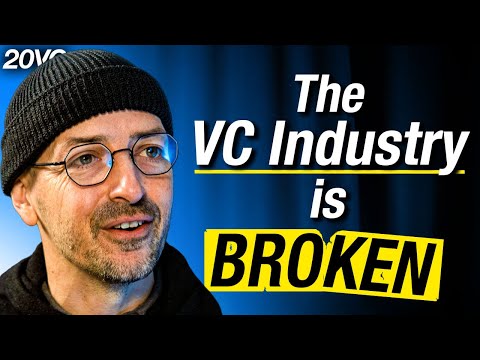
Nabeel Hyatt, GP @ Spark Capital: To Win in AI, Investors Need to Change Their Approach | E1255
Nabeel Hyatt (guest), Harry Stebbings (host)
In this episode of The Twenty Minute VC, featuring Nabeel Hyatt and Harry Stebbings, Nabeel Hyatt, GP @ Spark Capital: To Win in AI, Investors Need to Change Their Approach | E1255 explores nabeel Hyatt: Why Venture Must Abandon Playbooks To Win In AI Nabeel Hyatt argues that the venture playbook honed in the B2B SaaS boom—heavy on spreadsheets, pattern‑matching, and industrialized processes—is misaligned with today’s AI-driven, highly uncertain environment.
Nabeel Hyatt: Why Venture Must Abandon Playbooks To Win In AI
Nabeel Hyatt argues that the venture playbook honed in the B2B SaaS boom—heavy on spreadsheets, pattern‑matching, and industrialized processes—is misaligned with today’s AI-driven, highly uncertain environment.
He believes early-stage venture must return to being an artisanal, founder-centric craft that embraces “mysteries” rather than “puzzles,” with small, deeply product-native teams making subjective, long-term bets.
Hyatt critiques current VC incentive structures (principals chasing markups, packaging companies for the next round) and emphasizes genuine service to founders, taste, and curiosity over coverage, branding, and heuristics like ARR thresholds.
In AI specifically, he outlines a framework of adaptation, evolution, and revolution, backs both foundational models (e.g., Anthropic) and applications, and stresses that enduring value will come from continuous reinvention, data exhaust, and expert workflows, not thin GPT wrappers.
Key Takeaways
AI demands a shift from metrics-driven ‘puzzles’ to embracing ‘mysteries.’
The B2B SaaS era rewarded industrialized venture—checklists, ARR milestones, and pattern-matching. ...
Get the full analysis with uListen AI
Firm structure and incentives now matter more than playbooks.
Hyatt argues that when partnerships balloon and firms become associate/principal-led, incentives tilt to markups and promotions instead of long-term outcomes. ...
Get the full analysis with uListen AI
Stop over-relying on revenue and growth heuristics as quality signals.
In AI, products can hit $10M ARR in months yet be dead two years later. ...
Get the full analysis with uListen AI
Use product analysis to understand founders, not to rate features.
Hyatt doesn’t back companies solely because the product looks good; he uses the product to ask how and why it was built. ...
Get the full analysis with uListen AI
Avoid over-capitalizing companies, even when money is cheap and plentiful.
He believes too much capital can structurally damage a startup—distorting hiring, slowing learning, and raising expectations to impossible levels. ...
Get the full analysis with uListen AI
Focus on evolution and revolution in AI, not simple adaptations.
Hyatt’s AI lens—adaptation (AI bolt-ons), evolution (new workflows), revolution (new categories like Uber)—leads Spark to avoid generic ‘AI coats of paint’ and prioritize products that either rewire behavior (e. ...
Get the full analysis with uListen AI
True founder ‘service’ is deep engagement and tough love, not benign neglect.
He rejects the idea that “the best founders don’t need help” as setting the bar too low. ...
Get the full analysis with uListen AI
Notable Quotes
“We are in the industrialization of startups playbook land where everybody's trying to churn out some piece of ridiculous arbitrage every week in order to get through the end of their incubator and raise their seed round.”
— Nabeel Hyatt
“The industry today is run basically by principals, associates, and junior GPs… A principal is not actually waiting for an exit, they just want a promotion, man.”
— Nabeel Hyatt
“Why are we building a bunch of playbooks if the whole thing is about exceptions?”
— Nabeel Hyatt
“There is absolutely a belief, for me at least, that too much capital can mess up a company.”
— Nabeel Hyatt
“Venture is an incredibly simple business. Very hard, but very simple.”
— Bruce Dunlevie, as quoted by Nabeel Hyatt
Questions Answered in This Episode
If traditional heuristics like ARR and growth rates are unreliable in AI, what concrete alternative signals should early-stage investors prioritize when underwriting durability?
Nabeel Hyatt argues that the venture playbook honed in the B2B SaaS boom—heavy on spreadsheets, pattern‑matching, and industrialized processes—is misaligned with today’s AI-driven, highly uncertain environment.
Get the full analysis with uListen AI
How can a large, brand-name venture firm realistically rewire its incentives and org structure to behave like the small, artisanal partnerships Hyatt advocates?
He believes early-stage venture must return to being an artisanal, founder-centric craft that embraces “mysteries” rather than “puzzles,” with small, deeply product-native teams making subjective, long-term bets.
Get the full analysis with uListen AI
For founders, how do you practically decide whether your AI startup is an adaptation, evolution, or revolution—and does that change how you should raise and spend capital?
Hyatt critiques current VC incentive structures (principals chasing markups, packaging companies for the next round) and emphasizes genuine service to founders, taste, and curiosity over coverage, branding, and heuristics like ARR thresholds.
Get the full analysis with uListen AI
Given Hyatt’s emphasis on ‘data exhaust’ and expert workflows, what ethical and competitive issues arise from concentrating so much power in the hands of a few product-centric AI platforms?
In AI specifically, he outlines a framework of adaptation, evolution, and revolution, backs both foundational models (e. ...
Get the full analysis with uListen AI
In a world where models and markets can be reshaped in months, how should founders and investors think about defensibility without fooling themselves with fragile ‘moats’?
Get the full analysis with uListen AI
Transcript Preview
The industry today is run basically by principals, associates, and junior GPs. A principal is not actually waiting for an exit, they just want a promotion, man. We are in the industrialization of startups playbook land where everybody's trying to churn out some piece of ridiculous arbitrage every week in order to get through the end of their incubator and raise their seed round. There is absolutely a belief that too much capital can mess up a company.
Ready to go? (upbeat music) Nabil, it is so-
(laughs)
... good to have you here, dude. I'm also excited because you said before we have quite different views, and that always makes for a great show. So thank you for letting me turn a coffee meeting into an interview.
It's showbiz, man. Th- they- you're doing your job. I get it. (laughs)
Dude, it is great to have you here. Now, I want to just dive right in. You said to me your single biggest concern right now, or sorry, something that you're thinking about is how we need to change our investing mindset in the new world of AI. I'm really concerned that actually the way that we've always invested, maybe more spreadsheet SaaS investing-
Yeah.
... is gonna make us dinosaurs if we don't move with the times. How do you think about this and the mindset shift that needs to happen in investing?
Well, I think it's happening already, whether we like it or not, right? I, I, I think we can't really preach that a founder is supposed to adapt to a market and understand that the market is there. There's a thing called founder market fit, and there's also frankly a thing called VC market fit. And this market for AI is, is wildly different. I don't think anyone would argue it's not wildly different. And then the question is, in what way is it different? And, uh, we had a B2B SaaS, you know, amazing, wonderful bull run in 2000 and, uh, 21, and, and a little bit afterwards. And I think we got really good at like, um, uh, oh, uh, Gregg Trevorton uses this phrase that puzzles versus mysteries, which is just like, puzzles are this thing that you can like, you know, use that raw horsepower to solve. And mysteries are, you know, they're, you have to go on the journey. There's like fog of war and you cannot work it out ahead of time. And many, in many ways, like the B2B SaaS blow up of that era was all about like the industrialization of venture capital. It was all about figuring out all the puzzles needed to hire a hundred associates to do all of the work, to figure out exactly the right SaaS metrics, and then grind it all out. And no one has any idea what a model is even gonna do in a week. (laughs) So I don't know how that isn't a mystery. And so I think you have to build a firm with that set of talent.
Install uListen to search the full transcript and get AI-powered insights
Get Full TranscriptGet more from every podcast
AI summaries, searchable transcripts, and fact-checking. Free forever.
Add to Chrome