Alain De Botton: Why Status is Making You Miserable & Why Parents Want Their Kids to Fail | E1227
Alain de Botton (guest), Harry Stebbings (host)
In this episode of The Twenty Minute VC, featuring Alain de Botton and Harry Stebbings, Alain De Botton: Why Status is Making You Miserable & Why Parents Want Their Kids to Fail | E1227 explores alain de Botton Dissects Status, Meaningful Work, Meritocracy, and Modern Angst Alain de Botton explores why modern life is saturated with anxiety, driven largely by status-seeking and fragile self-worth amplified by social media and meritocratic narratives. He argues that most people chase money and fame not for materialism itself, but for love, dignity, and recognition, and explains how childhood validation shapes adult robustness to status. De Botton critiques meritocracy, capitalism, and corporate culture, highlighting how we mislabel ‘losers,’ strip work of meaning through scale and abstraction, and confuse companies with families. He offers alternative lenses from philosophy and religion, and practical ideas for parenting, careers, leadership, and entrepreneurship that center on genuine flourishing (eudaimonia) rather than empty status or profit alone.
Alain de Botton Dissects Status, Meaningful Work, Meritocracy, and Modern Angst
Alain de Botton explores why modern life is saturated with anxiety, driven largely by status-seeking and fragile self-worth amplified by social media and meritocratic narratives. He argues that most people chase money and fame not for materialism itself, but for love, dignity, and recognition, and explains how childhood validation shapes adult robustness to status. De Botton critiques meritocracy, capitalism, and corporate culture, highlighting how we mislabel ‘losers,’ strip work of meaning through scale and abstraction, and confuse companies with families. He offers alternative lenses from philosophy and religion, and practical ideas for parenting, careers, leadership, and entrepreneurship that center on genuine flourishing (eudaimonia) rather than empty status or profit alone.
Key Takeaways
Status is a proxy for love and recognition, not materialism.
People rarely pursue money or fame for their own sake; they want the esteem, warmth, and visibility attached to them. ...
Get the full analysis with uListen AI
Robust self-worth comes from early unconditional love, not public acclaim.
Adults who can withstand disapproval or anonymity usually had caregivers who valued them for who they were, not what they achieved. ...
Get the full analysis with uListen AI
Modern meritocracy intensifies shame by turning misfortune into ‘personal failure.’
Older cultures attributed outcomes partly to fortune or the gods, softening blame for failure. ...
Get the full analysis with uListen AI
Work feels meaningful when you clearly see how it reduces suffering or increases joy for others.
Large organizations and long feedback loops obscure that connection, making work feel empty. ...
Get the full analysis with uListen AI
If you don’t have a deliberate life plan, you live inside others’ plans.
Most people know what they dislike in their jobs but are vague about what they want. ...
Get the full analysis with uListen AI
Religion’s greatest secular gift is making it ‘pleasurable to be small.’
Even if its supernatural claims are false, religion once placed human egos within something larger, easing status anxiety. ...
Get the full analysis with uListen AI
Capitalism is neutral about the quality of demand, so responsibility shifts to entrepreneurs and investors.
The market rewards any strong demand, whether for therapy or gambling. ...
Get the full analysis with uListen AI
Notable Quotes
“We’re not particularly materialistic. What we are is hungry for status, for love, respect, dignity.”
— Alain de Botton
“A marker of good parenting is that your child doesn’t have any wish to be famous.”
— Alain de Botton
“If you don’t have a plan, you’ll fall prey to the plans of others.”
— Alain de Botton
“The problem with modern society is that everybody wants to be big. Everybody wants to matter.”
— Alain de Botton
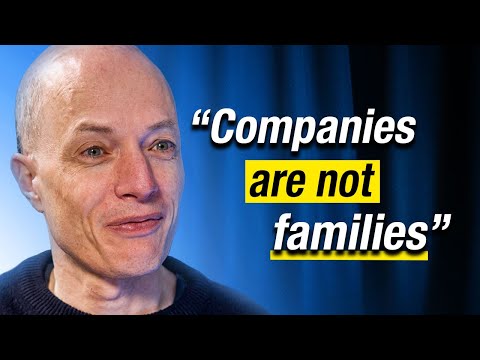
“When companies start talking about loving their employees and being a family, they’ve borrowed the language of private life to foster a short-term sense of togetherness.”
— Alain de Botton
Questions Answered in This Episode
How can an individual practically distinguish between healthy, eudaimonic ambition and status-driven ambition in their own life?
Alain de Botton explores why modern life is saturated with anxiety, driven largely by status-seeking and fragile self-worth amplified by social media and meritocratic narratives. ...
Get the full analysis with uListen AI
What specific practices can parents adopt to cultivate an ‘internal validation system’ in their children?
Get the full analysis with uListen AI
How should meritocratic societies soften the psychological blow of failure without undermining personal responsibility and effort?
Get the full analysis with uListen AI
In a large, abstract organization, what concrete rituals or processes most effectively reconnect employees with the real human impact of their work?
Get the full analysis with uListen AI
What would a truly ‘ethical capitalism’ look like in practice for founders and VCs, and how would it change which products and companies get funded?
Get the full analysis with uListen AI
Transcript Preview
(instrumental music plays) A marker of good parenting is that your child doesn't have any wish to be famous. There's tremendous envy in- within families and within people. Envy is one of the key motivators, and people are envious of their children. The problem with modern society is that everybody wants to be big. Everybody wants to matter. If you don't have a plan, you'll fall prey to the plans of others. And what goes wrong often in people's lives is they don't really have a plan. When companies start talking about loving their employees and being a family, et cetera, they've tied themselves in a knot. They've borrowed the language of private life in order to foster a short-term sense of togetherness.
Ready to go? (instrumental music plays) Alain, I'm so excited to make this happen. I am probably one of the biggest fans of your work. So thank you so much for joining me today.
Thank you so much. Thank you for having me.
Now, I would love to start, we live in this kind of social media-driven world.
Mm-hmm.
And I also live in this financial-driven world.
Mm-hmm.
And at the core of both is status.
Mm-hmm.
And so I wanna start with, how do you define status?
Mm-hmm.
And why do we want it so much?
Mm-hmm. Well, let's start with the second bit. I think we want status, um, if this isn't, doesn't sound too weird, for love. Uh, I don't mean sexual love or romantic love. I mean love in the broad sense: esteem, um, friendship recognition. Um, you know, we live in a world where what you do defines who you are. Um, that's a relatively modern way of doing things. It wasn't always the case. But, you know, nowadays, first time you meet somebody, they will immediately ask you, "What do you do?" According to how you answer that, you'll either be acclaimed and, you know, "Oh, that's very interesting," or you'll be left behind by the peanuts and you'll be made to feel that you don't really exist. You will become an invisible, uh, person. So we want status for, you know, I mean, very often material ends. But it's not really the material ends that we want. It's the, it's the, it's the love and respect and esteem that comes with those ends. I mean, if you said to somebody, "Right, you got a choice. Either we give you, you know, £400 million a year, but everyone who looks at you will treat you like a pariah, will treat you with, you know, ignominy, you'll, you'll, you'll feel, you'll feel shame, et cetera, but £400 million a year, or you can live on £15,000 a year and whenever, wherever you go, people will greet you with warmth, with adulation, with love, with respect, ta-da. Which one do you want?" I think the, uh, vast majority were gonna want the second option. So we, you know, people often say, "We're very materialistic nowadays." We're not particularly materialistic. What we are is we're hungry for status, for love, respect, dignity. And we live in a world in which, um, that status is available via the acquisition of material goods. It's not really the material goods. I mean, y- you know, I'm sure you've had people sitting in this chair who will tell you again and again, "I'm not doing it for the money." And of course they're not. They're not. They're not doing it for the money. They're doing it for the love.
Install uListen to search the full transcript and get AI-powered insights
Get Full TranscriptGet more from every podcast
AI summaries, searchable transcripts, and fact-checking. Free forever.
Add to Chrome