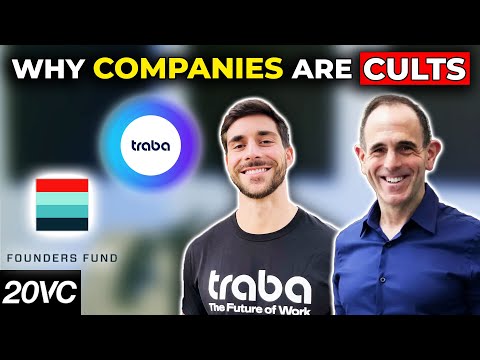
Keith Rabois & Mike Shebat: Creating an Olympian Mindset to Work Ethic| E1087
Harry Stebbings (host), Keith Rabois (guest), Mike Shebat (guest)
In this episode of The Twenty Minute VC, featuring Harry Stebbings and Keith Rabois, Keith Rabois & Mike Shebat: Creating an Olympian Mindset to Work Ethic| E1087 explores olympian Work Ethic: Building Trillion-Dollar Startups Through Extreme Commitment Keith Rabois and Traba CEO Mike Shebat discuss building a "once-in-a-generation" company by treating startups like Olympic teams, demanding extreme in-person commitment and long hours as a non-negotiable cultural foundation.
Olympian Work Ethic: Building Trillion-Dollar Startups Through Extreme Commitment
Keith Rabois and Traba CEO Mike Shebat discuss building a "once-in-a-generation" company by treating startups like Olympic teams, demanding extreme in-person commitment and long hours as a non-negotiable cultural foundation.
They argue that sustained, intense effort in your 20s, deep focus on a single craft, and an unapologetically high bar for talent are prerequisites for top 1% outcomes, both for individuals and companies.
The conversation explores how to design, scale, and defend such a culture, how equity and mission outweigh cash and titles, and why most conventional advice on work-life balance, side projects, and remote work is misaligned with building truly great companies.
Rabois also shares meta-lessons from decades of investing, including why culture must be intentionally set early, why first-time founders are often better bets, and how truly great investors and founders think in terms of leverage and frameworks, not generic best practices.
Key Takeaways
Treat startups like Olympic teams, not families.
Traba explicitly sets expectations of 12-hour in-office days, 60+ hour weeks, and a “pull your weight or leave” mindset; this self-selects for people who genuinely want top 1% outcomes and repels those optimizing for balance.
Get the full analysis with uListen AI
Be radically upfront about culture to attract the right talent.
Shebat intentionally describes Traba’s intensity in interviews and watches candidates’ reactions; enthusiasm and relief are green flags, attempts to negotiate expectations are red flags that prevent future misalignment.
Get the full analysis with uListen AI
Input hours matter, but leverage on time matters more.
Both guests stress that the point isn’t mindless grind but using a known 60+ hour commitment to drive urgency, compound decision speed, and focus those hours on the highest-leverage activities for the business.
Get the full analysis with uListen AI
Cash and titles are strong signals of cultural fit.
Obsession with title is a hard red flag at Traba because it indicates ego over team; heavy focus on cash over equity is a yellow flag that often correlates with misalignment on long-term upside and startup risk.
Get the full analysis with uListen AI
Culture is wet concrete: shape it early or need a jackhammer later.
Rabois notes his biggest regret as a founder was not being as intentional as Traba from day one; early hires who are off-culture replicate themselves and force painful, expensive “jackhammer” corrections later.
Get the full analysis with uListen AI
Your 20s should prioritize intense learning and focus over leisure.
They argue that treating your 20s like an athlete treats their prime—sampling only to find your comparative advantage, then going all-in—creates compounding benefits that are nearly impossible to replicate later.
Get the full analysis with uListen AI
Great founders and investors think in frameworks, not fixed answers.
Rabois emphasizes that every successful company is a unique cult; good advice is passed as conceptual frameworks (e. ...
Get the full analysis with uListen AI
Notable Quotes
“Everyone should be joining a company more like an Olympic sports team. It’s not a family, it’s an Olympic sports team.”
— Mike Shebat
“Effort and input is what dictates results. There’s never been a substitute for effort and dedication to your craft if you want to be top 1% in any field.”
— Keith Rabois
“Culture is like concrete in liquid form. Once it solidifies, it takes a jackhammer to break.”
— Keith Rabois
“If you want top-of-the-bell-curve results, live a middle-of-the-bell-curve life. If you want far-right outcomes, you cannot.”
— Paraphrased from Mike Shebat’s bell curve discussion
“I do believe strongly that everyone should be joining a company more like an Olympic sports team. When you’re an athlete that’s not pulling your weight, you get pushed off the team.”
— Mike Shebat
Questions Answered in This Episode
How can a founder realistically assess whether their own work ethic and ambition are truly compatible with an “Olympic team” culture before trying to build one?
Keith Rabois and Traba CEO Mike Shebat discuss building a "once-in-a-generation" company by treating startups like Olympic teams, demanding extreme in-person commitment and long hours as a non-negotiable cultural foundation.
Get the full analysis with uListen AI
Where is the line between a high-performance culture and unsustainable burnout, and how would you detect crossing it early?
They argue that sustained, intense effort in your 20s, deep focus on a single craft, and an unapologetically high bar for talent are prerequisites for top 1% outcomes, both for individuals and companies.
Get the full analysis with uListen AI
For someone in their late 20s or 30s who feels they “wasted” earlier years, what concrete steps can they take now to narrow the gap created by lost compounding?
The conversation explores how to design, scale, and defend such a culture, how equity and mission outweigh cash and titles, and why most conventional advice on work-life balance, side projects, and remote work is misaligned with building truly great companies.
Get the full analysis with uListen AI
How should a startup adapt these principles if it operates in a culture or geography where long hours are socially stigmatized or legally constrained?
Rabois also shares meta-lessons from decades of investing, including why culture must be intentionally set early, why first-time founders are often better bets, and how truly great investors and founders think in terms of leverage and frameworks, not generic best practices.
Get the full analysis with uListen AI
What practical frameworks can founders use to identify and promote true force multipliers—and to decisively handle talented but culturally misaligned hires?
Get the full analysis with uListen AI
Transcript Preview
If you could change one thing about Founders Fund, what would it be? (electronic music)
I think we need to... I don't think you should practice your pitch with mediocre investors because really good investors are gonna ask completely different questions. There's usually two or three things that matter and when you talk to a really good investor, it's so consistent how they dial into the same two or three things.
I do believe strongly that everyone should be joining a company more like a Olympic sports team. You need that level of commitment. You need that level of being all in. When you're an athlete that's not pulling your weight, you get pushed off the team.
I am excited for this. My word. I mean, I saw this email where you outlined the culture at Traba before, and I thought this was gonna be a really special show. So first off, I wanna say thank you both for coming. Now second, I wanna start with some intros. Let's start with you, Keith. For those that don't know, which I think at this point is probably no one, who are you and what do you do?
So I'm primarily a general partner at Founders Fund. I've been to DC for about 10 years after being a fairly entrepreneurial executive at companies like PayPal, LinkedIn, Square, co-founded a company called Opendoor as a side project, um, also CEO of 130-person company based in Miami.
(laughs) Um, love that side project. Mike, same for you. What do you do? What does the company do? And then additional one there, but how did you get to know Keith, and what's the relationship?
Yeah. So I'm Mike. I'm the CEO of a company called Traba, and we're a labor marketplace that connects workers with open shifts in the light industrial industry, and our mission is to empower both businesses and workers to reach their full productivity and potential. So what that looks like at scale is the AWS of labor across the global supply chain, things are moving faster, people are finding the right jobs at the right time, they're upskilling, and everything is just getting better around the world in the global economy.
Now, I did actually have, like, quite a neatly defined schedule and then you sent over the culture doc and I just thought, "Oh, fuck this. This is gonna be so much better if we have an honest conversation." So can you talk to me about the culture doc that you sent over to me? And start with what you expect in your approach, Mike. And Keith, I'd love for you to chime in with lessons that you have, observations that you have from seeing this from slightly afar.
Yeah. So when my co-founder Akshay and I started the company, we were thinking big. Just like how I mentioned to you, we plan on having a global impact, building a once-in-a-generation company. And when you go back and you look at any of those once-in-a-generation companies, Microsoft, Amazon, Apple, it was a group of people that were committed and they were working really hard doing something that doesn't happen oft-, uh, is very, very hard to make work. So our first value, dream big, that correlates very closely to our second value, which is Olympians' work ethic. So, eh, we were just like, "What we're gonna do is we're gonna work really hard together towards a common goal," and we only hire and promote people that are bought into that mission.
Install uListen to search the full transcript and get AI-powered insights
Get Full TranscriptGet more from every podcast
AI summaries, searchable transcripts, and fact-checking. Free forever.
Add to Chrome