Scooter Braun on Being Enough, Insecurity, Wealth, Investing, Fame, Marriage and Much More | E1002
Scooter Braun (guest), Harry Stebbings (host), Narrator, Harry Stebbings (host), Narrator
In this episode of The Twenty Minute VC, featuring Scooter Braun and Harry Stebbings, Scooter Braun on Being Enough, Insecurity, Wealth, Investing, Fame, Marriage and Much More | E1002 explores scooter Braun on Success, Self-Worth, Faith, and Redefining Winning Scooter Braun and Harry Stebbings have an unusually vulnerable, therapy‑like conversation about the illusion that success brings happiness, and how both of them have tied self‑worth to achievement and external validation.
Scooter Braun on Success, Self-Worth, Faith, and Redefining Winning
Scooter Braun and Harry Stebbings have an unusually vulnerable, therapy‑like conversation about the illusion that success brings happiness, and how both of them have tied self‑worth to achievement and external validation.
Scooter traces his journey from building the persona of “Scooter” to finally accepting “Scott,” describing how divorce, public controversy, and deep self‑work forced him to confront childhood shame, insecurity, and the feeling of not being enough.
They explore money, fame, online hate, parenting, investing, dealmaking, work–life ‘harmony,’ and faith in the universe, repeatedly returning to the theme that real success is being okay with your own mess and loving your unvarnished self.
Throughout, Scooter blends personal stories—from Bieber and Grande to Hybe, Uber, and Spotify—with practical lessons on boundaries, generosity, accountability, and the value of taking a week each year for intensive self‑work.
Key Takeaways
Success does not fix your inner emptiness or insecurity.
Scooter hit his lifelong financial ‘number’ at 27 and felt deep depression within 30 seconds, realizing that no level of money or status would magically make him feel at peace or “enough.”
Get the full analysis with uListen AI
You can build a powerful mask and forget who you really are.
He spent decades building the persona ‘Scooter’ to hide the insecure ‘Scott’; only after intense self‑work (like the Hoffman Process) did he start to like his given name again and accept that the scared kid actually built everything.
Get the full analysis with uListen AI
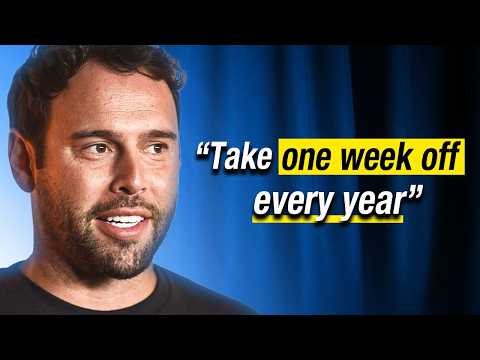
Take one full week a year for intensive self‑work with no phone.
Scooter argues that a single uninterrupted week annually—at a retreat, in therapy, or in silence—can radically change your life, and he wishes he’d started decades earlier instead of waiting for rock bottom to force him.
Get the full analysis with uListen AI
Generosity can be a form of freedom, not just kindness.
When he sold to Hybe, Scooter gave $50M of his own stock to employees and artists, not just to be ‘nice’ but to ensure everyone shared in the win and to free himself from future guilt, resentment, or obligation.
Get the full analysis with uListen AI
Boundaries teach others how to treat you and protect your energy.
He learned that having no boundaries isn’t strength; it’s self‑abandonment. ...
Get the full analysis with uListen AI
Faith means trusting the universe after it’s shown up for you repeatedly.
Scooter describes realizing that, like a loyal friend, life has consistently kept him afloat; his work now is to stop over‑controlling and cultivate faith that things will be okay even without constant pushing and hustling.
Get the full analysis with uListen AI
Real parenting is unconditional love and identity, not results-based pride.
He’s trying to raise wealthy kids with accountability and their own identity, telling them “I like you exactly as you are” rather than tying love to achievements—breaking the transactional “I’m proud of you if…” pattern he grew up with.
Get the full analysis with uListen AI
Notable Quotes
“Real happiness is being okay with your mess, being okay that you're not okay.”
— Scooter Braun
“We both have this thing that we're not enough; who would ever love us if we just showed up as ourselves without the achievements?”
— Scooter Braun
“Boundaries are there for you to teach other people how to treat you.”
— Scooter Braun (via his therapist)
“Why should you have to balance two things that you love? You should harmonize them.”
— Jeff Bezos (as quoted by Scooter Braun)
“Being mature is loving your 12-year-old self.”
— Scooter Braun’s grandmother (as quoted by Scooter)
Questions Answered in This Episode
If success and happiness are not inherently aligned, how should ambitious people redefine what ‘winning’ means for them personally?
Scooter Braun and Harry Stebbings have an unusually vulnerable, therapy‑like conversation about the illusion that success brings happiness, and how both of them have tied self‑worth to achievement and external validation.
Get the full analysis with uListen AI
What would it practically look like in your life to take one week a year with no phone or email for self‑work—and what are you afraid you’d find in that silence?
Scooter traces his journey from building the persona of “Scooter” to finally accepting “Scott,” describing how divorce, public controversy, and deep self‑work forced him to confront childhood shame, insecurity, and the feeling of not being enough.
Get the full analysis with uListen AI
In what ways might you be using achievement, status, or a ‘brand’ persona to avoid facing your own shame or childhood wounds?
They explore money, fame, online hate, parenting, investing, dealmaking, work–life ‘harmony,’ and faith in the universe, repeatedly returning to the theme that real success is being okay with your own mess and loving your unvarnished self.
Get the full analysis with uListen AI
How could you start shifting from transactional love (“I’m proud of you because…”) to unconditional love in your relationships—with partners, friends, or children?
Throughout, Scooter blends personal stories—from Bieber and Grande to Hybe, Uber, and Spotify—with practical lessons on boundaries, generosity, accountability, and the value of taking a week each year for intensive self‑work.
Get the full analysis with uListen AI
Where are you over‑controlling outcomes instead of trusting that the universe (or life) has already shown it can support you—and what small experiment in ‘faith’ could you try next?
Get the full analysis with uListen AI
Transcript Preview
It's your job to show up in the moment, be present, and present who you are, and help someone do the same.
(instrumental music) Scooter, I am so excited for this. So, I sent out a tweet saying how desperate I was to have you on the show, and, uh, I believe quite a few people messaged you after it.
So, if you're very-
Thank you so much.
I... Look, thank you. You're very popular on Twitter.
(laughs) .
My favorite was, obviously I got calls from people that I do know, but my favorite was reading underneath your tweet all of these people saying, "Oh, I know him so well, I'll reach out to him," and I had no idea who some of these people were. (laughs)
Did they try and reach out to you?
I have, I, I have no idea. I, I got a couple calls coming in, and then I responded, and I'm really glad that I did because we'll get into it, but the first time we spoke, you were just, "Hey, we can do this whenever. I'm excited." And you know, we ended up having a conversation on the phone where I pushed you on what you wanted to talk about and kind of where I am in life.
Hmm.
And I had a very vulnerable conversation with you about your life, mine, where you are, things you wanna achieve, things you're thinking of, and I found you to be an incredibly thoughtful guy who is, is thinking about the right things at an age far before I ever did. And I told you before we started that part of the reason I'm here is, one, because I was so impressed by you, but two, I c- I can tell you're just gonna be incredibly successful, but I think you're asking the right questions to be happy and successful.
You say about being happy and successful. The biggest thing that I'm struggling with right now, honestly, is I always thought happiness and success were aligned.
Well, so did I.
And they're not at all. Like, I'm sorry this sounds arrogant, but I'm becoming more and more successful, but I'm not becoming happier, and that's a really hard dislocation because everything I ever believed is then not true.
Well, i- look, I... (sighs) It's funny because even as I got older, I thought that I solved this, and then you find out that you're always doing the work, and you're always, the universe is always kinda revealing to you what you need. I had a number that I wanted to make... Uh, I wanted to... I was like, "Oh, I wanna be a billionaire," and then I found out making five grand is hard. And I was, uh, I was 19 years old, and I s- I was, started building the business that I have today. And I had a number. I met a guy who owned a c- a Cadillac dealership in Atlanta, Georgia, and he told me a number that I could have his life if I made this much, and my goal was to make that much by the time I was 50. And I was 27 years old, and, uh, Justin's career had started to explode. And my accountant called me, and another commission had come in, and I said, "Wait a second. How much money do I have?" And I was 27, and I had surpassed my lifetime number. And I remember suddenly becoming thrilled, and then within 30 seconds, incredibly depressed.
Install uListen to search the full transcript and get AI-powered insights
Get Full TranscriptGet more from every podcast
AI summaries, searchable transcripts, and fact-checking. Free forever.
Add to Chrome