Jeff Seibert: Why OpenAI Will Become an Infrastructure Play | E1085
Jeff Seibert (guest), Harry Stebbings (host)
In this episode of The Twenty Minute VC, featuring Jeff Seibert and Harry Stebbings, Jeff Seibert: Why OpenAI Will Become an Infrastructure Play | E1085 explores openAI, Infrastructure, and Execution: Jeff Seibert on AI and Startups Jeff Seibert, serial founder and CEO of Digits, explains how large language models will commoditize and why OpenAI is likely to become an infrastructure provider similar to AWS rather than a full-stack app company. He argues that startups must treat AI as a tool, not a product, and focus on deep customer problems, strong execution, and decisive pivots rather than thin wrappers on foundation models.
OpenAI, Infrastructure, and Execution: Jeff Seibert on AI and Startups
Jeff Seibert, serial founder and CEO of Digits, explains how large language models will commoditize and why OpenAI is likely to become an infrastructure provider similar to AWS rather than a full-stack app company. He argues that startups must treat AI as a tool, not a product, and focus on deep customer problems, strong execution, and decisive pivots rather than thin wrappers on foundation models.
Seibert shares hard-won lessons from building Crashlytics, operating at Twitter, and founding Digits: speed, conviction, intentional execution, and culture-driven feedback loops matter far more than most founders realize. He also details how Digits navigated a multi-year R&D wall, a pivot into tooling, and then a second pivot back to its original vision once GPT-class models made real-time accounting finally possible.
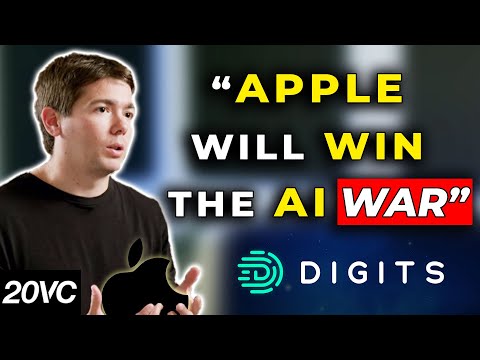
The conversation expands into the future of AI platforms, with Seibert predicting commoditized LLMs, an "Android to OpenAI" open-source ecosystem, and Apple emerging as a major on-device AI player due to control of silicon and privacy. He also assesses the vulnerability of incumbents like Google, the likely trajectory of AI adoption in enterprises, and why climate change and job displacement narratives are misunderstood.
On angel investing, Seibert candidly shares portfolio data, the dominance of outliers, and why disciplined, uniform check sizes and founder grit matter more than early traction or hype. He underscores that most early-stage bets are far harder and longer-dated than investors expect, and that secondary liquidity often beats waiting for IPO outcomes.
Key Takeaways
Treat AI as infrastructure, not the product itself.
Seibert stresses that LLMs will soon resemble databases or cloud compute—powerful but commoditized tools. ...
Get the full analysis with uListen AI
Avoid building thin wrappers on top of OpenAI or any single model.
If your core value is just orchestrating prompts into a general LLM and you built it in a few weeks, you are likely on OpenAI’s roadmap and will be “Sherlocked” when they ship a native feature or the model’s base capabilities improve.
Get the full analysis with uListen AI
Pivots must be decisive, all-in, and backed by runway.
Seibert argues a pivot is not a side experiment; it’s a full strategic reset that requires strong founder conviction, team buy-in, and at least ~12 months of cash so the new direction can actually prove itself.
Get the full analysis with uListen AI
Execution quality and intentional decision-making separate enduring founders.
Most founders and managers are poor operators: they’re unintentional with time, priorities, hiring, and what they say no to. ...
Get the full analysis with uListen AI
Design organizations where great ICs don’t have to become managers.
Promoting top individual contributors into management by default often fails. ...
Get the full analysis with uListen AI
Build strong feedback culture to create CEO accountability.
Digits runs weekly sprints with a company-wide Friday retro (“anchors and breezes”) at both team and org levels. ...
Get the full analysis with uListen AI
LLM success will hinge on high-quality, proprietary data and fine-tuning.
While base model performance correlates with scale, Seibert notes that domain-specific value comes from small, clean, proprietary datasets used for fine-tuning—e. ...
Get the full analysis with uListen AI
Notable Quotes
“I view OpenAI probably evolving more into an infrastructure company like AWS.”
— Jeff Seibert
“Startups are gonna get killed because they're very thin wrappers. If your primary product value is scripting GPT, that's a thin wrapper.”
— Jeff Seibert
“Most founders aren't intentional about how they operate the business… If you don't have conviction, you're really gonna struggle as a founder.”
— Jeff Seibert
“What kills companies is uncertainty… I would rather see founders take one to-the-moon bet on one new direction.”
— Jeff Seibert
“Google's by far the most vulnerable… It is way more effective to kill your own golden goose than watch someone else do it.”
— Jeff Seibert
Questions Answered in This Episode
If OpenAI becomes the AWS of AI, where will the most defensible startup opportunities actually sit in the stack?
Jeff Seibert, serial founder and CEO of Digits, explains how large language models will commoditize and why OpenAI is likely to become an infrastructure provider similar to AWS rather than a full-stack app company. ...
Get the full analysis with uListen AI
How can a founder rigorously tell the difference between a justified, all-in pivot and chasing the latest hype wave?
Seibert shares hard-won lessons from building Crashlytics, operating at Twitter, and founding Digits: speed, conviction, intentional execution, and culture-driven feedback loops matter far more than most founders realize. ...
Get the full analysis with uListen AI
What concrete practices can CEOs adopt to get honest, behavior-level feedback when power dynamics naturally suppress criticism?
The conversation expands into the future of AI platforms, with Seibert predicting commoditized LLMs, an "Android to OpenAI" open-source ecosystem, and Apple emerging as a major on-device AI player due to control of silicon and privacy. ...
Get the full analysis with uListen AI
In a world of commoditized LLMs, what types of proprietary data and workflows will create true long-term defensibility?
On angel investing, Seibert candidly shares portfolio data, the dominance of outliers, and why disciplined, uniform check sizes and founder grit matter more than early traction or hype. ...
Get the full analysis with uListen AI
How should ambitious operators weigh the trade-off between staying at a richly paid, overvalued late-stage company and jumping to a riskier but higher-upside earlier-stage opportunity?
Get the full analysis with uListen AI
Transcript Preview
I think Google's by far the most vulnerable. They need to go all in on it. I don't think they have a choice. (instrumental music) I view OpenAI probably evolving more into an infrastructure company like AWS. The road ahead for OpenAI is not easy. What very few people, I think, are paying attention to is Apple, because again, they control the silicon. Imagine they're able to pioneer small models that run on-device, and then they do custom silicon to make 'em run. The performance could be outlandish.
Jeff, I am so excited for this. What people don't know is I will always remember, I remember being 18, maybe 19, and being in your office at Twitter in San Francisco. I was so nervous. I was like, "This is so cool. I'm with, like, the head of product at Twitter. This is so cool. Mom's not gonna believe this." Anyway, that was a while ago. So first, thank you so much for joining me today, Jeff.
Harry, no, it is so great to be here. Thanks for having me on. You know, the whole world only makes sense going backwards because, like, who would've guessed from that meeting you'd become one of my largest investors, like, five years later? Just incredible what you've done.
I mean, uh, yeah, definitely not me, to be honest. (laughs)
(laughs)
Everyone always thinks that things are so strategic and you're like, "Well, you know, sometimes you have to go to the party to meet cool people." Um, that's what I always say. But I wanna start, I find actually, like, one's childhood aspirations quite revealing. What did you wanna be when you were a child, when you pictured yourself growing up?
Oh, man. So I loved building things since I was little, and I was completely obsessed with LEGOs. And so my dream was honestly, literally to be a LEGO Master Builder, until my mom did some research, and she found out that actually, like, it's not that great of a career. They're paid something like minimum wage. And that was in middle school. And so I forget if it was that Christmas or the next year, but she gave me a programming book for Christmas, and I was, and that was the end of the story. I was like, "Okay, computers are next."
(laughs)
(laughs)
Dammit, I think you'd have made a magnificent Master LEGO Builder. Um, it's a little bit like journalism. It's like, oh, a wonderful creative pursuit and then you're like, "Really? That's the pay?"
Right, exactly.
Um, okay. So when I met you, you were at Twitter, and it is a incredibly formative experience, I think, being at Twitter, especially in the role that you were. How did it shape your operating mindset and approach today, do you think?
Yeah, the biggest lesson I learned was empathy, honestly. So when you're in consumer software, you can't possibly begin to understand how many different people, personas, use cases, mindsets, like the human experience all comes to bear on your product. And what I saw was actually a trap. So the product managers who were super data-driven started designing and building features for the average user, 'cause that's what the data told them. And they actually believed that there was something such as an average Twitter user. It's such a huge mistake, right? Like, you're conflating all of these different populations. You have sports fans who want a live, like, chronological timeline during the game. You have celebrities who want to maximize their reach. You have Japanese users who, by and large, want to remain anonymous. None of them is average. And so what I really learned is you have to deeply understand each population, and design and build a feature for them. Don't, like, let the data lie to you.
Install uListen to search the full transcript and get AI-powered insights
Get Full TranscriptGet more from every podcast
AI summaries, searchable transcripts, and fact-checking. Free forever.
Add to Chrome