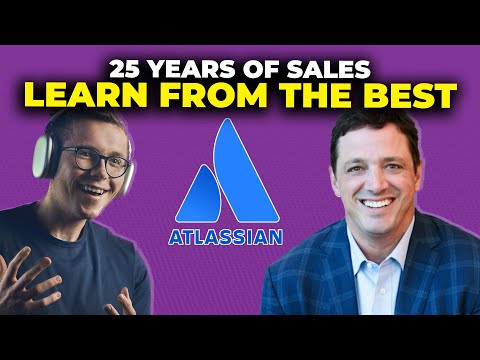
Kevin Egan: Biggest Lesson on Managing Sales Teams at Slack and Atlassian | E1034
Kevin Egan (guest), Harry Stebbings (host), Narrator
In this episode of The Twenty Minute VC, featuring Kevin Egan and Harry Stebbings, Kevin Egan: Biggest Lesson on Managing Sales Teams at Slack and Atlassian | E1034 explores kevin Egan Reveals How to Build and Scale Elite Sales Teams Kevin Egan, veteran sales leader at Salesforce, Dropbox, Slack, and Atlassian, breaks down how to build, hire, and manage high-performing sales organizations from early-stage startup to scaled enterprise. He reframes ‘sales playbooks’ as dynamic sales motions rooted in deep understanding of customer problems and product value, not scripted steps. Egan explains how to transition from PLG to enterprise, including technical, organizational, and sales-structure changes, plus how to measure rep effectiveness and run rigorous hiring and deal-review processes. He also dives into comp plans, discounting, forecasting, and feedback, emphasizing fairness, long-term alignment, and direct, well-calibrated communication as foundations of trust and performance.
Kevin Egan Reveals How to Build and Scale Elite Sales Teams
Kevin Egan, veteran sales leader at Salesforce, Dropbox, Slack, and Atlassian, breaks down how to build, hire, and manage high-performing sales organizations from early-stage startup to scaled enterprise. He reframes ‘sales playbooks’ as dynamic sales motions rooted in deep understanding of customer problems and product value, not scripted steps. Egan explains how to transition from PLG to enterprise, including technical, organizational, and sales-structure changes, plus how to measure rep effectiveness and run rigorous hiring and deal-review processes. He also dives into comp plans, discounting, forecasting, and feedback, emphasizing fairness, long-term alignment, and direct, well-calibrated communication as foundations of trust and performance.
Key Takeaways
Treat ‘sales playbooks’ as evolving sales motions grounded in customer problems.
Rather than rigid step-by-step scripts, top sellers start from who the buyer is, what problems they face, and how the product uniquely solves those problems, then codify those motions into repeatable patterns.
Get the full analysis with uListen AI
Sequence PLG and enterprise; don’t assume you can fully do both at once.
Slack nailed end-user love and virality first, then invested heavily for years in enterprise-grade security, compliance, and process; enterprise is not a feature checklist but an ongoing, ‘no finish line’ commitment.
Get the full analysis with uListen AI
Early-stage sales hires must have broad ‘intellectual range,’ not just big logos.
In young companies, the first sales leaders need to write messaging, close deals, gather product feedback, and build process; someone from a marquee brand without this range will often fail despite their résumé.
Get the full analysis with uListen AI
Use structured, multi-step hiring with a live mock sales scenario.
Candidates should pass through several interviews and a ‘stand and deliver’ mock meeting presenting to a fictitious or real product scenario; consistency across interviews and their ability to command the room are key signals.
Get the full analysis with uListen AI
Design comp plans to be fair and use them to test for long-term alignment.
Market-aligned compensation is table stakes, but Egan watches whether candidates focus only on OTE and short-term payout versus the broader growth journey and career upside of joining a ‘rocket ship’.
Get the full analysis with uListen AI
Run deal reviews to find why a deal won’t happen, not just why it will.
Using frameworks like MEDDIC/MEDDPICC, great managers probe risk, gaps, and objections; slips in forecasted deals require a deep postmortem on both product/fit and sales execution, not hand-waving.
Get the full analysis with uListen AI
Discounting should be CFO-led and programmatic, not ad hoc and desperate.
A clear discount matrix tied to volume and margin, with escalating approval levels, protects pricing integrity; procurement expects conviction, so early-stage startups must ‘hold the line’ more than they think.
Get the full analysis with uListen AI
Notable Quotes
“I don't typically use the word playbook… I prefer the term sales motions.”
— Kevin Egan
“It is naive to think it's just a few features… enterprise is a lifelong pursuit.”
— Kevin Egan
“Early days are really about who is creating the best connection between my developing product and my potential customer.”
— Kevin Egan
“When I hear, ‘It slipped to next quarter,’ what I'm looking for is, did you commit it to this quarter?”
— Kevin Egan
“Good discounting should originate from the office of the CFO.”
— Kevin Egan
Questions Answered in This Episode
If you’re an early-stage PLG startup seeing organic enterprise pull, how do you decide which enterprise requirements to prioritize first without stalling product velocity?
Kevin Egan, veteran sales leader at Salesforce, Dropbox, Slack, and Atlassian, breaks down how to build, hire, and manage high-performing sales organizations from early-stage startup to scaled enterprise. ...
Get the full analysis with uListen AI
What concrete indicators show that your first sales hire has the ‘intellectual range’ needed, beyond traditional interview performance?
Get the full analysis with uListen AI
How can founders with no sales background practically design and run an effective multi-step hiring and mock-presentation process?
Get the full analysis with uListen AI
In a world where CFOs scrutinize every purchase, how should startups build robust, credible ROI cases when they lack long-term data?
Get the full analysis with uListen AI
How can a sales leader balance being a supportive partner with maintaining clear hierarchy and delivering hard feedback without damaging trust?
Get the full analysis with uListen AI
Transcript Preview
I think when I'm closing a candidate, I'm, I'm interested if I'm giving them a fair comp plan, are they really interested about the long-term journey at this company? 'Cause this comp plan only represents this moment in time for the next year or two. Um, if we're both successful, the company will, um, increase in size. Our jobs will be different. Our jobs will be bigger. So what, how do they view the o- the long-term journey at this company? And are they excited about the company and the journey, or is it about the comp plan? It's really about a total rewards element, which is you're, you're joining a rocket ship. Uh, you're gonna love this job and it's gonna, you know, really benefit your career overall.
Kevin, I have heard so many great things from Maggie, from Kim, from Renu. But I wanna start in the beginning. So it hit me, how did you make your way into the world of sales first? Let's start there.
So I was lucky to join Oracle in the mid-'90s, and I started, um, in the data center in a technical support role, and quickly made my way over to the sales engineering side of the house, uh, supporting database technologies, again, at Oracle in the late '90s in their DMD organization, which was a fast-moving, fantastic place to learn, learn both sales and technology.
You know, I, I thought it'd be really cool, uh, but also a little bit unfair if I started with a quickfire round, 'cause you've had some incredible companies where you've been an essential part of their sales teams and often led them, Salesforce, Dropbox, and Slack. And I thought there's gonna be, like, one or two lessons from each that really shaped how you think. And so I wanted to delve into each in a quickfire round. So if we take Salesforce, what was the biggest takeaway for you? And how did that shape how you think?
Salesforce does not get enough credit for being one of the original product-led growth companies. If you look at Salesforce and what Benioff did in the early days, we were one of the first companies to ever allow companies, or our, uh, potential clients to use a trial of our service at no charge for 30 days. And during that trial, the sales team was obsessed with, what are the business problems that this customer's trying to solve? How do I c- help configure the Salesforce service to help solve those business problems? And it led to incredible conversion rates. So the idea that if we're gonna put the product in our customers' hands, we gotta give them help in terms of how they solve their problems, uh, as a, as a key accelerant. So that was an amazing element of Salesforce, and, and one I just don't think they got enough credit for. Uh, Salesforce remains an incredibly customer-centric company. Uh, so lots to learn there overall.
Install uListen to search the full transcript and get AI-powered insights
Get Full TranscriptGet more from every podcast
AI summaries, searchable transcripts, and fact-checking. Free forever.
Add to Chrome