Klaus Hommels: Why "Portfolios are Merely a Construct to Make LPs Happy"? | E1231
Klaus Hommels (guest), Harry Stebbings (host)
In this episode of The Twenty Minute VC, featuring Klaus Hommels and Harry Stebbings, Klaus Hommels: Why "Portfolios are Merely a Construct to Make LPs Happy"? | E1231 explores klaus Hommels Rejects Venture Orthodoxy: Portfolios, Pricing, and Defense Klaus Hommels, founder of Lakestar and chair of the NATO Innovation Fund, discusses his unconventional philosophy on venture investing, arguing that portfolios are largely an LP-pleasing construct and that true returns come from concentrated, high-conviction bets. He emphasizes venture capital as “outsourced business development” for founders, not a financial engineering game, and explains why he is deliberately not price-sensitive when backing exceptional companies. A major portion of the conversation focuses on Europe’s structural underfunding of innovation and defense, the need for technological sovereignty (in areas like space, satellites, and AI defense), and how deep tech can reshape modern warfare economics. He also reflects on career-defining wins (Spotify, Revolut, Airbnb, Facebook) and losses, the role of luck and ethics, and what actually drives long-term fulfillment as an investor and human being.
Klaus Hommels Rejects Venture Orthodoxy: Portfolios, Pricing, and Defense
Klaus Hommels, founder of Lakestar and chair of the NATO Innovation Fund, discusses his unconventional philosophy on venture investing, arguing that portfolios are largely an LP-pleasing construct and that true returns come from concentrated, high-conviction bets. He emphasizes venture capital as “outsourced business development” for founders, not a financial engineering game, and explains why he is deliberately not price-sensitive when backing exceptional companies. A major portion of the conversation focuses on Europe’s structural underfunding of innovation and defense, the need for technological sovereignty (in areas like space, satellites, and AI defense), and how deep tech can reshape modern warfare economics. He also reflects on career-defining wins (Spotify, Revolut, Airbnb, Facebook) and losses, the role of luck and ethics, and what actually drives long-term fulfillment as an investor and human being.
Key Takeaways
Portfolios are a construct to satisfy LPs, not a compass for great investing.
Hommels argues that the formal portfolio model (number of companies, reserves, per-company caps) is mostly about fitting institutional rules; in reality, fund outcomes are driven by one or two exceptional companies, so investors should be structurally willing to over-concentrate when they truly see an outlier.
Get the full analysis with uListen AI
When you find a truly exceptional company, you should take disproportionate risk.
He openly pushes against rigid per-company allocation limits, negotiates more flexibility with his advisory board, and believes capital constraints should not prevent backing a clear winner with very large checks over time.
Get the full analysis with uListen AI
Being price-sensitive at the early stage is far less important than being right.
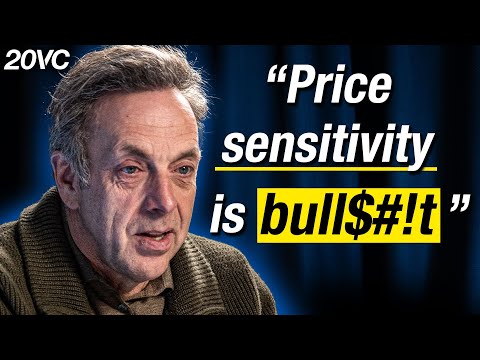
Hommels says he is “absolutely not” price-sensitive: the great companies would be worth backing even at 30% higher valuations, while bad ones aren’t attractive even if 30% cheaper; the judgment of quality and founder is what compounds, not entry precision.
Get the full analysis with uListen AI
Venture capital is best understood as outsourced business development for founders.
He rejects the image of VCs as gatekeepers with ‘borrowed LP power’, instead framing his job as increasing a founder’s odds of success through networks, business development, and hands-on help—reasoning why he only backs a limited number of companies he can deeply support.
Get the full analysis with uListen AI
Europe massively underfunds innovation relative to the post-war decades and the US.
Historically, Europe financed ~4% of GDP into innovation (via banks); now only ~0. ...
Get the full analysis with uListen AI
Defense and deep tech will become enormous venture categories driven by sovereignty needs.
He sees modern defense as applied deep tech (drones, software, satellites, electronic warfare) where cheap systems can neutralize extremely expensive legacy hardware, and expects tens of billions in annual NATO tech spending—creating hundreds of billions in potential market cap.
Get the full analysis with uListen AI
Europe’s lack of financial literacy and fragmented capital markets weaken its tech position.
From tiny pension allocations to venture (0. ...
Get the full analysis with uListen AI
Building a new defense-tech ecosystem hinges on trust between startups, primes, and MODs.
Hommels warns that selling deep-tech solutions into ministries of defense requires new procurement habits and trust; opportunistic or unserious players could damage that fragile trust and set back the entire category.
Get the full analysis with uListen AI
Personal ethics, humility after wins, and long-term pride matter more than IRR.
He intentionally pauses investing after big hits to avoid overconfidence, views early losses as essential tuition, and says the real ‘return’ is later-life pride—being able to say he acted with integrity and genuinely helped world-class founders on their journeys.
Get the full analysis with uListen AI
Notable Quotes
““Venture is not sitting in a nice office with borrowed power of LPs and playing like in old Caesar's times, thumbs up, thumbs down.””
— Klaus Hommels
““I'm not so keen of building portfolios. If I find cool companies that make a difference, that is where the beef is.””
— Klaus Hommels
““If you see the right company, you should take a lot of risk and over-proportional risk in those.””
— Klaus Hommels
““The progress of a society is the way how they can handle risk.””
— Klaus Hommels
““The heaviest things in life are not iron or gold, but unmade decisions.””
— Klaus Hommels
Questions Answered in This Episode
If portfolios are largely an LP construct, how should emerging managers redesign fund structures to better match Hommels’ concentrated, high-conviction philosophy?
Klaus Hommels, founder of Lakestar and chair of the NATO Innovation Fund, discusses his unconventional philosophy on venture investing, arguing that portfolios are largely an LP-pleasing construct and that true returns come from concentrated, high-conviction bets. ...
Get the full analysis with uListen AI
What concrete policy changes in Europe (especially around pension funds and a unified stock exchange) would most rapidly close the innovation and defense gap with the US and China?
Get the full analysis with uListen AI
How can founders and investors ethically reconcile investing in defense tech with concerns about militarization, while still addressing legitimate sovereignty and security risks?
Get the full analysis with uListen AI
What capabilities and team compositions will distinguish future European defense-tech ‘primes’ from today’s deep tech startups and incumbent contractors?
Get the full analysis with uListen AI
For early-stage investors, how can one practically develop Hommels’ kind of product intuition and readiness to move in hours, not weeks, without becoming reckless?
Get the full analysis with uListen AI
Transcript Preview
Venture is not sitting in a nice office with borrowed power of LPs and playing like in old Caesar's times, thumbs up, thumbs down. I'm not so keen of building portfolios. If I find cool companies that make a difference, that is where the beef is. And if you have one or two of them, every portfolio looks great. I do believe that if you see the right company, you should take a lot of risk and over-proportional risk in those.
Are you price-sensitive, Klaus?
Absolutely not.
Ready to go? Klaus, I am so excited for this. I wanted to make this one happen for quite a few years, so thank you so much for joining me.
Thank you very much. Uh, it's a pleasure. So, (clears throat) to finally, after that long years, uh, the wait was worth it because, uh, you have become an icon. So, uh, now I'm the underdog here.
(laughs) Well, I mean, flattery will get you everywhere. But I wanna start with a crucial first question, which is one that I haven't phrased quite like this before. Adidas or Puma, and how did Puma lead to the start of your investing journey?
Well, (clears throat) so you obviously did your homework. This is a very crucial question. So not in terms of the sports shoes, obviously, and as a Swiss German, I should say, that is on, but as a life lesson. Uh, Puma made a very big impact, and I guess that you always have, like, two or three of those in your life. And Puma was, was the halo moment for me. So as you know, (clears throat) I grew up in the German countryside, hence my crazy accent here. And, um, it was close to Mönchengladbach, and I was the son of a farmer. So, um, at 16, 17, 18, I knew a lot about how to work in the fields and do all this nasty work that nobody ever wants to do in that age. But I was lucky that my grandma wanted me to hate banks. Uh, and the way she thought about it was, "Look, I give you, um, 20,000 bucks, and you buy stocks. If you gain something, it's yours. If you lose it, I cover it." And she thought I go to the local saving and loan bank, get a bad stock recommendation, lose the money, and I'm mad at the bank. But, um, as it turns out, my, uh, affinity to, for football, yeah, and Mönchengladbach, (clears throat) was that they played in Puma shoes. And Puma did the IPO, and I said, "Look, Grandma takes the losses so I can go in fully leveraged." And at the time, I was making 10 bucks pocket money a month. I made 100,000 with Puma in three months. So I said, "Look, two phone calls, 100 years of pocket money, I become investor." So and at that moment, um, the, the, the s-, the, the sail was set for what I wanted to be in the future.
Install uListen to search the full transcript and get AI-powered insights
Get Full TranscriptGet more from every podcast
AI summaries, searchable transcripts, and fact-checking. Free forever.
Add to Chrome