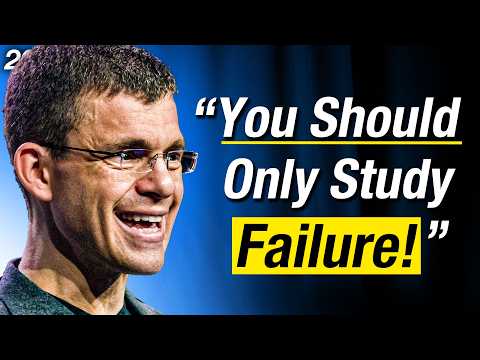
Max Levchin, Founder & CEO @ Affirm:The Biggest Surprise Scaling to $18.7BN Market Cap
Max Levchin (guest), Harry Stebbings (host), Narrator
In this episode of The Twenty Minute VC, featuring Max Levchin and Harry Stebbings, Max Levchin, Founder & CEO @ Affirm:The Biggest Surprise Scaling to $18.7BN Market Cap explores max Levchin on hiring brilliance, hard truths, and learning from failure Max Levchin discusses how to build and scale high‑performing teams, emphasizing the value and risks of “extreme” but brilliant personalities and the non‑negotiable importance of integrity. He explains how to align incentives, work with A and B players, and build a rigorous post‑mortem and writing culture that continuously improves decision‑making. Levchin also covers calculated versus uncalculable risks, quality in “invisible” product parts, the realities of remote work and layoffs, and the mindset required as a public company CEO. Throughout, he blends hands‑on leadership lessons from Affirm with broader views on speed, culture, and long‑term thinking in startups.
Max Levchin on hiring brilliance, hard truths, and learning from failure
Max Levchin discusses how to build and scale high‑performing teams, emphasizing the value and risks of “extreme” but brilliant personalities and the non‑negotiable importance of integrity. He explains how to align incentives, work with A and B players, and build a rigorous post‑mortem and writing culture that continuously improves decision‑making. Levchin also covers calculated versus uncalculable risks, quality in “invisible” product parts, the realities of remote work and layoffs, and the mindset required as a public company CEO. Throughout, he blends hands‑on leadership lessons from Affirm with broader views on speed, culture, and long‑term thinking in startups.
Key Takeaways
Brilliant, extreme personalities are worth the quirks—until narcissism and selfishness take over.
Levchin argues that highly opinionated, intense people often drive the best outcomes, as long as they remain humble and team-oriented; once their behavior becomes about elevating themselves above others, they turn toxic.
Get the full analysis with uListen AI
Integrity is a hard red line: once trust is broken, it’s over.
He believes almost any behavior can merit a second chance except dishonesty; if he can’t trust someone, there is no path back onto the team.
Get the full analysis with uListen AI
You can’t reliably hire only “A players”; focus on how they hire and grow others.
At scale, you will inevitably have many good-but-not-elite performers; the real danger is fearful B players who hire weaker people to protect themselves, whereas confident A players seek out and attract other A players.
Get the full analysis with uListen AI
Build a structured, blame-free post-mortem culture to maximize learning from failures.
He advocates separating data streams, assigning a directly responsible individual, documenting events clinically, and reviewing them rigorously so people can speak honestly without self-protection or shame distorting the analysis.
Get the full analysis with uListen AI
Mind the quality of invisible parts while iterating quickly with customers.
Rapid MVPs and prototypes are useful to test ideas, but once something shows traction, you must refactor and rebuild it properly—especially core systems—otherwise you accumulate “a generation of garbage software.”
Get the full analysis with uListen AI
Incentives, not just exhortations, drive effort and ownership in teams.
Founders often over-project their own obsession with winning; Levchin stresses understanding what each person actually values (quality, impact, lifestyle, etc. ...
Get the full analysis with uListen AI
Leadership during layoffs and downturns requires visible ownership and empathy.
He learned to be physically present, help people pack up, and openly own his mistakes; when culture is strong, people are more understanding than founders expect—if it’s clear layoffs were truly a last resort.
Get the full analysis with uListen AI
Notable Quotes
“The hard red line for me is always once I can't trust you, I can't ever trust you.”
— Max Levchin
“Brilliant people are often over the top and that's part of the ingredients that make them brilliant.”
— Max Levchin
“We take calculative risks—do the calculating.”
— Max Levchin
“If you believe that ideas speak for themselves so much that it can be garbage, you will end up with a collection of garbage and a generation of garbage software.”
— Max Levchin
“In the short term, the market is a voting machine. In the long term, it's a weighing machine.”
— Max Levchin (quoting Benjamin Graham)
Questions Answered in This Episode
How can a founder practically distinguish between a merely difficult high-performer and someone who has crossed into genuinely toxic behavior?
Max Levchin discusses how to build and scale high‑performing teams, emphasizing the value and risks of “extreme” but brilliant personalities and the non‑negotiable importance of integrity. ...
Get the full analysis with uListen AI
What specific signals should leaders watch for to identify fearful B players who may start hiring down to protect themselves?
Get the full analysis with uListen AI
How would you implement a post-mortem culture in a very early-stage startup without overwhelming a small team?
Get the full analysis with uListen AI
Where should a startup draw the line between shipping scrappy MVPs and investing heavily in robust, invisible infrastructure?
Get the full analysis with uListen AI
As a public company CEO, how do you balance ignoring short-term stock fluctuations with the need to respond to real market feedback?
Get the full analysis with uListen AI
Transcript Preview
I think opinionated is exceptionally valuable. The hard red line for me is always once I can't trust you, I can't ever trust you. The story about knowing the letter grade of every person you hire in your company, whether it's 2,000 people like a firm, but that's just silly.
Ready to go? (instrumental music plays) Max, I am so excited for this, dude. It has been a long time. So thank you so much for joining me today.
Thank you for having me.
Not at all, but I'd love to start with actually something that you've said before when it comes to hiring brilliant people. You said brilliant people have extreme personalities more often than not, and when I thought about that, I thought do you want them in your team as a result of these extreme personalities?
You mostly do. Everything is a range, and so you inevitably find yourself asking the question, you know, how extreme is extreme and, uh, what will it cost me if this person, you know, blows up or goes into some sort of a behavioral tailspin. But most of the time, truly brilliant people are worth the quirks, and it's a hallmark of a good manager who knows how to bring out the best from the people even if they are extreme.
Can I ask when we think about extreme levels, often extremes are dislikable. They're not that amiable. They're very opinionated. How do we think about that being a pro versus a con?
I think opinionated is exceptionally valuable. I think that the sort of pinnacle of teamwork achievement is to have really strong opinions, not hold them back, and yet manage to not so profoundly offend the person or the teammate that you're judging or providing feedback to that they choose to opt out, whatever that means for the problem. But you on balance, you want someone who can walk into a room and say, "That is a pile of garbage and I love all of you. You're amazing people. I'm proud to be part of this team, but what we've built here together is not gonna ship because it's terrible. And now we're all gonna regroup and rethink and build something better." Like that: that is the way, at least one of the ways, of trying to couch the blow. But if you don't give the blow, you're gonna ship garbage.
Teach me. I do that and people get offended. They get emotional and they get upset and I get told that I'm too direct. Help me. What do I do?
(laughs) Empathy is important. Understanding that when you're judging someone's work, there's two possibilities. It's bad. It's they done the best and circumstances intervened and they can do better, but it wasn't, it isn't good enough and they need to know, but you know they can do better. And the moment is about telling them, "This isn't your best work, but I know what you can do and this is just like, it- it's an embarrassment, but it's not an embarrassment of your ability. It's the embarrassment of the time you had or the effort you've been able to put in and that's okay. Like that we can fix." Sometimes you look at work and say, "Wow, like this person cannot do better." Full stop. Don't worry about being direct. The conversation you're gonna have with them at some point very soon is, "I don't think you have a place on this team anymore," and that: that's a much harder conversation, but you have to have it too.
Install uListen to search the full transcript and get AI-powered insights
Get Full TranscriptGet more from every podcast
AI summaries, searchable transcripts, and fact-checking. Free forever.
Add to Chrome