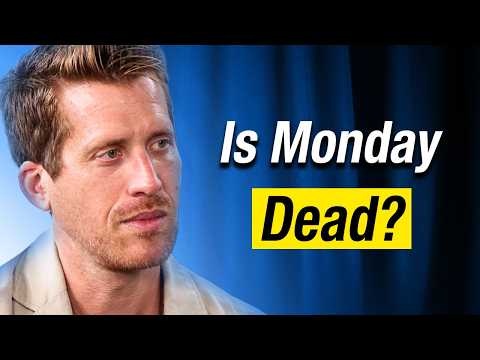
Monday.com CEO on Is SaaS Dead: Will Everything Be Vibe Coded | Eran Zinman
Eran Zinman (guest), Harry Stebbings (host)
In this episode of The Twenty Minute VC, featuring Eran Zinman and Harry Stebbings, Monday.com CEO on Is SaaS Dead: Will Everything Be Vibe Coded | Eran Zinman explores monday.com CEO outlines AI threats, agentic pivot, and growth strategy Zinman frames the current “SaaSpocalypse” as largely a sentiment shock: fundamentals can look stable while markets price in uncertainty about which incumbents will successfully adapt to AI.
Monday.com CEO outlines AI threats, agentic pivot, and growth strategy
Zinman frames the current “SaaSpocalypse” as largely a sentiment shock: fundamentals can look stable while markets price in uncertainty about which incumbents will successfully adapt to AI.
He addresses three major existential threats—vibe coding, foundation model vendors owning the app layer, and agents reducing SaaS products to “databases”—arguing the third is the most real and demands a full product pivot.
Monday’s strategy is to become a horizontal orchestration layer where humans and agents collaborate, while also rebuilding CRM and service products to be “100% agentic,” alongside a transition from seat-based to consumption pricing.
He also shares concrete operational AI wins (SDR intake, support automation, developer tooling) and discusses headcount choices, acquisition-channel disruption from Google AI results, and leadership challenges when the stock is down sharply.
Key Takeaways
The market is pricing uncertainty about adaptation, not current operations.
Zinman argues earnings can appear “normal” while valuation collapses because investors don’t know which incumbents will successfully reinvent products for an AI-first world.
Get the full analysis with uListen AI
“Vibe coding” is impressive but unlikely to materially disrupt serious SaaS.
He distinguishes quick UI generation from building and maintaining durable, evolving software used across organizations; maintenance and opportunity cost make DIY tools unattractive for most businesses.
Get the full analysis with uListen AI
Foundation model companies are more analogous to AWS than to SaaS winners.
He expects LLM providers to remain infrastructure leaders with enormous focus demands, enabling an explosion of apps built on top rather than capturing “all the value” at the application layer.
Get the full analysis with uListen AI
The ‘agents turn SaaS into a database’ threat is real—so products must flip from tracking work to doing work.
He says legacy software historically did only ~10–20% of work; AI can do 70–80%, meaning software that doesn’t perform meaningful work becomes obsolete unless it pivots.
Get the full analysis with uListen AI
Monday’s pivot is to become the horizontal workspace for human-agent collaboration.
The company aims to let customers build and orchestrate agents on Monday, with boards/dashboards receding and agents becoming the primary interface during a long transition where humans and agents co-work.
Get the full analysis with uListen AI
Seat-based SaaS economics will trend toward consumption pricing.
Zinman predicts a staged move from seats to hybrid to fully consumption-based pricing as value shifts from per-user access to measurable agentic output and usage.
Get the full analysis with uListen AI
AI efficiency gains are already reshaping go-to-market and operations—without necessarily shrinking headcount immediately.
Monday replaced inbound SDR qualification with AI (24 hours to 3 minutes; higher conversions), moved humans to outbound, automated support heavily, and boosted engineering output via tools like Cursor—yet he prioritizes capturing demand over aggressive cuts.
Get the full analysis with uListen AI
Notable Quotes
““Nobody will wanna buy software that not doing the majority of the work for them.””
— Eran Zinman
““Software going forward… the TAM… is gonna be a hundred X from what it is today.””
— Eran Zinman
““If we don't change, eventually we'll become a database.””
— Eran Zinman
““It used to take on average twenty-four hours to get back to a customer. Now it takes three minutes.””
— Eran Zinman
““What the market is saying to me is the company is worth zero… Now I need to build. Screw it. I'm gonna go all in.””
— Eran Zinman
Questions Answered in This Episode
On the agentic pivot: what are the first 3–5 concrete workflows where Monday agents will “do the work” end-to-end (not just assist)?
Zinman frames the current “SaaSpocalypse” as largely a sentiment shock: fundamentals can look stable while markets price in uncertainty about which incumbents will successfully adapt to AI.
Get the full analysis with uListen AI
What does “build agents on top of Monday” technically mean—are these prompt-based automations, tool-using agents with permissions, or a full agent runtime/marketplace?
He addresses three major existential threats—vibe coding, foundation model vendors owning the app layer, and agents reducing SaaS products to “databases”—arguing the third is the most real and demands a full product pivot.
Get the full analysis with uListen AI
How will Monday measure and bill “consumption” in a way customers trust (tasks executed, outcomes, tokens, time saved, revenue impact)?
Monday’s strategy is to become a horizontal orchestration layer where humans and agents collaborate, while also rebuilding CRM and service products to be “100% agentic,” alongside a transition from seat-based to consumption pricing.
Get the full analysis with uListen AI
If boards and dashboards move to the background, what becomes the new primary UI—chat, inbox-style queues, agent-generated artifacts, or something else?
He also shares concrete operational AI wins (SDR intake, support automation, developer tooling) and discusses headcount choices, acquisition-channel disruption from Google AI results, and leadership challenges when the stock is down sharply.
Get the full analysis with uListen AI
You said the database risk is real—what moats prevent Monday from becoming interchangeable storage under an agent layer built by others?
Get the full analysis with uListen AI
Transcript Preview
Some days I feel like I was ran over by a truck, hit by a plane, and barbecued, and it's just eleven AM. What the market is saying to me is the company is worth zero. Okay, fine. Now I need to build. Screw it. I'm gonna go all in.
The SaaSpocalypse is real, and no one has felt it more than Monday.com. With close to one point three billion in revenue, they're valued today at just three point nine billion dollars in the public markets. Today, we sit down with Eran Zinman.
Nobody will wanna buy software. They're not doing the majority of the work for them. We're changing everything. It's the biggest pivot moment for us in the history of the company. The TAM of software, how much companies are gonna spend on software, is gonna be a hundred x from what it is today.
Ready to go? [upbeat music] Eran, it is so good to have you on the show, dude. I have been wanting to do this one for a while, so thank you so much for joining me.
Thanks for having me, Harry. It's great to be here again.
And by the way, if anyone is listening, you should be watching 'cause Eran looks younger than he did last time. [laughing]
[laughing]
It's extraordinary the volume that your hair has today, dude. But I wanted to start-
Thank you.
Um, you're like, "This is not how I expected the show to go." Uh, clearly, we, we are lacking incredible discipline in our research. Um, I wanted to start on communication actually because we see stock price respectfully in the dumps, but actual kind of fundamentals may be different. So what is the stock market not seeing that you think they should be seeing?
Yeah, so f-first of all, I wanna acknowledge it's, uh, kind of a crazy period, uh, I think for all of us, uh, especially, you know, us, us founders going through this, uh, you know, massive change in the market. Uh, so it's definitely not easy. I'll, I'll, I'll give you that. Uh, definitely, uh, it feels like a rollercoaster, uh, almost every day, you know. Uh, um, you know, some days are extremely difficult, uh, but it's definitely, uh, quite a journey. I think fundamentally we need to distinguish between what happens in businesses, which is one thing, and the sentiment change that happened, I would say in the last year and a half, but more precisely in the last six months, which from my perspective feels, you know, very aggressive, very powerful. Um, you know, on one hand, like if you look at the earning calls and how business operate, everything is, is kinda normal. Uh, some companies have even exceeded expectations, and businesses are working great, but at the same time, the sentiment has shifted drastically, like I've never seen before, uh, as far from... at least from my perspective. Um, and the negativity that now it's been attached to software companies, and it seems like every day there's a new doomsday scenario, a new tweet. Um, so the, the, the sentiment definitely changed. By the way, there's some a lot, a lot of truth to that and, and a lot of things I do understand, uh, from the investor perspective, so I'm not dismissing it. But, uh, definitely we need to distinguish between the operation of businesses and the sentiment change that happened in the market.
Install uListen to search the full transcript and get AI-powered insights
Get Full TranscriptGet more from every podcast
AI summaries, searchable transcripts, and fact-checking. Free forever.
Add to Chrome