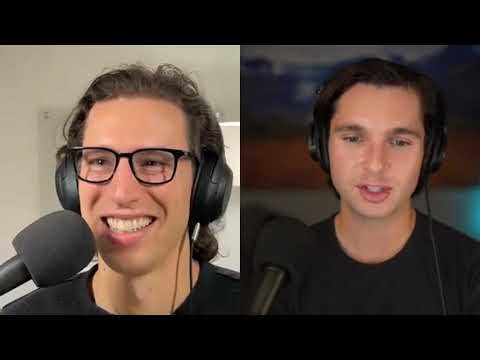
Standard Oil Part 1
Ben Gilbert (host), David Rosenthal (host)
In this episode of Acquired, featuring Ben Gilbert and David Rosenthal, Standard Oil Part 1 explores how Rockefeller built Standard Oil’s kerosene empire and monopoly machinery The episode traces John D. Rockefeller’s formation—part Baptist duty-driven morality, part “Devil Bill” money instinct—and how those traits shaped an obsessive, numbers-first approach to business.
How Rockefeller built Standard Oil’s kerosene empire and monopoly machinery
The episode traces John D. Rockefeller’s formation—part Baptist duty-driven morality, part “Devil Bill” money instinct—and how those traits shaped an obsessive, numbers-first approach to business.
Standard Oil’s early advantage came from industrial discipline in refining (process optimization, vertical integration, using byproducts, and reinvesting heavily) combined with ruthless consolidation of competitors.
Rockefeller and lieutenants like Henry Flagler weaponized railroads, pricing schemes, and corporate-legal innovations (joint-stock company, then the trust) to scale nationally and coordinate control across states.
Public backlash and political pressure culminated in the 1890 Sherman Antitrust Act—initially seen by Standard as toothless—setting the stage for the eventual breakup decades later.
Key Takeaways
Standard Oil’s first moat was operational excellence, not market power.
Rockefeller treated refining like an optimization problem—constant process improvement, lean operations, and reinvesting profits—creating cost advantages before the monopoly machinery fully arrived.
Get the full analysis with uListen AI
Vertical integration was a cost and control strategy, not just “doing more.”
They brought key inputs in-house (plumbing, barrel-making, even timber supply) to reduce costs, improve reliability, and iterate faster—turning suppliers into internal capabilities.
Get the full analysis with uListen AI
“Use the whole buffalo” economics expanded profits and reduced waste.
By monetizing byproducts (e. ...
Get the full analysis with uListen AI
Railroads were the critical choke point—and Standard negotiated like a platform owner.
Flagler’s volume guarantees and secret preferential rates created structural advantage; later, owning/controlling tank cars shifted leverage so railroads depended on Standard’s assets.
Get the full analysis with uListen AI
Legal/financial innovation enabled national scale before corporate law caught up.
The joint-stock company and then the trust structure solved interstate ownership constraints and aligned incentives via dividends/equity—foundational moves in modern U. ...
Get the full analysis with uListen AI
The South Improvement Company was leverage even without implementation.
Even though “not a single barrel” shipped under it, the threat of discriminatory freight pricing catalyzed rapid consolidation—especially the Cleveland Massacre—by forcing refiners to sell or fold.
Get the full analysis with uListen AI
Monopoly defense included co-opting substitutes and controlling downstream retail.
Standard neutralized disruptive pipelines by inducing rate wars, then buying in and scaling pipelines—often on railroad rights-of-way—and later pressured grocers with pricing and shelf-control threats.
Get the full analysis with uListen AI
Notable Quotes
““The rules of the game were unwritten as yet.””
— David Rosenthal (quoting Ron Chernow)
““I believe the power to make money is a gift from God… it is my duty to make money and still more money.””
— John D. Rockefeller (quoted in episode)
““For Rockefeller, ledgers were sacred books that guided decisions and saved one from fallible emotion.””
— David Rosenthal (quoting Chernow)
““Do unto others as they would do unto you—and do it first.””
— Henry Flagler (desk quote, cited in episode)
““Clark was an old grandmother and was scared to death because we owed money to the banks.””
— John D. Rockefeller (quoted in episode)
Questions Answered in This Episode
The hosts argue kerosene standardization helped consumers—where, specifically, did Standard cross the line from efficiency to coercion (rail rebates, drawbacks, grocer threats)?
The episode traces John D. ...
Get the full analysis with uListen AI
How did Standard’s trust structure practically function day-to-day—what decisions were centralized vs. left to the state-based entities?
Standard Oil’s early advantage came from industrial discipline in refining (process optimization, vertical integration, using byproducts, and reinvesting heavily) combined with ruthless consolidation of competitors.
Get the full analysis with uListen AI
Was the Cleveland Massacre primarily a financing advantage (pre-arranged bank capital) or an information advantage (using fear/uncertainty from South Improvement rumors)?
Rockefeller and lieutenants like Henry Flagler weaponized railroads, pricing schemes, and corporate-legal innovations (joint-stock company, then the trust) to scale nationally and coordinate control across states.
Get the full analysis with uListen AI
If pipelines were inherently cheaper than rail, how long could Standard’s railroad-induced price war realistically have lasted without destroying railroad economics?
Public backlash and political pressure culminated in the 1890 Sherman Antitrust Act—initially seen by Standard as toothless—setting the stage for the eventual breakup decades later.
Get the full analysis with uListen AI
Which of Standard’s tactics would be illegal today under U.S. antitrust (exclusive dealing, predatory pricing, rebates, vertical restraints), and which might still be permissible?
Get the full analysis with uListen AI
Transcript Preview
So history and facts going up through-
1890. [laughing]
Who got the truth? Is it you? Is it you? Is it you? Who got the truth now? Is it you? Is it you? Is it you? Sit me down, say it straight. Another story on the way. Who got the truth?
Welcome to season nine, episode four of Acquired, the podcast about great technology companies and the stories and playbooks behind them. I'm Ben Gilbert, and I'm the co-founder and managing director of Seattle-based Pioneer Square Labs, and our venture fund, PSL Ventures.
And I'm David Rosenthal, and I am an angel investor based in San Francisco.
And we are your hosts. Today's episode is 150 years in the making. David, somehow we missed this IPO-
[laughing]
... if or when it happened. [chuckles]
Can we get, uh, can we, can we still get, uh, get secondary shares?
We'll see.
Put together a little SPV, do, uh-
I think it might be of a spin-off or something like that-
Oh, okay. Okay
... at, at, at this point. Uh, at least the Standard Oil that we will cover today never IPO'd. It was privately held the whole time. Its financials were kept very secret. That, that must be why we, we have missed it until now, David. Sure.
Oh, yeah, must be. Must be.
Well, this episode on Standard Oil is, of course, the oil monopoly founded in the 1870s by John D. Rockefeller, the wealthiest person in modern human history. Embarrassingly, until I had started to do the research, I didn't realize the oil in Standard Oil did not refer to gasoline, at least until much, much later in the life of the company. Standard Oil actually-
Auto mobiles, uh, the Model T was, like, 1910 or so, like-
Totally. Standard Oil predates the Ford Model T by, like, 40 years.
Yeah. So wild. So yeah, John D. becomes the wealthiest person in, like, you know, modern human history before gasoline. [chuckles]
Yeah.
This is a different kind of oil.
Gasoline helped later. Turns out compounding, uh, compounding can kind of show up, especially when the second business line gets layered on top, but we will get into it. Listeners, the other thing that is crazy that I want to point out, I didn't realize how much Standard Oil is very much with us today. Despite being famously broken up, the parts went on to become both Exxon and Mobil, Marathon, Amoco, which of course is now a part of BP, Chevron, and several other companies. When you look at a gas station, you are probably looking at some remnant of, uh, of Standard Oil.
Just wild. Just wild. We will get much more into that next time.
Yep. So this one will be at least a two-parter. It turns out the company responsible for creating the entire modern energy industry has a lot of wild stories. So, uh, we, uh, we will, uh, in part one here, just go through probably the Sherman Antitrust Act, but we'll see how far we get.
Install uListen to search the full transcript and get AI-powered insights
Get Full TranscriptGet more from every podcast
AI summaries, searchable transcripts, and fact-checking. Free forever.
Add to Chrome