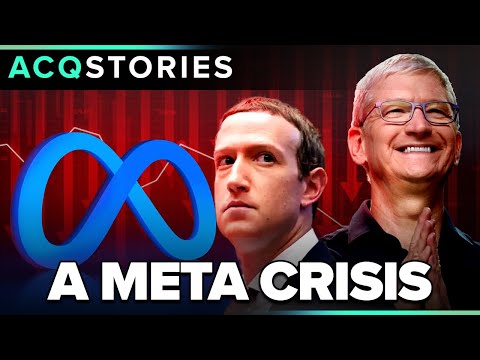
Is This The End For Amazon, TSMC and META?
Ben Thompson (guest), Ben Gilbert (host)
In this episode of Acquired, featuring Ben Thompson and Ben Gilbert, Is This The End For Amazon, TSMC and META? explores thompson’s take on Meta resilience, TSMC risk, and Amazon Day 2 Thompson argues Meta is healthier than sentiment suggests: Apple’s ATT changes hurt near-term economics but may strengthen Meta’s long-term moat, and TikTok’s threat appears contained as Meta products still grow.
Thompson’s take on Meta resilience, TSMC risk, and Amazon Day 2
Thompson argues Meta is healthier than sentiment suggests: Apple’s ATT changes hurt near-term economics but may strengthen Meta’s long-term moat, and TikTok’s threat appears contained as Meta products still grow.
He’d push Meta to refocus on its core ads + social strengths, shrink further, and controversially acquire Shopify to close the advertising-to-commerce loop—while calling the metaverse strategy structurally misaligned and unlikely to succeed via brute-force spending.
For TSMC, he sees current strategy as broadly correct, with pricing discipline improving but the overriding, effectively unhedgeable risks being Taiwan geopolitics and the post-EUV/Moore’s Law roadmap; advanced packaging and some trailing-edge capacity may matter.
For Amazon, he frames recent problems as a “trying to stay young forever” mistake: overinvestment in logistics and cost blowouts. AWS remains defensible via a Microsoft-like platform moat—feature sprawl, backward compatibility, and customer lock-in—while Microsoft/Azure pressures AWS through enterprise bundling and migration support.
Key Takeaways
Meta’s post-ATT pain may ultimately deepen its moat.
Thompson sees Apple’s changes as structurally damaging to valuation near term, but also as “moat-enhancing” because it’s harder for rivals to build competitive top-of-funnel advertising at Meta’s scale if Meta keeps its audience.
Get the full analysis with uListen AI
Meta’s decline narrative is overstated; usage growth persists.
He notes a mismatch between perception (“they’re shrinking”) and reality (“every product they have is still growing”), implying the market may be overly pessimistic.
Get the full analysis with uListen AI
Meta likely needs a true scarcity mindset—and more downsizing than done so far.
He frames growth-era companies as struggling to adapt; the 11,000 layoffs only “bring them back… nine months,” but deeper cuts risk morale and capability loss.
Get the full analysis with uListen AI
Closing the ads-to-commerce loop is Meta’s biggest strategic lever.
His CEO move is to acquire Shopify and litigate the inevitable FTC/DOJ challenge, believing the integration payoff would outweigh years of legal distraction (even if socially “bad generally”).
Get the full analysis with uListen AI
Meta’s metaverse push is strategically misaligned and too far from winning conditions.
He argues Facebook is a services/social-network company, yet VR success requires selling headsets at friend-network scale; he doubts innovation emerges from monolithic, high-spend brute force without broader ecosystem experimentation.
Get the full analysis with uListen AI
TSMC’s core risk is geopolitical and not meaningfully hedgeable.
Because TSMC’s engineering concentration in Taiwan underpins flexibility and execution, he views China/Taiwan risk as inherent; US/Japan fabs are more political/alliance signaling than true operational redundancy.
Get the full analysis with uListen AI
AWS’s ‘messy’ breadth is a moat, and backward compatibility is the lock-in engine.
He likens AWS to “Microsoft Word”: too many features and a bad interface, but customers rely on some irreplaceable service. ...
Get the full analysis with uListen AI
Notable Quotes
“I would acquire Shopify, and I would take the FTC and Justice Department to court when they sue to stop it.”
— Ben Thompson
“As far as the metaverse stuff, I think it’s a bad idea. Everything about their strategy works against that.”
— Ben Thompson
“In retrospect, that was the seed of Amazon’s kind of disastrous last few years… They dramatically overinvested in their logistics network.”
— Ben Thompson
“AWS is the Microsoft Word of cloud providers… an absolute absurd number of features, and the interface is pretty terrible, but every single customer is completely dependent on one of those features.”
— Ben Thompson
“TSMC is Taiwan… and I’m not sure there’s really much they can do about that.”
— Ben Thompson
Questions Answered in This Episode
On Meta: What specific ‘top-of-funnel’ ad advantages does Thompson think become harder for competitors to replicate post-ATT?
Thompson argues Meta is healthier than sentiment suggests: Apple’s ATT changes hurt near-term economics but may strengthen Meta’s long-term moat, and TikTok’s threat appears contained as Meta products still grow.
Get the full analysis with uListen AI
On Shopify: What product and data integrations would most concretely ‘close the loop’ between Meta ads and Shopify commerce, and what would success metrics be?
He’d push Meta to refocus on its core ads + social strengths, shrink further, and controversially acquire Shopify to close the advertising-to-commerce loop—while calling the metaverse strategy structurally misaligned and unlikely to succeed via brute-force spending.
Get the full analysis with uListen AI
On culture: If Meta shrinks significantly more, which teams/skills are non-negotiable to preserve its network effects and ad performance?
For TSMC, he sees current strategy as broadly correct, with pricing discipline improving but the overriding, effectively unhedgeable risks being Taiwan geopolitics and the post-EUV/Moore’s Law roadmap; advanced packaging and some trailing-edge capacity may matter.
Get the full analysis with uListen AI
On the metaverse: What would an ‘ecosystem-building’ path look like versus Meta’s brute-force approach, and which milestones would change Thompson’s view?
For Amazon, he frames recent problems as a “trying to stay young forever” mistake: overinvestment in logistics and cost blowouts. ...
Get the full analysis with uListen AI
On TSMC: If geopolitical risk is unhedgeable, what contingency planning (customer-side or industry-wide) is actually realistic?
Get the full analysis with uListen AI
Transcript Preview
In retrospect, that was the seed of Amazon's kind of disastrous last few years. [laughing] They have an absolute absurd number of features, and the interface is pretty terrible. The metaverse stuff, I think it's a bad idea. Everything about their strategy works against that.
Ben, I have one more section that I wanna do, which is, you do all this analysis on companies, and you have this very enviable position of getting to comment on and critique their strategies after they announce them, or an event after they do them. And I wanna play a game where I give you a company, and I'm curious, either if you were the CEO, or you were giving advice to the CEO, what would you do strategically? And I think an interesting place to start, 'cause we talked about them a bunch on this episode, is Meta. You are the new CEO of Meta. What do you do over the next five years?
Well, I think Meta is actually doing, um, a fair number of things that they should. Now, the Apple changes were very devastating, and they're structurally devastating, and so they deserved a significant haircut on their valuation because of that. But I also think they were moat-enhancing in the long run, where I, I, I question whether any other company's ever gonna build a top-of-the-funnel advertising product that will be competitive with, with, with Meta, assuming they can keep their audience. It appears that they've done a good job limiting the sort of the TikTok threat. TikTok's growth has sort of flattened out over the last few years. So I think they're actually in good shape. What I do worry about is this is a company that's always been growing. It's really hard for those companies to shift to more of a scarcity mindset. I mean, they laid off 11,000 people, which only brings them back, like, nine months. They probably need to be a lot smaller, but that's also very destructive to company culture and morale. Do they still have the people that they need to pull that off? Those are probably some of the bigger questions, and obviously, any aggregator is dependent on having that audience. But I do think that the network effects of their products are still underrated. I mean, everyone has it in their head that they're shrinking, and actually, every product they have is still growing, which I think is underappreciated. So number one, I think they're kind of broadly on the right track. Number two, I would acquire Shopify, and I would take the FTC and Justice Department to court when they sue to stop it. I think they need to close the loop on e-commerce and advertising, and, well, again, I think that'd probably be bad generally, but I think it'd be very good for Meta, so I would do that. As far as the metaverse stuff, I think it's a bad idea. It's very hard to talk about the metaverse, 'cause it, like, what are the prospects versus is it, you know, X, Y, Z? I do think that it's not just a bad idea because it's taking so many resources and attention, I think, from Mark Zuckerberg, but also, I just don't think innovation is necessarily born of mass expenditures in large companies. We sort of skipped over a period of experimentation and ecosystem building that, in the long run, perhaps would be consolidated into a couple companies, but instead, it's just one monolith sort of trying to brute force this sort of bit. And the reality is, is Facebook is a services company. It's a social network, and everything about their strategy works against that. To succeed, they not only need to sell headsets, they need to sell headsets at sufficient scale and into friend networks such that people can social network on the headsets. And, and so their, their place of winning is, is even further away than I think people think, and so I don't think strategically it's the best thing for them to be doing, and I've been pretty anti-them doing from day one. When they bought Oculus, I said it was bad. And again, it's very hard to distinguish between, well, what are the prospects of this versus zooming out, and should they even be doing this? But I think the market is overly down on Meta, in part because the [chuckles] branding was too successful. This is still a powerhouse in social media and advertising. Uh, and the amount of money they're spending on the metaverse is, all things considered, not that much. They still, you know, have a $5 billion profit a quarter. So yeah, I would double down on what they are, and I would consolidate, not acquire Shopify, and spend three years fighting it out in court, because I think the payoff would be worth it.
Install uListen to search the full transcript and get AI-powered insights
Get Full TranscriptGet more from every podcast
AI summaries, searchable transcripts, and fact-checking. Free forever.
Add to Chrome