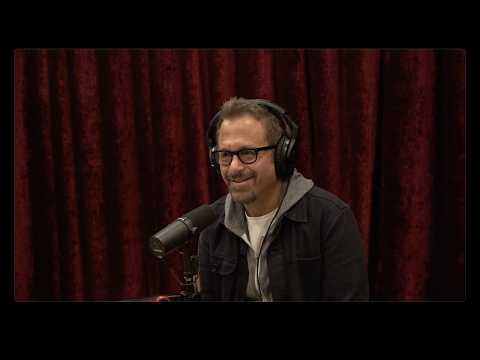
Joe Rogan Experience #2475 - Andrew Jarecki
Joe Rogan (host), Joe Rogan (host)
In this episode of The Joe Rogan Experience, featuring Joe Rogan and Joe Rogan, Joe Rogan Experience #2475 - Andrew Jarecki explores inside Alabama prisons: corruption, brutality, profit motives, and transparency failures Jarecki argues that prisons operate like “black sites,” where secrecy and restricted press access enable brutality, coverups, and uninvestigated deaths on a massive scale.
Inside Alabama prisons: corruption, brutality, profit motives, and transparency failures
Jarecki argues that prisons operate like “black sites,” where secrecy and restricted press access enable brutality, coverups, and uninvestigated deaths on a massive scale.
The conversation details how contraband phones—often sold by guards—became critical evidence sources for documenting beatings, overdoses, rape, and retaliation against inmate organizers.
They describe prison economics as a web of perverse incentives: forced labor, exploitative fees (communications, transport, uniforms), and service contracts that profit when prisons stay full and opaque.
Jarecki and Rogan connect prison dysfunction to broader societal failures—criminalizing addiction, neglecting early education and community investment, and creating traumatized people who reenter society worse off.
Jarecki recounts how “The Jinx” helped bring Robert Durst to justice, contrasting rare cases requiring incapacitation with the far more common over-punishment and dehumanization of nonviolent offenders.
Key Takeaways
Opacity is the enabling condition for prison abuse.
Jarecki frames prisons as “black sites” where the public assumes someone would tell them if horrors occurred; the documentary’s core claim is that secrecy, not isolated “bad apples,” allows routine violence, neglect, and coverups.
Get the full analysis with uListen AI
Contraband technology paradoxically created the documentary’s evidence trail.
Phones and cameras—often sold by guards for income—let incarcerated people record beatings, blood trails, and conditions that would otherwise be denied or re-labeled in official reports.
Get the full analysis with uListen AI
The incentive structure rewards harm, not rehabilitation.
From forced labor programs to telecom/video-visit contracts and vendor fees, the system makes money from captivity and volume, while providing minimal services that check boxes rather than improve outcomes.
Get the full analysis with uListen AI
Over-criminalization and “violent crime” inflation expand who gets treated as irredeemable.
They describe how Alabama classifies many behaviors as “violent,” enabling long sentences and harsher placements—even for conduct like “entering an unoccupied building”—reinforcing the narrative that only the “worst of the worst” are incarcerated.
Get the full analysis with uListen AI
Guard impunity and political protection normalize extreme brutality.
The episode highlights allegations around Steven Davis’s death and the continued employment/promotion of a guard tied to numerous excessive-force complaints, suggesting institutional backing from leadership (including the state AG).
Get the full analysis with uListen AI
New prison construction can function as a corruption vehicle rather than a solution.
Jarecki describes Alabama’s response to DOJ findings as a pivot to building new prisons (despite DOJ emphasizing corruption/brutality), with ballooning costs and early site work implying a “fix was in.”
Get the full analysis with uListen AI
Sustainable reform requires both oversight inside prisons and investment before people ever reach them.
They argue for independent investigations, press access, and community/education interventions (e. ...
Get the full analysis with uListen AI
Notable Quotes
“Because of the secrecy that surrounds prisons, we treat them sort of like black sites.”
— Andrew Jarecki
“The Alabama Department of Corrections is the largest law enforcement agency in the state of Alabama, and it's also the biggest drug dealing operation.”
— Andrew Jarecki
“It is exactly convict leasing.”
— Andrew Jarecki
“You’re much more likely to die of an overdose inside the prison than you are out on the street in Alabama.”
— Andrew Jarecki
“It shouldn't be that these guys who are incarcerated have to take life and death risks using contraband cell phones to show what's happening in institutions that I'm paying for and you're paying for.”
— Andrew Jarecki
Questions Answered in This Episode
In “The Alabama Solution,” what specific evidence most strongly indicates coverups (e.g., witness handling, official narratives, medical neglect), and how did you verify it beyond contraband footage?
Jarecki argues that prisons operate like “black sites,” where secrecy and restricted press access enable brutality, coverups, and uninvestigated deaths on a massive scale.
Get the full analysis with uListen AI
You suggest attorney calls may be monitored despite protections—what indicators or cases made you conclude that, and what reforms would actually enforce attorney-client privacy?
The conversation details how contraband phones—often sold by guards—became critical evidence sources for documenting beatings, overdoses, rape, and retaliation against inmate organizers.
Get the full analysis with uListen AI
How did Alabama’s DOJ findings letter describe the core causes of the crisis, and what parts did state officials most directly dispute as “anecdotal”?
They describe prison economics as a web of perverse incentives: forced labor, exploitative fees (communications, transport, uniforms), and service contracts that profit when prisons stay full and opaque.
Get the full analysis with uListen AI
What are the concrete mechanics of the forced-labor pipeline you documented (assignment process, penalties for refusal, where the money flows, and who contracts with whom)?
Jarecki and Rogan connect prison dysfunction to broader societal failures—criminalizing addiction, neglecting early education and community investment, and creating traumatized people who reenter society worse off.
Get the full analysis with uListen AI
The documentary implies retaliation against organizers like Robert Earl Council—what patterns distinguish “ordinary” discipline from targeted retaliation for speech/organizing?
Jarecki recounts how “The Jinx” helped bring Robert Durst to justice, contrasting rare cases requiring incapacitation with the far more common over-punishment and dehumanization of nonviolent offenders.
Get the full analysis with uListen AI
Transcript Preview
Joe Rogan Podcast, check it out. The Joe Rogan Experience. Train by day, Joe Rogan Podcast by night. All day. [upbeat rock music]
What's happening, man? How are you?
I'm good. How are you?
I'm great. I watched, uh, your documentary, The Alabama Solution, last night, and it was wild. It's very, very disturbing. Um, kind of shocked I hadn't heard more about it, you know, 'cause it's such a terrible, terrible story. It's such a, just an unbelievably awful situation, and, um, I think you covered it really well. It's just, it's very, very heartbreaking.
Yeah. Thanks for watching it. Yeah, it's sort of a question of, of, sort of a question of why people, uh, don't know about things that are happening with our tax dollars in our backyards. You know, are there things that we don't wanna know? Um, there's a reason why people sort of drive by prisons on the highway, and they see the little metal sign, and it says, you know, XYZ Correctional, and they probably think, as I did for many years, "Well, I'm sure it's not great back there, but doesn't need to be great, and if anything terrible was happening back there, somebody'd probably tell me about it." But because of the secrecy that surrounds prisons, um, you know, we treat them sort of like black sites. There's no way for us to really look inside, so the press doesn't get let in, and the public doesn't understand what's happening. And we know that, you know, when you give people total control over other people, bad things happen.
Bad things happen-
Especially-
... every single time. And this is one of the worst things. It's, what's really terrifying is the sheer numbers of people that died there with no investigation. That's what's really terrifying.
Yeah.
Because, you know, you even detailed at, at the end, like, since then, how many people have died, and it's just like, good Lord, you're, you're, thousands.
Yeah. Well, there's a attorney general in Alabama named Steve Marshall, uh, who's always run on, like, tough on crime strategies and saying, you know, "We gotta lock more people up, and people who are in prison for, uh, violent crimes should potentially never get out of prison, ever." Um, and he says in the film, as you remember, um, that, uh, there... I, I ask him about the nature of crime, and he says, "Well, I think there are evil people in this world, people who have absolutely no regard for human life." And this is a guy who's presided over a system that's killed, that's led to the deaths of 1,500 people just since we started making the film.
Right.
So this question of, like, who are the good guys, and who are the bad guys, and, you know, what's the nature of, of cruelty? What's the nature of punishment? Are we putting people there to try to make them better, rehabilitate them? Are we putting them there because they're drug addicts, and we're trying to get rid of them as opposed to rehabilitate them or as opposed to try to get them off of drugs? So obviously, prisons have become pretty much a catchall for the ills of society. So if you have mental illness, much more likely to go to prison. Once you're in prison, if you're mentally ill or you have bad social skills, you're much more likely to get into a scrape with a guard who probably isn't trained to deal with somebody who's mentally ill, and you're much more likely to get murdered, which is what we saw happening in Alabama.
Install uListen to search the full transcript and get AI-powered insights
Get Full TranscriptGet more from every podcast
AI summaries, searchable transcripts, and fact-checking. Free forever.
Add to Chrome