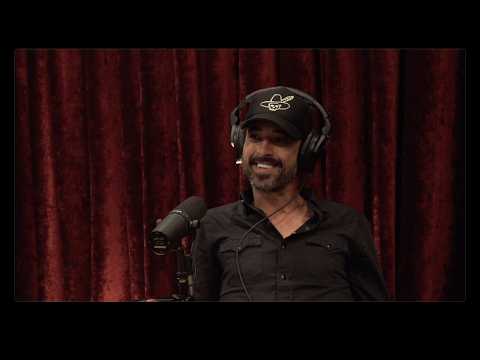
Joe Rogan Experience #2489 - Ryan Bingham
Joe Rogan (host), Ryan Bingham (guest)
In this episode of The Joe Rogan Experience, featuring Joe Rogan and Ryan Bingham, Joe Rogan Experience #2489 - Ryan Bingham explores rogan and Bingham on cowboy roots, nature, fires, fame, art Ryan Bingham recounts a life shaped by ranch work and bull riding, arguing that hard, physical experiences build resilience and translate into confidence in music and acting.
Rogan and Bingham on cowboy roots, nature, fires, fame, art
Ryan Bingham recounts a life shaped by ranch work and bull riding, arguing that hard, physical experiences build resilience and translate into confidence in music and acting.
Both discuss the psychological and spiritual reset that wilderness provides, describing heightened senses, community dependence, and the appeal of self-sufficiency skills.
They explore hunting culture and wildlife management—from axis deer in Hawai‘i to feral hogs in Texas—plus controversies around predator policies, reintroductions, and eradication plans.
Bingham details California wildfire evacuations with horses and the stress of living in fire-prone canyons, while Rogan criticizes infrastructure failures and regulatory paralysis.
Bingham explains his organic path from rodeos to songwriting to Yellowstone, emphasizing community support, protecting creative ownership, and music as personal therapy rather than commerce.
Key Takeaways
Hard, uncomfortable work can be formative—if you don’t stay trapped in it.
Both frame ranch labor, hay hauling, and other manual jobs as character-building: they teach competence, work ethic, and perspective, while also motivating people to find a healthier long-term path.
Get the full analysis with uListen
Wilderness time strips away “civilization weight” and recalibrates attention.
Bingham’s guide-school story and Rogan’s Alaska trips highlight how removing phones and distractions heightens senses and produces a grounded feeling many people mistake for “spiritual” but may be deeply biological.
Get the full analysis with uListen
Community is stronger where nature can still kill you.
They argue places like Alaska (and rural Texas) encourage mutual aid because the consequences of isolation—car trouble, storms, predators—are real, unlike urban environments where responsibility is outsourced.
Get the full analysis with uListen
Wildlife management debates often ignore lived reality on the ground.
Rogan criticizes predator policies (wolves/mountain lions) as being shaped by ideology and urban distance, while Bingham notes ranchers’ generational experience should be central to decisions that affect livestock and safety.
Get the full analysis with uListen
Invasive-species solutions become controversial when values clash with practicality.
They discuss axis deer overpopulation in Hawai‘i, feral hog expansion, and Catalina’s mule deer eradication plan—raising the question of eradication vs regulated public hunting and who benefits from each approach.
Get the full analysis with uListen
Wildfire readiness is personal in California; evacuation planning becomes a lifestyle.
Bingham describes repeated evacuations, moving horses, and chasing safe zones as winds shift—arguing residents often create more workable preparedness plans than institutions burdened by bureaucracy.
Get the full analysis with uListen
Protect your creative work; don’t trade ownership for short-term money.
Rogan’s advice to Oliver Anthony and Bingham’s own stance converge: songwriting is the core asset, and contracts can turn labels/financiers into long-term “vampires” if artists sign under pressure.
Get the full analysis with uListen
Notable Quotes
“Every time I get across the state line, it’s just like that weight comes off… ‘Ah, man, I’m home.’”
— Ryan Bingham
“It’s not the United States of Montana.”
— Joe Rogan
“There was that moment in me… I was like, ‘I don’t know if I’m ever going back.’”
— Ryan Bingham
“Team People first.”
— Joe Rogan
“What I get out of music is… singing it to the wall… that’s what saved my life.”
— Ryan Bingham
Questions Answered in This Episode
In your Montana guide-school experience, which specific skills proved most transferable back to “normal life” (decision-making, calm under stress, leadership)?
Ryan Bingham recounts a life shaped by ranch work and bull riding, arguing that hard, physical experiences build resilience and translate into confidence in music and acting.
Get the full analysis with uListen AI
You mention music as therapy—what are the practical steps you take when you’re stuck (routine, prompts, melodies first vs lyrics first)?
Both discuss the psychological and spiritual reset that wilderness provides, describing heightened senses, community dependence, and the appeal of self-sufficiency skills.
Get the full analysis with uListen AI
On Yellowstone, what was the most challenging scene emotionally or technically, given you had no formal acting training?
They explore hunting culture and wildlife management—from axis deer in Hawai‘i to feral hogs in Texas—plus controversies around predator policies, reintroductions, and eradication plans.
Get the full analysis with uListen AI
If Catalina’s mule deer are ‘invasive,’ what would a realistic alternative plan look like—public hunting, contraception, relocation, or habitat restoration—and who should decide?
Bingham details California wildfire evacuations with horses and the stress of living in fire-prone canyons, while Rogan criticizes infrastructure failures and regulatory paralysis.
Get the full analysis with uListen AI
How would you design a predator-management policy (wolves/mountain lions) that balances ecology, ranching economics, and public safety without becoming ideological?
Bingham explains his organic path from rodeos to songwriting to Yellowstone, emphasizing community support, protecting creative ownership, and music as personal therapy rather than commerce.
Get the full analysis with uListen AI
Transcript Preview
Joe Rogan Podcast, check it out. The Joe Rogan Experience. Train by day, Joe Rogan Podcast by night. All day. [upbeat rock music] What's happening, man? Good to see you.
Yeah, good to see you, man.
Hold on up to that microphone, sir.
All right.
Um, you were fucking great at that McConaughey thing last year. I really enjoyed that. That was my first time seeing you perform live. It was really cool.
Oh, really? Thank you, man.
It was very cool. You're so relaxed up there, man. So, it was like you brought everybody into a nice, like, comfortable, chill vibe. It was cool.
[laughs] Oh, I'm glad you guys felt, felt that way. Sometimes it, uh, it takes me a minute to get into the groove, you know?
Yeah, but it felt like that, you know?
Mm-hmm.
It felt like you were in it, like it brought us, it brought the whole crowd into it, too. That, that event that he does, the two events, the one, the singer-songwriter one, and then the other one with the b- the auction and everything.
Mm-hmm.
They're so cool. Such good events.
Yeah, they're good people, too, you know?
Yeah.
That's, uh, I, uh, really grown to just appreciate the community around here in Austin and the Hill Country area and all of that stuff. I definitely, uh, wouldn't have the career, I don't think, if it wouldn't have been for the community around here that just support songwriters and music in the way that they do. It's pretty incredible, you know? When they get behind anything, it's just like, it just feels so good to see that many people come together and, and sup- you know, have that support, you know?
It's a really good place, man. Austin is a really good community. It really is.
Mm-hmm.
A very positive place in a lot of ways.
Yeah.
I mean, nothing's perfect. There's no perfect places, but it's, it's really good.
Yeah.
I like it so much better than when I was living in California.
Mm-hmm.
Just feels like real people. Just-
I miss it, man. I mean, I'm, I'm, I'm mov- in the process of moving back to, to Texas as well.
Where are you at right now?
Uh, outside of Dallas, Texas, out by Tyler.
Okay.
But I've been, I've been in, uh, Topanga Canyon in LA for years.
Oh, geez.
You know? So I've been in the middle of it, and, um-
Doing that Hollywood thing
... every time I get across the state line, it's just like that weight comes off, and you're just like-
[laughs]
... "Ah, man, I'm, I'm home," you know? So, yeah.
Dude, you had the coolest fucking character on Yellowstone.
[laughs]
It was such... It must be so fun to play.
It was so much fun, man. I had to... I, I laugh. I always talk about it. I ki- I felt like I had, like, one of the easiest jobs there, you know? It's 'cause my, the character was kind of a smaller role, and, you know, most of the time I'd, I'd work, like, one or two days a week, and then the rest of the time I'd just be, like, fly fishing and get lost in the mountains.
Install uListen to search the full transcript and get AI-powered insights
Get Full TranscriptGet more from every podcast
AI summaries, searchable transcripts, and fact-checking. Free forever.
Add to Chrome