OpenAI and Google Reveal Plans for AI Future | Pivot
Kara Swisher (host), Scott Galloway (host)
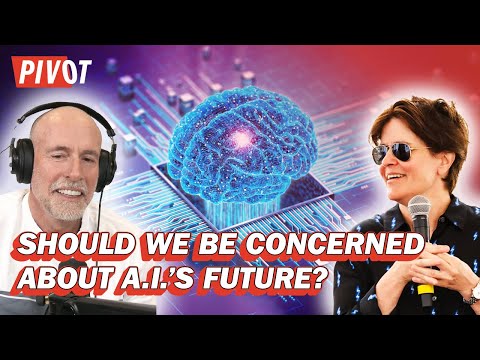
In this episode of Pivot, featuring Kara Swisher and Scott Galloway, OpenAI and Google Reveal Plans for AI Future | Pivot explores openAI, Google, and AI Search: Power, Loneliness, and Media Upheaval The episode examines OpenAI’s new GPT-4o model, its voice-driven, Her-like assistant capabilities, and the social risks of people preferring AI relationships over human ones.
OpenAI, Google, and AI Search: Power, Loneliness, and Media Upheaval
The episode examines OpenAI’s new GPT-4o model, its voice-driven, Her-like assistant capabilities, and the social risks of people preferring AI relationships over human ones.
Kara Swisher and Scott Galloway debate whether advanced voice agents will deepen isolation—especially for young men—or meaningfully help already-lonely people.
They then shift to the competitive landscape, leadership churn at OpenAI, and how Microsoft’s influence and big-tech consolidation are shaping the AI race.
Finally, they dissect Google’s AI-overview search rollout, warning that AI answers on top of search results could devastate media traffic, collapse SEO, and entrench Google’s monopoly power.
Key Takeaways
Voice-based AI agents are rapidly evolving into emotionally persuasive companions.
GPT-4o’s realistic, flirty voice interactions echo the film Her, raising concerns that people—especially young men—will retreat from difficult but growth-producing human relationships into low-friction AI relationships.
Get the full analysis with uListen AI
AI companionship could both deepen isolation and offer real support to the already lonely.
Galloway fears widespread social sequestration, while Swisher counters that many people are already profoundly isolated, and AI assistants—though imperfect and glitchy—might offer some relief or connection.
Get the full analysis with uListen AI
OpenAI’s internal churn doesn’t halt the broader AI power shift toward hyperscalers.
Despite high-profile departures like Ilya Sutskever, the hosts argue Microsoft’s backing means OpenAI’s trajectory will largely follow Microsoft’s strategic interests, reflecting how AI is consolidating inside a few cloud giants.
Get the full analysis with uListen AI
Google’s AI Overviews in search are an existential threat to web publishers and SEO.
By placing AI-written “best answers” at the top of results, Google reduces the need to click through to external sites, undermining traffic, advertising revenue, and the entire SEO optimization ecosystem.
Get the full analysis with uListen AI
Media’s core differentiator—voice—may be easily mimicked by large language models.
If users can request “business news in the voice of Reuters” directly from an LLM, AI may replicate trusted editorial tones without sending audiences—or revenue—back to the originating outlets.
Get the full analysis with uListen AI
Big Tech AI leaders are converging into a small set of cloud-compute utilities.
Companies like Google, Microsoft, Amazon, and Meta increasingly function as energy/compute providers powering LLMs, making them structurally similar and concentrating power in four or five massive firms.
Get the full analysis with uListen AI
Regulation is lagging as Google uses its monopoly position to set AI search terms.
Swisher argues that Google’s dominance has already stifled innovation in search, and its AI pivot now extends this control, making antitrust and regulatory intervention more urgent.
Get the full analysis with uListen AI
Notable Quotes
“This is the voice agent we’ve all wanted… the Syrian Alexa killer.”
— Scott Galloway
“This is the biggest threat of AI… people sequester from one another.”
— Scott Galloway
“Real victory is around overcoming really hard things with people, ’cause people are complicated.”
— Scott Galloway
“I sat there and I was like, ‘I don’t have to click in anywhere. Here is the actual answer.’”
— Kara Swisher
“Because they’re a monopoly… there has been no innovation in search because they run it.”
— Kara Swisher
Questions Answered in This Episode
How should society balance the mental-health benefits of AI companions with the risk of people withdrawing from real-world relationships?
The episode examines OpenAI’s new GPT-4o model, its voice-driven, Her-like assistant capabilities, and the social risks of people preferring AI relationships over human ones.
Get the full analysis with uListen AI
What new business models could enable media organizations to survive when AI search answers replace most click-through traffic?
Kara Swisher and Scott Galloway debate whether advanced voice agents will deepen isolation—especially for young men—or meaningfully help already-lonely people.
Get the full analysis with uListen AI
Should regulators treat AI-generated search summaries as an anticompetitive use of publishers’ content, and if so, how?
They then shift to the competitive landscape, leadership churn at OpenAI, and how Microsoft’s influence and big-tech consolidation are shaping the AI race.
Get the full analysis with uListen AI
How might individuals consciously design their own “rules of engagement” with AI assistants to avoid social isolation and overdependence?
Finally, they dissect Google’s AI-overview search rollout, warning that AI answers on top of search results could devastate media traffic, collapse SEO, and entrench Google’s monopoly power.
Get the full analysis with uListen AI
As AI and cloud consolidate into a few mega-firms, what practical antitrust or interoperability requirements could realistically keep the market open?
Get the full analysis with uListen AI
Transcript Preview
OpenAI has released its latest model, GPT-4o. The new model... They can't go to five, I don't know why. The new model is capable of realistic voice conversations, sort of, and can interact through text, audio, and image. It will also have memory capabilities allowing it to learn from previous conversations, and can do real-time translation. That's, uh, that's very impressive, but it's not th- as hard as you think it is, that particular one. Um, in the blog post, uh, Sam Altman said, "It feels like AI from the movies." He was referring to Her. Um, I think you didn't see it, 'cause it wasn't a happy movie, FYI, Sam. You need to see it to the end.
It's a great movie.
It... I didn't like it, but, um, but, uh, but I have to say, uh, that's not the movie I would reference in any way. So, talk a little bit about this, um, this new model, the technology, is... A-I is try- uh, OpenAI is trying very hard to keep ahead of its competitors and not be Netscape. I- I think they're doing an interesting job of doing that, but they have to constantly be waving hands so that they're in the center of the attention, uh, scheme of this thing, and, uh, and keep rolling out products. It's smart, you know, 'cause Netscape sort of sat on its laurels and got run over by Microsoft.
Yeah, I'd love... Remember when they used to do those things, like, what if, what if movie titles were real, like, what the movie's actually about? Um, if they wanted to name this what it's actually about, they should call it the Syrian Alexa Killer, because it's... essentially, this is the voice agent we've all wanted. And the stuff I've seen is actually pretty th- exceptional, and I do think Her is a really decent metaphor for this. Uh, that movie really was, uh, prescient, and, and the thing I see that worries me, and I might be... uh, I might be being paranoid, but it doesn't mean I'm wrong, is this is the problem, and it's depicted in the movie Her. This guy begins to sequester from society and have a relationship with an algorithm, and this is the fear, uh, and this is what worries me most about AI, is it's gonna give, yet again, more and more young men a belief that they can have a reasonable facsimile of life without interacting with actual organic beings called humans. Look, this is the biggest threat of AI, and that is we... when we separate from each other in-person and we can express... when we're walking around with our own TV studio and we can say things about people without having any direct contact with them, or we can say something about them without even revealing our identity online, much less in-person, our worst instincts come out. And when we feel, w- when we feel as if we can have something s- some reasonable semblance of a relationship rather than friendship, Reddit or Discord, rather than sex, YouPorn or a sex doll, rather than work, um, Coinbase or Robinhood, people sequester from one another. And the reason why people are so f- afraid of being canceled is that the worst thing that could happen to you throughout most of history is to be shamed, 'cause that meant you were risking being expunged from the tribe or the clan, at which point you would die. And the reason why you die is you become lonely, and without the benefit or the wisdom of crowds and other people caring for you and helping you make good decisions, you slowly get depressed, then crazy, then violent.
Install uListen to search the full transcript and get AI-powered insights
Get Full TranscriptGet more from every podcast
AI summaries, searchable transcripts, and fact-checking. Free forever.
Add to Chrome