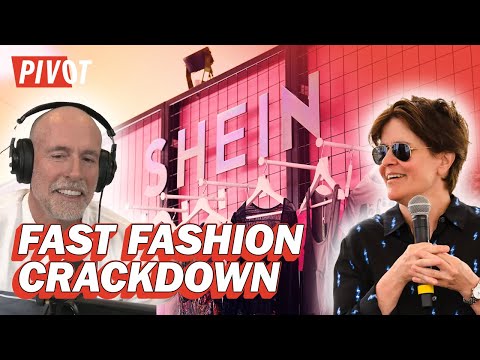
Shein and Temu Face Major Crackdown with New Shipping Rules | Pivot
Kara Swisher (host), Scott Galloway (host)
In this episode of Pivot, featuring Kara Swisher and Scott Galloway, Shein and Temu Face Major Crackdown with New Shipping Rules | Pivot explores biden Targets Shein, Temu Loophole As Software-Driven Retail Dominates The episode discusses new Biden Administration shipping rules aimed at closing a duty-free loophole heavily used by Shein, Temu, and other Chinese platforms. These companies have avoided import taxes that traditional retailers like Gap and H&M pay, creating a major cost advantage. Scott Galloway, a Shein investor, concedes the loophole should be closed or duties removed for everyone, even though it will only minimally impact Shein’s growth. The conversation emphasizes that Shein’s real advantage is its asset-light, AI-driven business model, which is disrupting legacy retailers regardless of tariff policy.
Biden Targets Shein, Temu Loophole As Software-Driven Retail Dominates
The episode discusses new Biden Administration shipping rules aimed at closing a duty-free loophole heavily used by Shein, Temu, and other Chinese platforms. These companies have avoided import taxes that traditional retailers like Gap and H&M pay, creating a major cost advantage. Scott Galloway, a Shein investor, concedes the loophole should be closed or duties removed for everyone, even though it will only minimally impact Shein’s growth. The conversation emphasizes that Shein’s real advantage is its asset-light, AI-driven business model, which is disrupting legacy retailers regardless of tariff policy.
Key Takeaways
Closing the de minimis loophole is economically fair, but politically costly.
Shein and Temu currently pay no import duties on many shipments while competitors like Gap pay hundreds of millions; fixing this levels the playing field but will likely raise prices for U. ...
Get the full analysis with uListen AI
Shein’s core advantage is software, not tax arbitrage.
Even if tariffs are imposed, Shein’s AI-driven demand prediction and routing, plus an asset-light structure, will preserve most of its cost and speed advantage over legacy retailers.
Get the full analysis with uListen AI
Asset-light, AI-native companies are capturing outsized market value.
Over the past two decades, firms that outsource physical assets and concentrate on software and data have added tens of billions in market cap; Shein fits this pattern and is rapidly overtaking apparel incumbents.
Get the full analysis with uListen AI
Real-time demand forecasting reduces waste and returns, enabling lower prices.
By using AI to predict exactly how many units of specific items will sell and where, Shein minimizes overproduction and logistics inefficiencies, allowing it to undercut brands like Zara.
Get the full analysis with uListen AI
Legacy retailers are constrained by outdated, asset-heavy models.
Traditional players own factories, warehouses, stores, and inventory-heavy supply chains, which limit agility and keep costs high compared to software-centered platforms.
Get the full analysis with uListen AI
Tariff policy is a weak tool against structurally superior business models.
While new rules may marginally hurt Shein and Temu, the hosts argue this will “barely slow their growth” because their structural and technological advantages are much more decisive.
Get the full analysis with uListen AI
Technology leadership has consistently separated winners from losers in retail.
Walmart once dominated through logistics and IT superiority, and now Shein is doing the same at internet scale with AI, showing the recurring pattern of tech-driven disruption.
Get the full analysis with uListen AI
Notable Quotes
“They are taking advantage, as companies do, of a loophole, and what I would like to see is these taxes done away for everybody.”
— Scott Galloway
“I think this is hard to argue that this shouldn’t be closed or they shouldn’t get rid of the taxes or the import duties on the other brands.”
— Scott Galloway
“The really amazing thing, and the reason why I invested in Shein… they don’t own a single factory, a single truck, a single plane, a single warehouse or a single store.”
— Scott Galloway
“It’s what Zara did to everybody else, these guys are doing to Zara, and it’s all with software.”
— Scott Galloway
“They deserve to pay the tax. Sorry. Sorry, companies. You have to pay the tax.”
— Kara Swisher
Questions Answered in This Episode
If tariffs barely slow Shein and Temu, what policy tools—if any—could meaningfully address their dominance while protecting consumers?
The episode discusses new Biden Administration shipping rules aimed at closing a duty-free loophole heavily used by Shein, Temu, and other Chinese platforms. ...
Get the full analysis with uListen AI
How can legacy retailers practically transition from asset-heavy models to more software- and data-centric operations without destroying their existing businesses?
Get the full analysis with uListen AI
What are the broader economic and environmental implications of Shein’s ultra-fast, AI-driven fashion model at global scale?
Get the full analysis with uListen AI
To what extent should consumer price increases be tolerated in the name of fair competition and trade equity?
Get the full analysis with uListen AI
How might similar AI-driven, asset-light models disrupt other sectors beyond apparel and retail logistics?
Get the full analysis with uListen AI
Transcript Preview
The Biden Administration is proposing new shipping rules targeting, uh, Shein and, uh, Temu and Alibaba. A longstanding trade law that allows low-value shipments to enter the US without duties and fees has been abused by companies, the administration says. The new rule would prevent, uh, those exemptions. A report from the House Select Committee on the Chinese Communist Party says, uh, Shein and, uh, Temu are likely responsible for more than fif- 30% of all packages within the exemptions. According to the committee, uh, a Gap paid, uh, $700 million in import duties in 2022, while Shein and Temu, uh, paid none. I think that, that probably needs to be fixed. Um, what do you think about this? It does make things more expensive for the American consumer, for the average.
Yeah. Look, look, uh, just disclosure, I'm an investor in Shein. Um, I think this is, I think this is hard to argue for maintaining. I, I don't... I mean, two things. Uh, uh, they are, they're taking advantage, as companies do, of a loophole, and what I would like to see is these, these taxes done away for everybody. Um, I'm a, I'm, uh, I'm totally anti-tariffs, anti-taxes unless it's used as a strategic weapon for outsourcing pollution or someone, or the Chinese decide to try and dump steel, whatever it is. But I'm, uh, I'd like to see the taxes... I mean, Gap and H&M, you know, say they paid 700 and 200 million respectively on this tax, because this is a loophole that says if you, it's less than $800 and it's going direct to the household, you don't have to pay these, uh, I think it's import taxes. So, I, I think this is hard to argue that this shouldn't be closed or they should, they shouldn't get rid of the, the taxes or the import duties on the other brands. What they don't realize is this is only a small cost or delta in what gives these companies such an incredible advantage. And Shein, and the reason I invested in it, is that if you look at companies over the last 20 years that have added tens of billions of dollars in market capitalization, they tend, tend to have one thing in common, and that is they're asset-light. And the really amazing thing, and the reason why I invested in Shein, and the reason why even with if they have to pay these tariffs, they're still gonna have an unbelievable advantage over these other players and... I mean, these two companies will be responsible for one in $5 spent over the holidays, and their advantage is the following. It's all software. They don't own any assets. They don't own a single factory, a single truck, a single plane, a single warehouse or a single store. And what they do is they use AI to examine activity on their site, and with this machine learning and AI, they can go, "Okay, we're gonna need exactly 7,700 pairs of bell-bottom tie-dye jeans," and then within a microsecond, the software goes, "These are the three best factories to produce it," and then other pieces of the software start going, "Okay, this is the fastest way to get it to the consumer." And because it goes, because of all of this incredible demand estimation, it's because it's such a low price, there are fewer and fewer returns, it's more efficient, and they're able to charge a fraction of the p- price of Zara. I mean, it's, it, it's what Zara did to everybody else, these guys are doing to Zara, and it's all with software. There's no assets here. So as a, as a result, Shein is gonna be the second-largest apparel company in the world, surpassing Amazon this year, and next year, they're probably gonna surpass Walmart with no assets. So this will hurt them a little bit. I think it's unfair.
Install uListen to search the full transcript and get AI-powered insights
Get Full TranscriptGet more from every podcast
AI summaries, searchable transcripts, and fact-checking. Free forever.
Add to Chrome