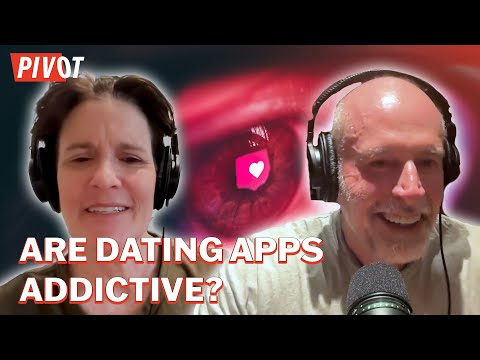
Lawsuit Claims Dating Apps Encourage Compulsive Use
Kara Swisher (host), Scott Galloway (host)
In this episode of Pivot, featuring Kara Swisher and Scott Galloway, Lawsuit Claims Dating Apps Encourage Compulsive Use explores lawsuit Targets Dating Apps’ Addictive Design, Ethics, and Inequity Dynamics Kara Swisher and Scott Galloway discuss a new lawsuit accusing Match Group’s dating apps of being designed to be addictive and predatory, and whether that claim has real legal merit. They question how addiction can be proved in court, drawing parallels to social media, alcohol, and cigarettes, and pivot toward issues of fraud, fake profiles, and platform liability instead. Galloway argues that while these apps can be emotionally damaging and structurally unfair—especially to average men—they also help many people form meaningful relationships and can be better than traditional bar culture. The conversation explores the moral and social trade-offs of gamified dating, from user well‑being and loneliness to how digital marketplaces distort romantic expectations.
Lawsuit Targets Dating Apps’ Addictive Design, Ethics, and Inequity Dynamics
Kara Swisher and Scott Galloway discuss a new lawsuit accusing Match Group’s dating apps of being designed to be addictive and predatory, and whether that claim has real legal merit. They question how addiction can be proved in court, drawing parallels to social media, alcohol, and cigarettes, and pivot toward issues of fraud, fake profiles, and platform liability instead. Galloway argues that while these apps can be emotionally damaging and structurally unfair—especially to average men—they also help many people form meaningful relationships and can be better than traditional bar culture. The conversation explores the moral and social trade-offs of gamified dating, from user well‑being and loneliness to how digital marketplaces distort romantic expectations.
Key Takeaways
Legally proving “addiction” is difficult; liability may hinge more on fraud and harm.
The hosts suggest courts will struggle to define and prove addiction, so stronger cases may come from clear deception (like fake profiles) or demonstrable harms, especially to minors, rather than broad claims about compulsive use.
Get the full analysis with uListen AI
Dating apps use the same gamification mechanics as social media to keep users hooked.
Features like endless swiping, visual stimulation, and intermittent rewards function like a slot machine, delivering dopamine hits that can encourage compulsive engagement.
Get the full analysis with uListen AI
Fraudulent practices, such as fake profiles, may be more actionable than “addictiveness.”
If companies knowingly seed fake or misleading profiles to inflate perceived opportunity and extract more money from users, that behavior aligns with classic definitions of fraud, which courts already know how to address.
Get the full analysis with uListen AI
Dating apps create a skewed market where a small fraction of men capture most attention.
Galloway argues that roughly the top 10% of men receive the vast majority of interest, enabling short-term, low-commitment behavior for them while leaving “average” men feeling invisible and devalued.
Get the full analysis with uListen AI
User experience is highly unequal: many find love, while others feel worse and lonelier.
Some users, including many of the hosts’ friends, find lasting partnerships through apps, while others delete them because they damage their self-esteem or feel dehumanizing and transactional.
Get the full analysis with uListen AI
Offline and online dating both have downsides; apps mainly intensify existing dynamics.
The hosts note that bars and traditional venues can also be depressing or objectifying; apps “speedball” the market rather than inventing bad behavior from scratch, amplifying choice, rejection, and superficial judgment.
Get the full analysis with uListen AI
Users should approach dating as a multi-channel effort, not rely solely on apps.
Galloway recommends that single people use apps alongside in-person strategies—social gatherings, work connections, and proactive but respectful outreach—because finding a partner is hard and demands effort on multiple fronts.
Get the full analysis with uListen AI
Notable Quotes
“You're kidding. Dating apps are addictive? Tell us something we don't know.”
— Kara Swisher
“Not only do they implement the same sort of gamification and visual stimulation and random rewards... that create that slot machine effect, where it's constant dopa by just pulling the arm again.”
— Scott Galloway
“If they are lying to people and saying, 'Okay, there's a ton of really hot interesting people here who are really interested in you,' and there are fake profiles and they're not, such that you spend more money, that's fraud, right?”
— Scott Galloway
“What dating apps do is they speed ball a market.”
— Scott Galloway
“If you want to find a means of validating [that] they have no worth to the opposite sex, they should just go on dating apps. It's really brutal for what I'll call an average man.”
— Scott Galloway
Questions Answered in This Episode
How should regulators distinguish between “addictive design” and ordinary persuasive product design when it comes to dating apps?
Kara Swisher and Scott Galloway discuss a new lawsuit accusing Match Group’s dating apps of being designed to be addictive and predatory, and whether that claim has real legal merit. ...
Get the full analysis with uListen AI
What specific forms of transparency or warnings—if any—should dating apps be legally required to provide to users?
Get the full analysis with uListen AI
Would limiting or banning fake and “stimulus” profiles meaningfully change user experience and outcomes on these platforms?
Get the full analysis with uListen AI
How might dating apps be redesigned to mitigate inequality for “average” users while still allowing for genuine preference and choice?
Get the full analysis with uListen AI
Where should society draw the line between individual responsibility and platform liability for emotional harm and loneliness stemming from dating apps?
Get the full analysis with uListen AI
Transcript Preview
The Match Group, home of Tinder and other dating apps, is being sued for creating addictive products. The lawsuit claims the business model is predatory and rewards compulsive use, accusing the company of negligence and violation of consumer protection laws. Uh, the accusation of similarities to litigation other social platforms have faced, uh, about knowingly designing addictive features. In a statement, Match called the lawsuit "ridiculous" and said it had "zero merit." This suit also seeks damages for people who paid to use the apps and new warnings about risk, uh, risks of addiction. I, I, I don't know what to say. I, I, I feel like that they're... I'm kinda on Match's side, "It's ridiculous." You're kidding. Dating apps are addictive? It's not-
Yeah. Uh, uh, tell us something we don't know. I don't... I mean-
Yeah.
... it feels like it'd be not just cocaine, but crack cocaine. Not only do they implement-
Mm-hmm.
... the same sort of, um, you know, uh, uh, gamification and visual stimulation and random rewards that Tristan Harris talked about that create that slot mach- machine effect, where it's constant dopa by just pulling the arm again. But when you're thinking about the opportunity for a romantic or, you know, a romantic relationship, um, and you get evaluation or you get feedback s- you know, s- some positive but mostly negative, especially if you're a man on these apps, I can't imagine these apps wouldn't be addictive. How could they not be addictive?
Mm-hmm. I, I, I, I don't know. Is there a lawsuit here though?
Yeah. Tell us something we don't know. Alcohol is addictive, okay? What do we do about it?
So, this is why... This is the only reason I'm asking, and I'm gonna play devil's advocate here, is we s- we think social media platforms should be held accountable for what it does to teen girls or addiction and stuff like that, and we think that's okay. Is this any different or not?
Y- Well, the only thing that's... Uh, I mean these things get pretty mendacious pretty fast. Fake profiles-
Yes.
... where they give people the sense that there's more opportunity and build their hopes when there isn't. You know, that's pretty... That's sort of... Th- th- that's just immoral. That's just not... But they're not doing anything that any other app that's selling sneakers or washing machines is doing, trying to create you to just stick on the app. I don't-
Yeah, but how is it different than social media? 'Cause I know-
I don't think it is.
... you and I are... It isn't. It isn't. So should... What we think, social media should be subject to lawsuits around addiction or not? 'Cause it definitely-
I, I think-
... has self-esteem issues, which is linked to addiction of using them, right? So, just-
Well, it's not... Okay. Uh, to try and... A- addiction itself, I think, is so complicated to prove in a court. I think what we've advocated for is that around health, as it relates to kids, maybe even elections, that's similar to the rest of media. They should not have Section 230 protections, such that if they find that, in fact, Facebook is sending out emails to girls-
Install uListen to search the full transcript and get AI-powered insights
Get Full TranscriptGet more from every podcast
AI summaries, searchable transcripts, and fact-checking. Free forever.
Add to Chrome