Can Chili Crunch Be Trademarked? | Pivot
Kara Swisher (host), Scott Galloway (host)
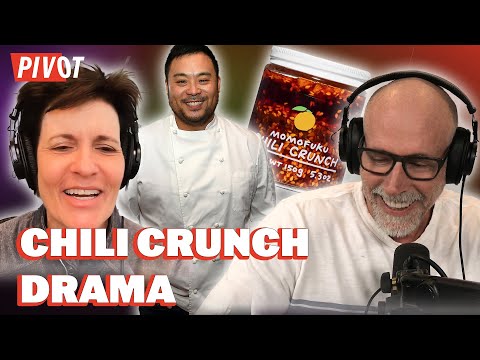
In this episode of Pivot, featuring Kara Swisher and Scott Galloway, Can Chili Crunch Be Trademarked? | Pivot explores chili Crunch Trademark Fight Exposes Limits of Intellectual Property Protection The episode examines Momofuku’s decision to trademark the term “Chili Crunch” and send cease-and-desist letters to other makers of the popular Asian-style condiment.
Chili Crunch Trademark Fight Exposes Limits of Intellectual Property Protection
The episode examines Momofuku’s decision to trademark the term “Chili Crunch” and send cease-and-desist letters to other makers of the popular Asian-style condiment.
Kara Swisher criticizes the move as trying to own a generic cultural product, likening it to trademarking ketchup, while Scott Galloway frames it within the broader role and abuse of intellectual property protections.
They argue that although IP rights are crucial for innovation, they are increasingly weaponized by well-resourced companies for intimidation, PR, and quasi-monopoly behavior.
Both hosts predict that “Chili Crunch” will likely be deemed too generic to own, framing the case as legal harassment that highlights problems in the trademark system itself.
Key Takeaways
Generic terms are hard to defend as trademarks.
Common product names like “Chili Crunch,” widely used across markets and cultures, are likely to be deemed generic and thus not ownable by a single company.
Get the full analysis with uListen AI
IP protection is essential but easily abused.
While trademarks and patents incentivize innovation, they can also be stretched beyond reasonable bounds to control markets and stifle competition.
Get the full analysis with uListen AI
Cease-and-desist letters function as intimidation tools.
Well-funded companies often rely on the cost and fear of litigation to pressure smaller competitors into rebranding or exiting, regardless of the ultimate legal merits.
Get the full analysis with uListen AI
Courts act as a necessary check on overbroad IP claims.
Judges can draw the line on what is truly protectable, dismissing inflated claims and sometimes forcing companies to cover opponents’ legal costs for frivolous actions.
Get the full analysis with uListen AI
The trademark and patent systems themselves need scrutiny.
The fact that a term like “Chili Crunch” could be registered at all suggests systemic issues in how trademarks are examined, approved, and later challenged.
Get the full analysis with uListen AI
Big brands sometimes use IP filings mainly for PR value.
Companies like Amazon file eye-catching patents (e. ...
Get the full analysis with uListen AI
Businesses should focus on differentiated IP, not generic names.
Building proprietary value around unique formulations, branding, or design is more sustainable than trying to lock up widely used descriptive terms.
Get the full analysis with uListen AI
Notable Quotes
“This seems crazy for Momofuku and David Chang to do. He looks like an asshole.”
— Kara Swisher
“The majority of bad ideas started out as good ideas, and that is our ability to protect IP.”
— Scott Galloway
“This reminds me of when Paris Hilton tried to trademark 'that's hot.'”
— Scott Galloway
“IP protection has taken on all this different nuance including intimidation, including well-resourced monopolies.”
— Scott Galloway
“These are generic terms, and I believe the court will say, 'Sorry, this term has become generic, and you can't own it.'”
— Scott Galloway
Questions Answered in This Episode
Where should the legal line be drawn between a protectable brand name and a generic cultural or descriptive term?
The episode examines Momofuku’s decision to trademark the term “Chili Crunch” and send cease-and-desist letters to other makers of the popular Asian-style condiment.
Get the full analysis with uListen AI
How can small food producers realistically defend themselves against aggressive trademark enforcement by larger brands?
Kara Swisher criticizes the move as trying to own a generic cultural product, likening it to trademarking ketchup, while Scott Galloway frames it within the broader role and abuse of intellectual property protections.
Get the full analysis with uListen AI
What reforms, if any, are needed in the U.S. trademark office to prevent overbroad registrations like “Chili Crunch”?
They argue that although IP rights are crucial for innovation, they are increasingly weaponized by well-resourced companies for intimidation, PR, and quasi-monopoly behavior.
Get the full analysis with uListen AI
At what point does protecting a brand cross into unethical or anti-competitive behavior in food and consumer goods?
Both hosts predict that “Chili Crunch” will likely be deemed too generic to own, framing the case as legal harassment that highlights problems in the trademark system itself.
Get the full analysis with uListen AI
How can companies build strong IP strategies that respect cultural products while still protecting their genuine innovations?
Get the full analysis with uListen AI
Transcript Preview
David Chang's Momofuku finds itself in the middle of some Chili Crunch drama. Momofuku has trademarked Chili Crunch, a spicy, oily, crispy condiment, popular in Asian countries. After sending cease and desist letters to manufacturers using the name, the brand has been accused of trademarking a generic cultural product. Some critics have compared it, the move to trademarking ketchup and suggested it's mono- it is monopoly behavior. A company in Denver previously owned the trademark and sent a cease and desist letter to Momofuku, which instead, has in- instead worked to purchase the trademark for itself. I, I, uh, Scott, you're a branding person. What the heck? Chili Crunch? I've seen Chili Crunch stuff all over the place, uh, in Asia, and also anytime you go to an Asian market, there's a million Chili Crunch things. This seems crazy for, for, for Momofuku and David Chang to do. He looks like an asshole. Your thoughts on, like, this marketing thing?
Well, I- i- it's like the majority of bad ideas started out as good ideas, and that is our ability to protect IP is really important. Whether it's someone's likeness, whether it's the, the patents or the, you know, chemical context of a pharmaceutical, America's innovation and our economy relies on what you would loosely call intellectual property protection and our ability to legally protect it. This has had gone crazy. This reminds me of when Paris Hilton tried to trademark "that's hot."
Oh, right, yeah. I, yeah. Uh-huh. I knew you'd be good at this. Go ahead.
And someone said that, "No. You can't trademark this." So, the reason why we have thoughtful judges in law, in, in, in cases is that we can say, "All right. There is a line here." Because what you have is it's been weaponized in the sense that these, especially big companies or well-resourced companies send cease and desist letters to everyone for anything that smells of anything remote, and they use it as a means-
Yeah.
... of suppressing competition. And also, they use it as a means of trying to get unearned PR. For example, Amazon will file a patent-
Mm-hmm.
... for a, not only a floating warehouse, which is probably, um, physically, uh, impossible for the next couple centuries. They will file a patent for a projectile defense shield of their-
Mm-hmm.
... floating warehouse, and the reason they do it is they know that reporters at Forbes and other business magazines troll patent filings and then write about them. So, IP protection has taken on all this different nuance including intimidation, including well-resourced monopolies. The cons- Because if you get a cease and desist letter and you're a small company, you're sort of inclined to say, "Am I really gonna take on this well-resourced company or am I just gonna find another name?" But this is an example of it gone haywire. These are generic terms, and I believe the court will say, "Sorry, this term has become generic, and you can't own it."
Install uListen to search the full transcript and get AI-powered insights
Get Full TranscriptGet more from every podcast
AI summaries, searchable transcripts, and fact-checking. Free forever.
Add to Chrome