By playing, you agree to uListen's Terms and Privacy Policy and YouTube's Terms of Service.
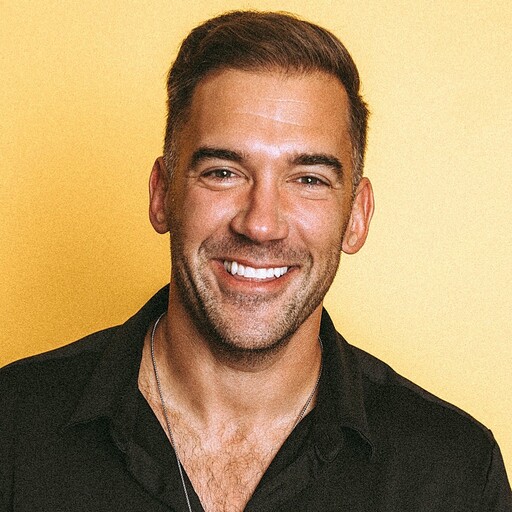 Lewis Howes
Start Here If Your Teen Is Always on Their Phone | Stanford Doctor Anna Lembke
 Summaries, chapters, transcripts, and FAQs on this page are made by uListen, not YouTube.
Great conversations run long. Their best ideas don't have to.
uListen is free on iPhone, iPad, Android, Chrome, and Claude.
See howAt a glance
WHAT IT’S REALLY ABOUT
Why teens can’t stop scrolling—and what surrender changes
- Dr. Anna Lembke says the world is “most addicted to the internet,” driven by constant virtual stimulation that reduces enjoyment of real-life connection.
- She argues digital media addiction shares core mechanisms with substance addiction, but is more dangerous in practice because it is normalized and hard to physically avoid—especially for kids.
- She describes evidence linking increased time online and social media use with higher risks of depression, anxiety, eating disorders, self-harm, and suicidal ideation, and cites naturalistic before/after access studies (including Facebook on college campuses).
- She explains why modern platforms can be uniquely addictive—algorithms, notifications, infinite scroll, and condensed short-form video—and connects heavy use to sleep loss and a reinforcing mental-health spiral.
- She connects pervasive control, shame, and “endemic narcissism” to disconnection from mystery/meaning, and argues that spiritual surrender (broadly defined) can restore humility, resilience, and recovery—particularly for severe addiction.
IDEAS WORTH REMEMBERING
5 ideasDigital media should be reconceptualized as an intoxicant—especially for kids.
She argues digital media has been normalized in a way that masks its risks, including widespread use by children whose brains are still developing and lack the executive function to regulate use.
Smartphones turned the internet into an “emotional pacifier.”
She describes the shift beginning with mobile phones in the early 2000s, when the internet moved from a practical connector to something people use to quickly change how they feel in the moment.
More online time correlates with worse mental health outcomes, with a tipping point.
She says there’s an “ever-growing body of evidence” linking more time online (especially social media and similar platforms) with increased risk of depression, anxiety, eating disorders, body dysmorphia, self-harm, and suicidal ideation, including naturalistic studies comparing outcomes before/after Facebook availability.
“Addictive” platforms are engineered with specific engagement-maximizing features.
She distinguishes between platforms designed to optimize engagement and other tools, naming features like engagement-optimized algorithms, notifications, infinite scroll, and short-form video as especially reinforcing.
Overstimulation can reset the brain’s baseline so normal life feels flat—and absence feels painful.
Using her pleasure–pain balance metaphor, she explains how repeated high-reward stimulation shifts the “joy set point,” making ordinary activities less enjoyable and leaving people anxious/irritable when not using (sub-threshold withdrawal).
WORDS WORTH SAVING
5 quotesThe world is most addicted to the internet.
— Dr. Anna Lembke
We have to begin to reconceptualize this medium as an intoxicant, 'cause that's really what it is.
— Dr. Anna Lembke
When you take that reinforcing medium and you condense it into an 11-second video, you, you've basically created a very impo- potent drug.
— Dr. Anna Lembke
We are living in a time of endemic narcissism, where we are so focused on the exertion of our will over material reality that we have lost sight of reality itself.
— Dr. Anna Lembke
The biggest harm is that inevitably we will someday encounter a situation that we cannot predict and control, no matter how hard we try, no matter how much we planned.
— Dr. Anna Lembke
Ask ChatGPT about this episode
Get its key ideas, plus a summary of each chapter linked to that point in the video, right in your chat.
Add uListen AI to ChatGPT.
Install uListen AI in ChatGPT (opens in a new tab)Needs a ChatGPT account.Paste this prompt into a new chat.
Use uListen AI to give me this episode's key ideas and a chapter-by-chapter summary, with timestamps: https://www.youtube.com/watch?v=il-AP6c0g6M
SPEAKERS
Dr. Anna Lembke
guestStanford psychiatrist and addiction-medicine specialist; author of *Dopamine Nation* and *Radical Surrender*.
Lewis Howes
hostPodcast host and interviewer (The School of Greatness).
High quality AI-generated summary created from speaker-labeled transcript.




