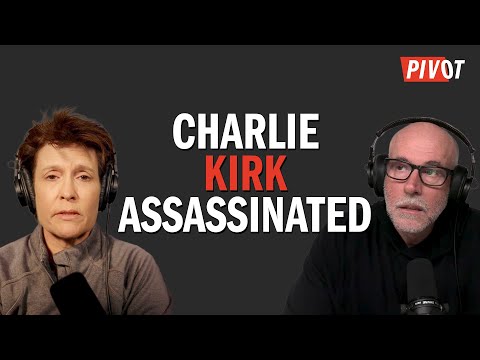
Charlie Kirk Assassination: Condemnation, Division, and Conspiracies | Pivot
Kara Swisher (host), Scott Galloway (host), Charlie Kirk (guest), Larry Ellison (guest)
In this episode of Pivot, featuring Kara Swisher and Scott Galloway, Charlie Kirk Assassination: Condemnation, Division, and Conspiracies | Pivot explores charlie Kirk Killing Spurs Fury Over Speech, Guns, and Conspiracies Kara Swisher and Scott Galloway unpack the assassination of conservative activist Charlie Kirk on a Utah campus, calling it a tragedy and a chilling blow to free speech and university life. They condemn the immediate politicization by right-wing figures and Donald Trump, contrasting it with more unifying responses like Utah Governor Spencer Cox’s speech. The conversation links the shooting to systemic issues: social media–driven rage, male isolation, easy access to high‑powered guns, and the viral spread of conspiracy theories. In later segments they pivot to U.S. policy and politics (Epstein fallout, Kamala Harris’ book), global unrest in Nepal, and big tech/AI stories, especially Larry Ellison’s AI bet with Oracle and Apple’s stagnating innovation.
Charlie Kirk Killing Spurs Fury Over Speech, Guns, and Conspiracies
Kara Swisher and Scott Galloway unpack the assassination of conservative activist Charlie Kirk on a Utah campus, calling it a tragedy and a chilling blow to free speech and university life. They condemn the immediate politicization by right-wing figures and Donald Trump, contrasting it with more unifying responses like Utah Governor Spencer Cox’s speech. The conversation links the shooting to systemic issues: social media–driven rage, male isolation, easy access to high‑powered guns, and the viral spread of conspiracy theories. In later segments they pivot to U.S. policy and politics (Epstein fallout, Kamala Harris’ book), global unrest in Nepal, and big tech/AI stories, especially Larry Ellison’s AI bet with Oracle and Apple’s stagnating innovation.
Key Takeaways
Political violence undermines both free speech and physical safety on campuses.
Swisher and Galloway argue universities should be physically safe but intellectually dangerous; the Kirk killing instead chills speech, deters speakers, and heightens fear among students and faculty.
Get the full analysis with uListen
Partisan blame after attacks fuels a cycle of escalating violence.
They note leading Democrats uniformly condemned the shooting, while prominent right‑wing figures and Trump quickly blamed the “radical left” without evidence, rhetoric they see as an accelerant for further violence.
Get the full analysis with uListen
Rage‑driven algorithms, social isolation, and gun access form a lethal triangle.
Galloway outlines how engagement‑optimized social platforms radicalize isolated young men, who then face few social guardrails and easy access to “weapons of war,” making lethal outcomes more likely.
Get the full analysis with uListen
Conspiracy theories after tragedies deepen confusion and radicalization.
They describe the rapid proliferation of baseless plots around Kirk’s murder (foreign ops, Epstein distractions, orchestrated signals) and warn that young people lacking judgment are especially vulnerable to this information chaos.
Get the full analysis with uListen
Condemning speech instead of violence misses the democratic point.
Both hosts insist Kirk’s inflammatory rhetoric does not make him responsible for his murder; the appropriate response to offensive speech is more speech, protest, and debate—not physical harm or de‑platforming.
Get the full analysis with uListen
Gun policy, not just ‘lowering the temperature,’ is essential to prevention.
Comparing UK and U. ...
Get the full analysis with uListen
Leadership and institutions failed to check dangerous decisions at the top.
From Trump’s incendiary post‑shooting statements to Democrats’ reluctance to confront Biden’s age and capacity, they argue that aides and allies lacked the courage to impose guardrails when it mattered.
Get the full analysis with uListen
Notable Quotes
“University campuses are supposed to be an incredibly safe place physically, but a dangerous place intellectually.”
— Scott Galloway
“If anyone in the sound of my voice celebrated even a little bit at the news of this shooting, I would beg you to look in the mirror and to see if you can find a better angel in there somewhere.”
— Utah Governor Spencer Cox (quoted by Kara Swisher)
“Our profit motive in the United States and 10 companies driving the entire market have a rage motive that divide us.”
— Scott Galloway
“He is not to blame for his death. Let’s be clear. I’m sorry, people. I know you were angry at some things he said, but just then be angry at things he said. That’s pretty much where it stops.”
— Kara Swisher
“At some point, does a total fidelity to gun rights begin to come at such an unbearable cost? I think it does.”
— Scott Galloway
Questions Answered in This Episode
How can universities realistically protect both physical safety and robust, uncomfortable speech in an era of increasing political violence?
Kara Swisher and Scott Galloway unpack the assassination of conservative activist Charlie Kirk on a Utah campus, calling it a tragedy and a chilling blow to free speech and university life. ...
Get the full analysis with uListen AI
What specific regulatory or design changes to social media platforms could weaken the link between engagement, enragement, and radicalization?
Get the full analysis with uListen AI
Where should the line be drawn between condemning hateful speech and holding speakers morally (but not physically) accountable for the climate they help create?
Get the full analysis with uListen AI
Why do conspiracy theories flourish so quickly after events like this, and what media or educational interventions might blunt their impact?
Get the full analysis with uListen AI
What forms of gun control could address high‑powered weapons and volume of firearms while still respecting constitutional rights?
Get the full analysis with uListen AI
Transcript Preview
Whoever did this was like, "I'm gonna take my gun. I am gonna climb up on that roof. I am gonna murder someone," and thinking it was the right choice. You know what I mean? Like, this is your only choi- why didn't you go down there and ask him a fucking question and yell at him? Hi everyone. This is Pivot from New York Magazine and the Vox Media Podcast Network. I'm Kara Swisher.
And I'm Scott Galloway.
So, today we should start very much saying what happened yesterday in Utah was, uh, a terrible and tragic situation. Um, I think, uh, there's been a lot of, like, a lot of anger, a lot of accusations, a lot of really ugly stuff going on. Um, but, uh, being able to speak even if you disagree with someone and, and as y- you might imagine, we, we, Scott and I have disagreed with Charlie Kirk many times. You can say what you want, but getting- having this happen is probably the most heinous thing, uh, that could occur in a country like the United States where we are supposed to be able to say the most horrible things and continue to debate. Scott?
That's all? Um... Yeah, look, I, I, I, uh, I've been thinking about this a lot, as most people have over the last, um, whatever, uh, 18 hours. Look, he... (sighs) I mean, i- this wa- uh, at the end of the day, or the begin- the beginning and the end is the following. A 31-year-old father of two was needlessly murdered, all right? That, that, that is a tragedy, full stop. Should not happen, and we should be thinking about, uh, tangible actions (laughs) to make sure it, it, it happens less. Um, Charlie Kirk, i- in my view, and we said this, uh, and just to be honest, in mi- you know, I, I won't speak for you. In my view, said a lot of divisive, hateful things.
Mm-hmm. Absolutely.
At the same time, his format was really powerful and productive, and that is a lot of people on the far left and the far right go into their echo chambers in a studio somewhere behind a mic, and only listen to or respond to people who are supporting them. He went on campus, and he would have these open mic, you know, you know, uh, "Challenge me or debate me or prove me I'm wrong."
"Prove Me I'm Wrong" was his name.
Yeah, Prove Me R- And I thought that was really productive and courageous because he was subject to a lot of TikToks and videos that made him look bad, and a lot of times he would make great points and show that a lot of young people weren't being critical thinkers about their progressive views, and a lot of times young people would show up and say very intelligent things that, that, uh, counteracted in critical thinking and showed that he was wrong. That is a productive dialogue we should have on campus. Campuses are supposed to be, and this is one of the most upsetting things about A Very Upsetting Thing. University campuses are supposed to be an incredibly safe place physically, but a dangerous place intellectually, and that is-
Install uListen to search the full transcript and get AI-powered insights
Get Full TranscriptGet more from every podcast
AI summaries, searchable transcripts, and fact-checking. Free forever.
Add to Chrome