By playing, you agree to uListen's Terms and Privacy Policy and YouTube's Terms of Service.
Summaries, chapters, transcripts, and FAQs on this page are made by uListen, not YouTube.
At a glance
WHAT IT’S REALLY ABOUT
Nadella says AI will redefine firms, work, and leadership priorities
- Satya Nadella argues that AI should be understood not as a standalone technology but as a structural shift in how firms operate, compete, and compound value through “token capital.”
- He describes Microsoft’s AI developer strategy as helping every organization build “hill-climbing machines” defined by clear objectives and evals, with those evals becoming a key form of new intellectual property.
- He emphasizes that enterprises must prevent tacit knowledge from leaking by keeping AI learning loops, data context, and human-agent work trajectories inside systems they control.
- He outlines how agentic work is evolving from chat to long-running autonomous loops, creating new needs in UX (agentic development environments) and in governance (observability, identity, sandboxing, and policy).
- He contends that public trust and adoption will depend on practical proof points—community benefits from infrastructure, credible job transitions, and visible societal wins such as progress in science and health.
IDEAS WORTH REMEMBERING
5 ideasAI isn’t just a tool upgrade; it changes the nature of the firm.
He argues that AI will reshape what a company is, so leaders must understand how their organization creates, owns, and compounds “token capital,” rather than treating AI as a bolt-on IT project.
The new “BASIC interpreter” is a company-specific “hill-climbing machine.”
He frames Microsoft’s current developer focus as enabling organizations to define objectives and evals, then continuously improve performance through data, rewards, and reinforcement-style learning loops; he calls the resulting evals/objectives “the new IP.”
Tacit knowledge can leak through AI usage unless firms control the learning loop.
He warns that enterprises can inadvertently give away what makes them unique when human work trajectories get absorbed into external model training; he describes this as a “one-way door” that can erase hard-won differentiation.
Agentic work requires new UI and coordination systems, not just better models.
He describes work evolving from chat and task assignment to long-running autonomous agent loops, creating new interfaces (like an “agentic development environment”) to manage many agents, reduce cognitive load, and enable steerability.
Security, observability, and governance are foundational in an agentic world.
He says long-running agents require inventorying what agents exist, what they do, and making traces inspectable/auditable; he also emphasizes identities, sandboxing, policy governance, and runtime controls such as “asserts” to prevent execution going off-rails.
WORDS WORTH SAVING
5 quotesAI is not like a sort of a technology. It's the future of the firm, right?
— Satya Nadella
If you leak it, it's a one-way door. You're done in some sense, right?
— Satya Nadella
One of the dictums I have is don't use frontier models for non-frontier problems, right?
— Satya Nadella
I need to know, I need to have an inventory.
— Satya Nadella
When you go out and say, "Hey, you know, all economic opportunity will go away for knowledge workers," or, you know, "White-collar jobs are gone," or, you know... And, and you, uh-- and then you're saying, "I'm excited about building that technology," right? Y- why would anyone want you to be successful, right?
— Satya Nadella
SPEAKERS
Satya Nadella
guestChairman and CEO of Microsoft, focused on cloud and AI strategy.
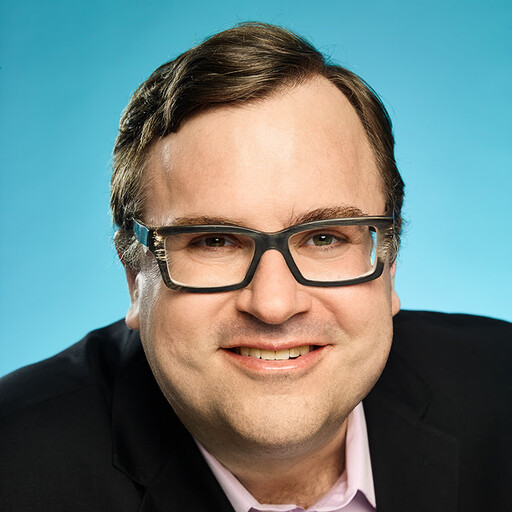
Reid Hoffman
hostEntrepreneur and investor, known for co-founding LinkedIn and hosting the podcast Possible.
High quality AI-generated summary created from speaker-labeled transcript.


