Curated by uListen Editorial · Last reviewed Apr 28, 2026
Stanford's 2026 AI Index showed agent task-success jumping from 12% to 66% in a year, Microsoft is turning agentic AI on by default in Office, and a one-hour WhatsApp prototype called OpenClaw broke the internet — and yet most coverage of AI agents still oscillates between hype and dismissal. These eleven long-form interviews bring in the people actually building, deploying, and arguing about agents: Andrew Ng on what 'agentic' really means, the head of Claude Code on shipping 10–30 PRs a day, Box and Microsoft on enterprise rollout, and Sierra and Decagon on customer-facing systems already running at Notion, Duolingo, and Rippling. The discussion here is at the level of architecture and operating model, not headline.
Start here for what living with AI agents actually looks like day-to-day. Ex-Amazon AI lead Allie Miller walks through her stack of dozens of scheduled agents that draft her morning briefing and prioritize email responses while she sleeps, plus the case for context-document hygiene as the moat under all of it.
Proactive workflows and scheduled agentsClaude Chat vs Cowork vs Claude Code vs Chrome extensionSkills as modular, reusable automation unitsContext documents and file organization as an AI moatLive build: morning briefing skill and delivery format
Andrew Ng on the gap between agent marketing and what's actually deployable — why agentic workflows, evals, and disciplined engineering matter more than scale, and why coding agents are the leading practical example of high-agency AI today.
Definition and evolution of agentic AI and its marketing hypeCurrent obstacles to deploying real-world AI agents (talent, evals, tooling)Coding agents as the leading practical example of high-agency AIAI-assisted coding, rapid engineering, and their impact on startupsChanging founder profile: technical depth, work ethic, and product intuition
The viral story behind OpenClaw. Peter Steinberger with Lex Fridman on how a one-hour WhatsApp-to-CLI prototype unexpectedly demonstrated tool discovery, audio transcription, and self-modifying code, plus what its rapid spread says about prompt-injection risk and the skill curve of short-prompt agent design.
One-hour prototype: WhatsApp relay to CLI agentEmergent autonomy: tool discovery and audio transcriptionVirality drivers: fun, weirdness, system-aware designSelf-modifying software and agent introspectionName-change saga and account/package sniping
The head of Claude Code, Boris Cherny, on shipping 10–30 PRs a day with 100% AI-written code, the move from 'coding' to 'computer use' via Cowork, and how Anthropic's safety stack — interpretability, evals, in-the-wild monitoring — sits underneath all of it.
100% AI-written code and multi-agent workflowsProductivity gains and new engineering bottlenecksFrom coding to tool use to computer use (agents)Cowork: non-coding agent automation and desktop/Chrome controlLatent demand as a product discovery method
Box CEO Aaron Levie with Jack Altman on the enterprise side: agent pricing models that converge labor-cost and software-margin, why incumbents have a real advantage on dormant document data, and how cross-platform agent interoperability actually plays out.
Unlocking value from dormant enterprise contentAgent-driven content workflows inside BoxCross-platform agent interoperability and emerging protocolsIncumbents vs startups: execution, innovator’s dilemma, net-new marketsAgent pricing models: labor-comped vs software-margin convergence
Microsoft CPO Aparna Chennapragada on prompt sets as the new PRDs, the consumer-vs-enterprise governance split for agent rollouts, and why every product builder should already be prototyping with AI rather than spec'ing it.
AI-driven product development and rapid prototyping (“prompt sets as the new PRDs”)Agents: definition, capabilities, and how they change software and workNLX (natural language interfaces) as the new UX and its design principlesDifferences between consumer vs. enterprise product building, especially around governanceThe evolving roles of product managers, engineers, and “software operators” in an AI world
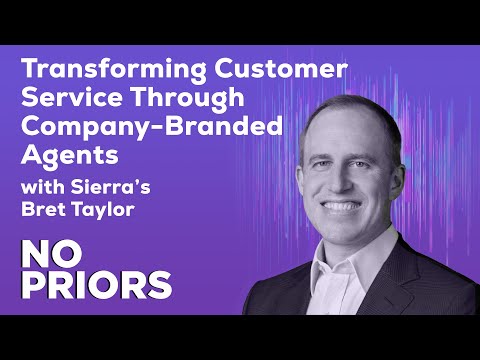
The clearest taxonomy on the page. Sierra CEO Bret Taylor splits agents into personal, persona-based, and company categories, then walks through the limits of pure RAG, why brand and tone become product surfaces, and the case for outcome-based pricing.
Definitions and categories of AI agents: personal, persona-based, and company agentsSierra’s approach to building branded, customer-facing company agentsLimits of pure RAG and the need for actions, integrations, goals, and guardrailsMarket structure of AI vs. cloud: foundation models, tools, and solution layersOutcome-based business models and measurable ROI for AI applications
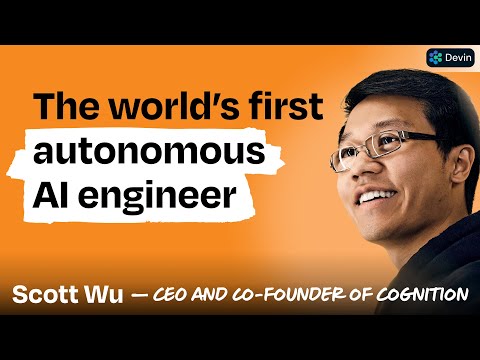
Cognition CEO Scott Wu on Devin, the autonomous AI engineer companies use like a junior remote dev via Slack, Linear, and GitHub — including how Cognition's own team runs five-plus agents per engineer and what software roles look like once implementation is delegated.
What Devin is and how it works as an autonomous AI engineerHow Cognition’s own team uses Devin (5+ agents per engineer, PR stats)The evolving role of software engineers: from implementers to architectsProduct and UX design for agents versus traditional chatbots or IDE toolsTechnical and strategic bets: reinforcement learning, agents, and code as a domain
Decagon CEO Jesse Zhang on building enterprise-grade customer-support agents — what large companies actually need around transparency, control, and orchestration — already deployed at Notion, Duolingo, Rippling, and BILT Rewards.
Decagon’s product focus: AI agents for customer service and customer experienceEnterprise needs for transparency, observability, and control in AI systemsTechnical architecture: orchestration layers, tooling, and multi-model useVoice-based AI support, latency challenges, and multimodal interfacesMath Olympiad and contest communities as a talent and founder pipeline
The contrarian framing for everyone else on the page. Y Combinator argues agents are becoming economic actors — picking stacks, choosing services, even posting online — and that the real shift is treating documentation as go-to-market for the agents that read it.
Agent-only communities (MaltBook) and minimal human involvementAgents as economic actors choosing tools and servicesDocumentation as go-to-market (LLM/agent parsability)Dev tool winners: Supabase, Resend; docs platform MinifyNew infrastructure: inboxes/identities for agents (AgentMail, phone numbers)
Guests: Amjad Masad, Bret Weinstein, Daniel Priestley
If you want the labor-disruption pole of the conversation: a Diary of a CEO debate with an AI agent founder, an evolutionary biologist, and an entrepreneur on end-to-end agent demos, near-term job displacement, wealth concentration, and whether an agent-driven economy can actually be governed.
Definition, capabilities, and trajectory of AI agentsLabor disruption, job displacement, and new forms of workWealth inequality, power concentration, and economic moats in an AI eraAI misuse: scams, deepfakes, cyberwarfare, and autonomous weaponsEducation, children, and how to prepare people for an AI‑driven world
How we picked these
We searched every transcript in our catalog for substantive discussion of AI agents, then ranked by relevance — not popularity, recency, or paid placement. Summaries and topic tags are AI-generated from the full transcripts.