Curated by Ahaan Ugale · Last reviewed Apr 29, 2026
Most 'neuroscience podcast' searches surface short, narrative-style brain shows built around storytelling. These twelve interviews go the other direction — one- to three-hour conversations with the working neuroscientists actually building theories of the cortex, scanning patients, and arguing about whether modern AI captures what brains do. Jeff Hawkins on the Thousand Brains theory, Karl Friston on the Free Energy Principle, Karl Deisseroth on optogenetics and psychiatry, and Adam Marblestone on what AI is still missing about biological intelligence — alongside foundational episodes on vision, executive function, neuroplasticity, dreams, and the female brain across the lifespan. The discussion runs at the level of mechanism and theory, not anecdote.
Start here for the foundational tour. Neurobiologist David Berson with Andrew Huberman walks from photons hitting the retina through color and brightness encoding, intrinsically photosensitive retinal ganglion cells and circadian rhythm, the vestibular system, midbrain reflex circuits, and basal ganglia go/no-go control — i.e., how the nervous system actually constructs experience and action.
How vision works: photoreceptors, ganglion cells, color and brightnessIntrinsically photosensitive retinal ganglion cells, melanopsin, and circadian rhythmsLight’s impact on melatonin, mood, jet lag, and seasonal affective disorderVestibular (balance) system, motion sickness, and cerebellar integrationMidbrain reflex systems, multisensory integration, and blindsight-type functions
Computational neuroscientist Terry Sejnowski on how a single reinforcement-learning–like value function in the dopamine and basal ganglia system underlies motivation, skill acquisition, and many social behaviors — plus sleep spindles and memory consolidation, mitochondria and exercise, and what large language models are revealing about brain algorithms.
Reinforcement learning, dopamine, and the brain’s value function for motivationProcedural vs. cognitive learning and how to actually learn betterSleep architecture, sleep spindles, and memory consolidationMitochondria, exercise, and age-related changes in energy and cognitionAI and large language models as models of brain algorithms and tools for discovery
Neurologist Mark D'Esposito on the prefrontal cortex as the seat of executive function, working memory, and self. Covers the inverted-U of dopamine and cognitive performance, why even mild concussion is real damage to frontal networks, and how sleep, stress, and smartphone use degrade these systems with age.
Frontal lobes, prefrontal cortex, and executive functionWorking memory as the foundation of cognitionDopamine, neuromodulators, and the inverted-U of cognitive performanceConcussion and traumatic brain injury: frontal networks and persistent symptomsAging, Alzheimer’s, Parkinson’s, and cognitive decline
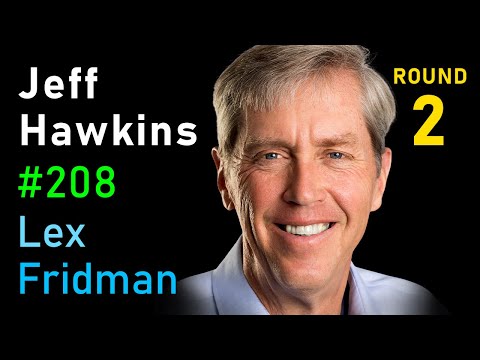
Jeff Hawkins on his Thousand Brains theory — the argument that the neocortex is built from tens of thousands of parallel cortical columns running reference frames over movement and prediction, and that real machine intelligence will only emerge once we model that architecture rather than scale deep learning. Ranges into the dendritic-spike mechanism of prediction, sparsity, and the evolutionary roots of intelligence in hippocampal grid and place cells.
Thousand Brains Theory of Intelligence and cortical columnsPrediction, movement, and reference frames as the core of intelligenceNeuronal mechanisms of prediction (dendritic spikes) and sparsityEvolutionary origins of intelligence (hippocampus, grid/place cells)Design principles and risks of future AI systems
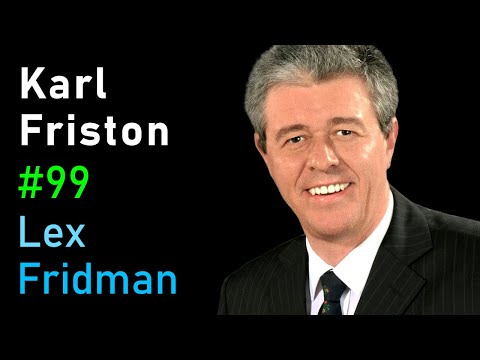
Karl Friston on the Free Energy Principle: living systems exist by minimizing variational free energy between their internal model and the world, and active inference is what links perception and movement. Also covers brain architecture (hierarchy, sparsity, recurrence), neuroimaging methods, and BCI bandwidth limits.
Current understanding of the brain: from microcircuits to large‑scale hierarchyNeuroimaging methods: fMRI, PET, EEG/MEG, and “blobology” vs connectivityBrain architecture: sparsity, recurrence, hierarchy, and functional segregationBrain–computer interfaces: potentials, limits, and bandwidth constraintsThe Free Energy Principle: existence as variational free energy minimization
Stanford psychiatrist Karl Deisseroth on optogenetics — controlling specific neurons with light to causally probe motivation, perception, and dissociation — plus how depression, schizophrenia, autism, and bipolar each illuminate something about how the normal mind works.
Function versus disorder in psychiatry and the spectrum of mental illnessDepression, suicidality, and the biological and experiential roots of sufferingAutism, social cognition, and different brain modes for predictable vs. unpredictable informationSchizophrenia, thought disorder, and how broken cognition reveals normal functionOptogenetics and large-scale causal control of neural circuits
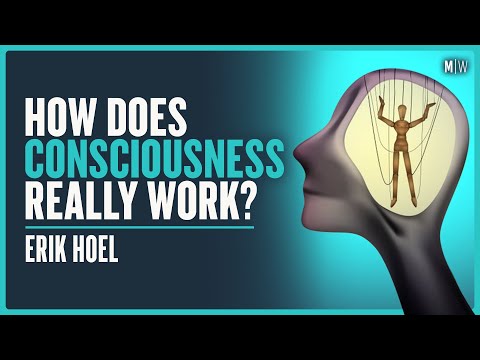
Neuroscientist and novelist Erik Hoel argues mainstream neuroscience has largely dodged consciousness because it inherited a behaviorist taboo against subjective experience. Walks through what a unifying paradigm centered on the stream of consciousness would look like — touching on Julian Jaynes, the bicameral mind, and causal emergence.
Historical exclusion of consciousness from science (Galileo, behaviorism, Crick, Edelman)Neuroscience’s limitations and the need for a unifying paradigm centered on consciousnessIntrinsic vs. extrinsic perspectives and the parallel development of science and literaturePhilosophical puzzles of mind–body interaction (Descartes, Princess Elisabeth, dualism)Julian Jaynes, the bicameral mind, and the evolution of how we talk about inner life
Neurosurgeon Rahul Jandial on the brain across waking, sleeping, and liminal states — making the case that dreams are high-energy training grounds for creativity, emotion, and complexity rather than noise. Covers lucid dreaming, nightmares, near-death states, and how brain stimulation (TMS, ECT) actually treats mental illness.
Liminal states of consciousness (falling asleep, waking, lucid dreaming, near-death)Dream function, architecture, and the executive vs. imagination networksNightmares, erotic dreams, and universal dream patterns across the lifespanLimits of dream interpretation and the role of intuition vs. scientific rigorBrain stimulation, mental health treatments, and neuromodulation (TMS, ECT, drugs)
NYU neuroscientist Wendy Suzuki on how exercise, sleep, social connection, and mindfulness literally change brain structure — protecting against dementia and sharpening cognition at any age. The lifestyle lens on neuroplasticity, plus Suzuki's four-rule model of how memories stick.
Brain plasticity and structural brain change across the lifespanExercise, neurochemicals, and protection against dementiaMemory systems, attention, and the four rules for making memories stickSleep, diet, social connection, and lifestyle risk factors for brain declineSocial media, stress, and rising anxiety in young people
Harvard-trained neuroanatomist Jill Bolte Taylor — best known for surviving a major left-hemisphere stroke and writing My Stroke of Insight — on the four anatomically distinct 'characters' of the brain (left-thinking, left-emotional, right-emotional, right-thinking), the 90-second emotional reset rule, and where addiction and craving actually live.
Dr. Jill Bolte Taylor’s left-hemisphere stroke and eight‑year recoveryThe “four characters” model of brain-based personalitiesRight vs. left hemisphere functions and societal imbalanceEmotional processing, the 90‑second rule, and trauma integrationAddiction, craving, and where they live in the brain
Neuroscientist Sarah Mackay walks through how female brains develop and adapt across childhood, puberty, menstrual cycles, pregnancy, motherhood, and menopause — dismantling the myth that women are wired more emotional or worse at math, and showing how most observed differences trace back to hormones, environment, and socialization rather than fixed structure.
Myths and misconceptions about male vs. female brainsThe bottom-up / outside-in / top-down model of brain functionBrain development across life stages: childhood, puberty, pregnancy, motherhood, menopauseHormones, menstrual cycles, the pill, and hormone sensitivitySocialization, gender inequality, and their impact on female brain development
If you want the AI-skeptic pole of the conversation: Adam Marblestone with Dwarkesh Patel on what current AI is still missing relative to biological brains — the cortex/learning vs. subcortex/steering split, developmentally-timed cost functions, omnidirectional probabilistic inference, and a roadmap for connectomics-grounded alignment.
Differences between brain learning and current deep learning (loss functions, architecture, efficiency)Learning vs steering subsystems in the brain and evolutionary reward designOmnidirectional inference, probabilistic/energy-based models, and amortized inferenceContinual learning, hippocampus/cortex roles, and hardware constraints of biologyConnectomics, large-scale neuroscience infrastructure, and timelines for relevance to AI
How we picked these
We searched every transcript in our catalog of 6,000+ podcast episodes for substantive discussion of neuroscience, then ranked by relevance — not popularity, recency, or paid placement. Summaries and topic tags are AI-generated from the full transcripts.