Curated by Ahaan Ugale · Last reviewed Apr 29, 2026
Year five of Russia's full-scale invasion. Ukrainian drone strikes have knocked out roughly 20% of Russia's oil-refining capacity, the late-February Trump–Zelenskyy Oval Office collapse and the peace-deal politicking that followed have reset the diplomacy clock, and most coverage of all of it still alternates between daily-news fragments and partisan one-liners. These eleven long-form interviews are a backgrounder, not a daily news show: Serhii Plokhy on the long imperial arc, Stephen Kotkin on Putin and the Eurasian authoritarian lineage, President Zelenskyy on negotiation strategy from Kyiv, three All-In episodes from early 2022 archiving the macroeconomic shock in real time, and journalist Jake Hanrahan on what life on the ground actually looked like. Strategy, history, and primary source — built for understanding, not minute-by-minute updates.
Start here for the long view. Harvard historian Serhii Plokhy with Lex Fridman on the centuries-long arc — Kievan Rus, the rise of Moscow, the Soviet collapse, and today's war — plus how nationalist myths, Bandera, and the 'denazification' narrative actually function inside Russia's own propaganda.
Causes and character of the Soviet Union’s collapse as an imperial disintegrationUkraine’s historical development: Kievan Rus, Cossack myth, nationalism, and languageRussian nationalism, Putin’s historical narratives, and the ‘one people’ thesisBandera, Ukrainian radical nationalism, Nazi collaboration, and modern neo‑Nazi claimsKGB power, political assassinations (Stashinsky, Bandera), and security‑state culture
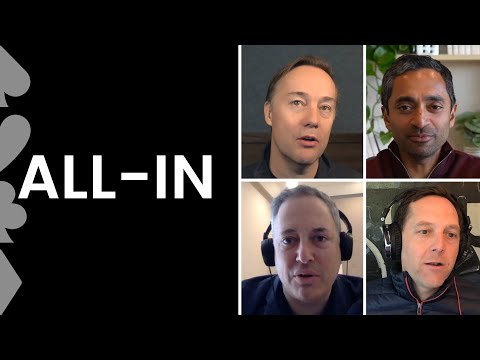
The escalation deep dive. The All-In hosts spend almost the entire episode on Russia–Ukraine — military escalation paths, nuclear concerns, information warfare, and the case that a 'Franz Ferdinand' miscalculation involving NATO is the tail risk worth thinking hardest about.
Escalation risks in the Russia-Ukraine conflict (no-fly zones, NATO, Article 5)Economic warfare and sanctions: severity, second-order effects, and exit rampsNuclear risk, misinformation, and the ‘fog of war’ in media narrativesForeign policy philosophy: realism vs. idealism, NATO expansion, and MearsheimerRegime change debates and historical lessons from Iraq, Afghanistan, and Libya
The frontline view. Journalist Jake Hanrahan with Chris Williamson, fresh off the ground in Ukraine in the opening days of the full-scale invasion, on the lived reality of civilians suddenly thrust into war — the ground-level texture missing from briefing-room maps.
Everyday life for Ukrainian civilians under bombardment and siegeUkraine’s lack of preparation: bomb shelters, supplies, and government misstepsCitizen militias, guerrilla warfare, and the culture of resistance in UkraineRussian military strategy, expectations, and the reality of the invasion’s progressMedia narratives, propaganda, and public distrust of corporate and social media
Guests: Krystal Ball, Saagar Enjeti, Guest (clip being played)
The independent-media counterweight on the page. Krystal Ball and Saagar Enjeti with Joe Rogan on how legacy coverage of Ukraine handles dissenting views, the escalation risks they argue go under-scrutinized, and where weapons spending sits inside US foreign-policy incentives.
Independent media vs. legacy/cable news business models and incentivesUkraine war, NATO escalation, and risks of nuclear conflict with RussiaPropaganda, censorship, and the role of advertisers and platforms (YouTube, Twitter)Political corruption: congressional stock trading, SBF/FTX, Adani, and influence of donorsU.S. foreign policy, military‑industrial complex, and examples like Iraq, Afghanistan, Yemen
Joe Rogan with former CIA officer Mike Baker on Putin's mindset, Russia's military miscalculations, and the real risks of nuclear and cyber escalation in the new Cold War — the intel-community read, not the cable-news version.
Putin’s strategy, mindset, and the evolution of Russian aggression (Chechnya, Georgia, Crimea, Ukraine)Nuclear risk, hypersonic weapons, cyber warfare, and the changing nature of deterrenceIntelligence gathering, human assets, Chinese espionage, and long-term infiltrationMedia narratives, censorship, and public distrust (Hunter Biden laptop, Ukraine coverage)US domestic politics: aging leadership, term limits, ‘deep state’, and institutional impartiality
The real-time archive. Recorded in the first days of Russia's invasion, the All-In hosts argue through whether the US should intervene militarily, how far sanctions ought to go, and what Putin's stated ambitions actually signal.
Russia’s invasion of Ukraine and U.S./NATO military postureSanctions, cyberwarfare, and economic consequences for Russia and the WestHistorical analogies (Cold War, World Wars, Georgia 2008, Crimea 2014)Energy dependence on Russia versus U.S. and European energy independenceDebate over fracking, solar, and nuclear power as strategic tools
The contrarian pole, on the page. Joe Rogan moderates an extended Douglas Murray vs. Dave Smith debate on Ukraine, NATO expansion, and the responsibility of popular podcasters to platform — or not platform — non-expert voices on foreign policy.
Responsibility and influence of major podcasts in shaping public opinionDebates over historical revisionism of World War II, Churchill, and HitlerNATO expansion, U.S. foreign policy, and the causes of the Russia–Ukraine warRoots, conduct, and morality of the Israel–Hamas war and Gaza campaignUse and abuse of ‘experts’ versus independent researchers and podcasters
The Putin-scholar read. Stanford historian Stephen Kotkin with Lex Fridman on Putin not as a one-off villain but as the latest expression of a Eurasian authoritarian tradition — compared head to head with Stalin, Mao, and Hitler — and on what that lineage suggests about Russia's actual war aims.
Comparisons between Stalin, Putin, Mao, Hitler, and modern authoritarian leadersRussia’s historical “perpetual geopolitics” and the gap between ambition and capacityCauses of the Ukraine war and critique of NATO-blame narrativesDemocracy vs. autocracy: institutional differences between Ukraine and RussiaBattlefield dynamics, sanctions, nuclear escalation risk, and long-term scenarios
The sanctions explainer from inside the Russian-economy lens. Russian-born finance commentator Tom Nash on how cutting Russia's central bank and major banks off from foreign currency and partial SWIFT access actually transmits into the economy — what it breaks and what it doesn't.
Russia’s economic structure, sanctions, and the collapse of the rublePutin’s strategic miscalculations about NATO, Germany, and UkraineSWIFT, central bank sanctions, and the freezing of Russia’s war chestImpacts on global markets: oil, commodities, defense stocks, and inflationThe role of cryptocurrency during financial repression and war
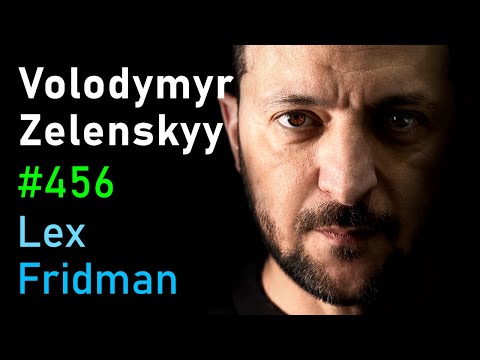
The primary source on the page. Lex Fridman in Kyiv with President Volodymyr Zelenskyy on ceasefire scenarios involving Trump and Putin, the role of NATO and US security guarantees, why Ukraine insists strength has to precede negotiations, and how language and personal loss shape his stance.
Prospects for peace, ceasefire scenarios, and Trump–Putin–Zelenskyy negotiationsNATO membership, U.S. security guarantees, and the risk of a weakened allianceHistorical context: WWII, Soviet legacy, Budapest Memorandum, Minsk agreementsZelenskyy’s personal story, leadership during invasion, and martial law/democracyRussian aggression, propaganda, and the moral/psychological framing of Putin
Sanctions and macro implications. The All-In hosts work through the war's military trajectory, the early shape of a possible peace deal, the role of US versus European diplomacy, and the second-order effects of historically severe sanctions — recession risk, food-shortage risk, and tighter Russia–China alignment.
Military and diplomatic status of the Russia-Ukraine war and ceasefire prospectsSanctions on Russia, economic severing, and geopolitical realignment with ChinaGlobal food supply risks: wheat, fertilizer, energy prices, and famine potentialCritique of Western energy and agricultural policy (nuclear, GMOs, environmentalism)Market outlook: inflation, Fed tightening, volatility, and public vs private valuations
How we picked these
We searched every transcript in our catalog of 6,000+ podcast episodes for substantive discussion of the Russia-Ukraine war, then ranked by relevance — not popularity, recency, or paid placement. Summaries and topic tags are AI-generated from the full transcripts.