11 Middle East Podcasts
Curated by Ahaan Ugale · Last reviewed Apr 29, 2026
In late February the U.S.-Israeli operation against Iran widened into the Strait of Hormuz, pushing Brent above $110 a barrel and collapsing transit for weeks; the Trump-brokered Gaza ceasefire from October 2025 has been fraying through this spring with hundreds of casualties since. The sustained news cycle has crowded out the longer formats most people need to actually parse the region. These eleven long-form interviews bring in the people who study Middle Eastern politics as a system: John Mearsheimer on offensive realism and the Israel lobby, Robert Pape simulating Iran-war scenarios, Pentagon Under Secretary Emil Michael on Operation Epic Fury, Ian Bremmer on the global power vacuum the U.S. has helped create, plus a Lex Fridman debate that pulled Finkelstein, Morris, Rabbani, and Destiny into one room around 1948 and October 7. The discussion here is at the level of history and mechanism, not headline.
Iran War Debate: Nuclear Weapons, Trump, Peace, Power & the Middle East | Lex Fridman Podcast #473
Guests: Mark Dubowitz, Scott Horton
The fresh-news anchor on the page. Lex Fridman moderates a long, careful debate between anti-war libertarian Scott Horton and Iran-hawk policy analyst Mark Dubowitz on Iran's nuclear program, the U.S.-Israeli strikes, the JCPOA, and what counts as legitimate deterrence. Both positions argued in their strongest form.

The IR-theory anchor. John Mearsheimer walks through offensive realism — the structural logic that compels great powers in an anarchic world — and applies it to Israel-Palestine and Gaza, the limits of American leverage over Israel via the Israel lobby, and why he thinks the political window for a two-state solution has closed.
Israel-Palestine Debate: Finkelstein, Destiny, M. Rabbani & Benny Morris | Lex Fridman Podcast #418
Guests: Benny Morris, Norman Finkelstein, Steven Bonnell (Destiny), Mouin Rabbani
The closest thing on the page to a historical primer. Lex Fridman puts Norman Finkelstein, Benny Morris, Muin Rabbani, and streamer Destiny in one room and lets them argue 1948 and October 7 line by line — Zionism's intentions, the Nakba, transfer-vs-contingency in 1948, October 7's casualty responsibility, and whether any realistic two-state solution was ever on the table.
For the regional voice. Egyptian-American comedian and former heart surgeon Bassem Youssef on Israel-Palestine and the Gaza war — the propaganda mechanics on both sides, his Piers Morgan interviews after October 7, his exile from Egypt and satire under the Muslim Brotherhood and army, and how power dehumanizes victims and perpetrators alike.

A flagship 2025 Middle East debate. Joe Rogan referees a long, tense argument between Douglas Murray and Dave Smith on Israel-Hamas, Western interventions, podcaster responsibility for platforming non-experts, and where the line is between criticizing Israeli policy and enabling antisemitism.

Ian Bremmer's April 2026 reset. The Eurasia Group founder argues the United States has now become the world's largest source of geopolitical uncertainty itself, and frames the Iran-Hormuz-Lebanon escalation as a case study in how impulsive U.S. decision-making produces systemic global shocks. The clearest macro frame on the page for why the region is destabilizing right now.
Robert Pape's 'bombs change politics' framework, applied to the current war. The Chicago political scientist who has simulated Iran-war scenarios for twenty years walks through a three-stage escalation pathway: airstrikes and immediate retaliation, horizontal escalation via drones against UAE/Saudi shipping and tourism, and expansion toward homeland risk. He recommends 'take the deal' over deeper escalation.
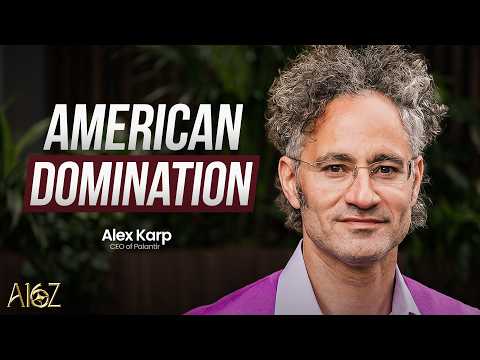
The defense-tech pole. Palantir CEO Alex Karp's read on the same war from inside the U.S. defense stack: that the Middle East escalation is the moment U.S. deterrence came back, with technology as the decisive lever. The clearest articulation of the American Dynamism position, including Karp's argument that AI competition with China is structurally zero-sum.
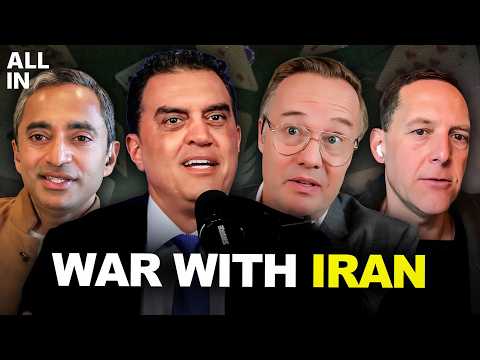
The closest thing on the page to an inside-the-Pentagon briefing. The All-In hosts press Under Secretary of Defense for Research & Engineering Emil Michael on Operation Epic Fury — the 'weeks not months' timeline, what it would take to degrade Iran's proxies (Hezbollah, Hamas), drone-swarm and AI-targeting reliability, and what a Strait of Hormuz disruption does to insurance and inflation.
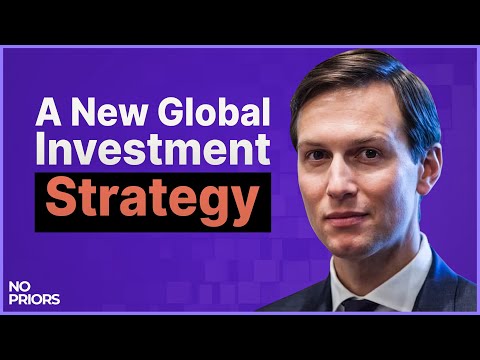
Jared Kushner on the investor's-eye view of the region. Drawing on his government experience in Middle East diplomacy, now running Affinity Partners, he covers Gulf-state and Israeli capital flows, why he keeps coming back to the Abraham Accords as the durable shape of regional diplomacy, and where AI and energy infrastructure intersect with U.S.-Middle East geopolitics.
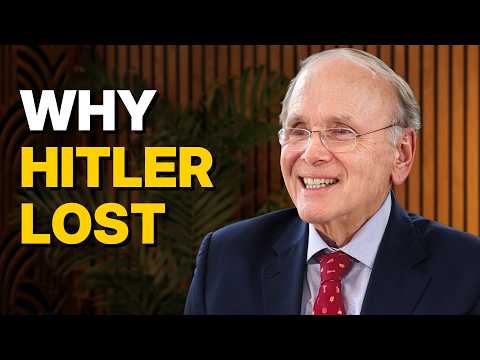
If you want the resource-and-energy lens. Veteran oil historian Daniel Yergin on how oil drove twentieth-century geopolitics — Standard Oil and antitrust, OPEC and the 1973 crisis, U.S. shale's effect on Russia and Europe, and why the energy transition's mineral dependencies map onto the same regions all over again.
How we picked these
We searched every transcript in our catalog of 6,000+ podcast episodes for substantive discussion of Middle East, then ranked by relevance — not popularity, recency, or paid placement. Summaries and topic tags are AI-generated from the full transcripts.



