Morgan Housel's podcast appearances: which to watch and why
Start with The Diary of a CEO with Steven Bartlett (November 6, 2023), or sample eight stretches in a 76-minute crash course.
Every quote checked against its transcript
If you watch one
His core ideas through his most personal stories
 Play episode
By playing, you agree to uListen's Terms and Privacy Policy and YouTube's Terms of Service.
Rich versus wealthy, 5:34 · The avalanche, 35:46 · Rent or buy, 1:35:56
The Diary of a CEO with Steven Bartlett (November 6, 2023). Steven Bartlett walks through chapters of The Psychology of Money and Same as Ever, reading passages aloud, and Housel answers with the stories behind his views: his ER-doctor father who could quit because the family lived below its means, the valet job where he learned nobody admires the driver, and the avalanche that killed two friends and left him humble about forecasting. He also lays out exactly what he owns, why he would rent forever if not for his kids, and how success erodes the hunger that built it. No other episode here covers both books with this many of his own stories.
On uListen: summary · chapters · transcript
Or start with
 12 min
New to money or feeling behind
The Mel Robbins Podcast (September 22, 2025). Mel Robbins keeps steering toward listeners who feel broke or scared, and Housel answers with plain habits, from checking your balance daily to automating savings (58:42 to 1:10:31, 12 min).
 54 min
Short on time
Modern Wisdom with Chris Williamson (February 13, 2020). In 54 min he covers wealth as control of your time, rich versus wealthy, and volatility as the price of admission.
 8 min
Curious about The Art of Spending Money
The Diary of a CEO with Steven Bartlett (October 6, 2025). A long interview built on the book's argument (status versus utility, saving as buying independence, contentment over happiness), including his idea that wealth is what you have minus what you want (38:46 to 47:02, 8 min).
one course
Want the best stretches back to back
The crash course. Eight clips from eight episodes, played one after another.
A guided watch
The Morgan Housel crash course
Eight stretches from eight episodes: what money is for, then how to spend it and when it is enough, then time, risk and the price of success.
Total: about 76 minutes.
Play all · 76 minWhat money is for
- Rich versus wealthy 8 min
14:58 to 23:05, 8 min of Modern Wisdom with Chris Williamson (February 13, 2020): his signature distinction, that wealth is the money you don't spend, with Chris Rock's Shaq joke and why net worth, unlike fitness, can't be seen.
- What freedom really is 8 min
1:15:50 to 1:23:24, 8 min of Huberman Lab with Andrew Huberman (December 2, 2024): the young Franklin Roosevelt's free day, the investment banking internship he hated because he was told to work the hours, and why leaving a career on your own terms matters.
Spending, status and home
- Why spending is a psychological itch 7 min
2:14 to 9:34, 7 min of The Diary of a CEO with Steven Bartlett (October 6, 2025): status versus utility, the deserted island test, why he wanted a flashy car as a young man, and why nobody is watching you as closely as you think.
- The comparison treadmill 11 min
21:36 to 32:47, 11 min of Modern Wisdom with Chris Williamson (February 5, 2026): why wealth is only felt relative to others, how fast a luxury becomes a necessity, and how his first book's success stopped feeling special after about a year.
- Rent or buy 11 min
1:44:12 to 1:54:52, 11 min of The Diary of a CEO with Steven Bartlett (April 28, 2025): buying for family rather than returns, why renting isn't wasted money, the 700-square-foot Levittown homes, and Ramit Sethi's $3 versus $30,000 questions.
Time, risk and the price of success
- Endurance beats peak returns 13 min
3:08 to 16:32, 13 min of Tim Ferriss (March 2, 2022): why Buffett is far wealthier than Jim Simons despite lower annual returns, why copying Buffett fails, and how Citigroup grew too big to understand.
- The avalanche 11 min
34:44 to 45:55, 11 min of The Diary of a CEO with Steven Bartlett (November 6, 2023): his full account of the avalanche that killed two friends, and how it shaped his humility about forecasting and his habit of holding what feels like too much cash.
- Admire them, don't become them 7 min
17:56 to 24:32, 7 min of Sourcery with Molly O'Shea (April 7, 2024): why the trait that makes Musk, Ford, Edison and Jobs great also makes them hard to be around, and why he would never want their lives.
Lately
The three newest episodes, from January 21, 2026 to February 27, 2026, stay with spending, status and independence. Along the way he blames zoning for the housing shortage, criticizes prediction markets, and talks candidly about his own relationship with money.
- 1:45:33He names zoning as the main cause of unaffordable housing and estimates America is about five million homes short
- 16:22He admits that much of his own drive for more money has been about the scorecard and his place in the social hierarchy
- 1:54:42He says watching his net worth rise is part of his identity, which may make him bad at spending it down in old age
- 39:02He criticizes prediction markets such as Kalshi and gamified trading aimed at the young, while calling the people at those companies well-meaning
- 12:31He retells how every US publisher turned down The Psychology of Money, adding that its 19 loosely connected essays had no central thesis
- 29:41He thinks his net worth would be higher had he kept renting, and would still make the same choice
“you think housing affordability is a housing problem, and it is just a social problem all the way down.”
Housel on ...
Morgan Housel on behavior and the psychology of money
Housel argues that doing well with money depends on behavior (patience, ego, greed and fear), not intelligence, so an ordinary saver can beat a Harvard MBA, which he says could never happen in open heart surgery.
“So finance is a very unique field where it is, it, it's not that behavior is important. I think the behavior part is everything.”
Go deeper: 1:16:18 to 1:40:23, 24 min · Modern Wisdom with Chris Williamson (February 17, 2024).
More on behavior and the psychology of money 4 moments
In that conversation he argues that because investing is behavioral, getting better means doing less (1:26:32), and that people who plan to buy a 50% crash picture cheaper stocks, not the frightening event behind them (1:19:31). On Modern Wisdom with Chris Williamson (September 21, 2020) he says finance is closer to medicine than physics (6:11). On Huberman Lab with Andrew Huberman he borrows a social work line, that all behavior makes sense with enough information, to argue there is no single right way to manage money (7:21).
Morgan Housel on saving, wealth and independence
Housel separates being rich, a high income you spend, from being wealthy, the money you did not spend, and says wealth's real dividend is independence: waking up able to do what you want.
“I don't feel like I'm saving money. I feel like I'm buying independence.”
Go deeper: 5:34 to 13:55, 8 min · The Diary of a CEO with Steven Bartlett (November 6, 2023).
More on saving, wealth and independence 4 moments
On The Diary of a CEO with Steven Bartlett his example is his father, an ER doctor who could quit after about 20 years of night shifts because the family kept living below its means (7:37 to 10:54). On The Diary of a CEO with Steven Bartlett (October 6, 2025) he suggests about six months of expenses as a medium level of independence (31:01). On Modern Wisdom with Chris Williamson (February 5, 2026) his formula for a good life is independence plus purpose (20:56), and he says many people who retire very early lose the purpose their work provided and end up clinically depressed about six months later (18:16).
Morgan Housel on spending, status and showing off
Housel calls it the man in the car paradox: as a young valet he admired the Ferraris but never their drivers, so most status spending chases admiration from strangers who are not paying attention.
“Spending money to show people how much money you have is the fastest way to have less money.”
Go deeper: 31:59 to 38:22, 6 min · The Mel Robbins Podcast (September 22, 2025).
More on spending, status and showing off 4 moments
He is not against spending: his deserted island test asks whether you would still want something if nobody could see it, and on that island, he tells BigDeal by Codie Sanchez , he would still want a great house (25:23). On Modern Wisdom with Chris Williamson (February 5, 2026) he argues that showing off often answers an old wound (3:21). On My First Million he calls Ramit Sethi a perfect example of spending well: Sethi spends heavily on the clothes he loves and, as Housel recalls it, drives a Honda (43:04 to 45:01). On Tim Ferriss (October 31, 2023) he puts the audience that matters at about seven people (1:03:50).
Morgan Housel on contentment, comparison and enough
Housel calls getting the goalpost to stop moving the hardest financial skill: your feeling of wealth is what you have minus what you want, and social media now sets the comparison bar at the best moments of the luckiest lives.
“Your, like, your expectations are a debt that has to be repaid.”
Go deeper: 2:03:10 to 2:09:59, 7 min · The Diary of a CEO with Steven Bartlett (April 28, 2025).
More on contentment, comparison and enough 4 moments
On The Diary of a CEO with Steven Bartlett (October 6, 2025) he separates contentment, a lasting state, from happiness, a fleeting emotion like laughter (40:22). His example is his wife's grandmother, content for about 30 years on roughly $1,700 a month of Social Security (38:46 to 42:03). On Tim Ferriss (October 31, 2023) he says more money tends to make happy people happier but does little for people who are already depressed (36:18), and on Huberman Lab with Andrew Huberman that the restlessness making individuals unhappy is what drives progress for society (1:39:24).
Morgan Housel on compounding, investing and index funds
Housel describes compounding as returns raised to the power of time, so the variable he maximizes is endurance: in his view, merely average returns held for an unusually long time put you near the top of all investors.
“The truth is that you don't need to do anything extraordinary with your returns. You need to have extraordinary patience.”
Go deeper: 1:10:28 to 1:20:06, 10 min · The Diary of a CEO with Steven Bartlett (April 28, 2025).
More on compounding, investing and index funds 4 moments
In that conversation his evidence includes Warren Buffett, whose fortune came almost entirely late in life (1:11:36). On The Diary of a CEO with Steven Bartlett (November 6, 2023) he adds his own parents, who bought index funds steadily for about 40 years and never sold (48:20 to 48:41), and says he holds index funds for endurance, not because he thinks the market can't be beaten (48:07). On Tim Ferriss (March 2, 2022) he treats volatility as a fee for admission rather than a fine for a mistake (2:07:58).
Morgan Housel on risk, uncertainty and room for error
Housel argues that the biggest risk is always the one nobody is talking about, from Pearl Harbor to Covid, so he keeps savings that look excessive: cash that feels like too much.
“And if you are only prepared for what you can imagine, again, you're gonna miss the biggest risk every single time.”
Go deeper: 25:13 to 33:47, 9 min · Modern Wisdom with Chris Williamson (March 16, 2020).
More on risk, uncertainty and room for error 4 moments
On Modern Wisdom with Chris Williamson, recorded during the Covid crash, he says he manages money for a good night's sleep rather than the highest returns (27:48). On Modern Wisdom with Chris Williamson (September 21, 2020) he advises saving like a pessimist and investing like an optimist (30:56). On The Diary of a CEO with Steven Bartlett (November 6, 2023) he says the avalanche that killed two friends taught him the world hangs by a thread (35:46 to 41:34), and on Tim Ferriss (March 2, 2022) he admits panicking early in the pandemic: he woke at 2 a.m. afraid there might be no market for the sale planned for April, and told his agent to list the house that day (1:14:24 to 1:15:38).
Morgan Housel on housing, renting and buying a home
Housel treats a home as a lifestyle decision, not an investment: he and his wife rented for about a decade and bought soon after their first child arrived, because they wanted a stable base.
“I'm not doing this to maximize my net worth. I'm doing it so I have a stable place for my children.”
Go deeper: 1:35:56 to 1:41:45, 6 min · The Diary of a CEO with Steven Bartlett (November 6, 2023).
More on housing, renting and buying a home 3 moments
On The Diary of a CEO with Steven Bartlett he cites Robert Shiller's long-run data to argue that inflation-adjusted home prices have historically gone nowhere (1:39:48). On The Diary of a CEO with Steven Bartlett (April 28, 2025) his formula is to buy only when you can afford it and want to raise a family there for five or ten years (1:46:17). On Modern Wisdom with Chris Williamson (February 5, 2026) he widens this into policy, blaming zoning for a shortage of homes and arguing that rising prices leave most owners no richer, since a seller must buy another inflated house unless they downsize or move (1:47:10).
Morgan Housel on parenting, kids and inheritance
Housel argues that kids learn about money by watching their parents, not from lectures, and that withholding help to teach grit often teaches humiliation instead.
“So leading by example rather than by humiliation, I think, is the way to do it with kids.”
Go deeper: 1:59:53 to 2:12:02, 12 min · Huberman Lab with Andrew Huberman (December 2, 2024).
More on parenting, kids and inheritance 4 moments
On Tim Ferriss (March 2, 2022) his rule is that parents should be a safety net, never a fuel (1:40:46). On The Diary of a CEO with Steven Bartlett (November 6, 2023) he says that after his seven-year-old son bragged to everyone about flying first class, he and his wife decided never again (1:01:13 to 1:01:59). On timing he follows Bill Perkins' Die With Zero: give children money in their 30s, when they need it, rather than at death (1:00:02), a book he credits on Modern Wisdom with Chris Williamson (February 5, 2026) with profoundly changing his view (1:59:25).
Stories he tells
The stories that return, and where he tells them most fully.
Told in 5 episodes
The valet and the man in the car
Parking Ferraris as a young valet at a Los Angeles hotel, he realized he never admired the drivers, only imagined himself behind the wheel.
2 min · Fullest tellingTold in 2 episodes
The avalanche
At 17, after a small slide on an out-of-bounds run, he skipped a second run with two friends for no considered reason, and both were killed in an avalanche.
6 min · Fullest tellingTold in 2 episodes
His father's way out of the ER
His father, an ER doctor, kept the frugal habits of the family's lean years, so leaving the job was always an option.
3 min · Fullest tellingTold in 3 episodes
The grandmother-in-law on Social Security
His wife's grandmother lived content for about 30 years on roughly $1,700 a month and wanted nothing more.
3 min · Fullest tellingTold in 4 episodes
The Vanderbilt heirs
Heirs to a vast fortune spent it on mansions and one-upmanship within a few generations, and Anderson Cooper, the first without a trust fund, seems the happiest of them.
4 min · Fullest tellingTold in 3 episodes
Jesse Livermore
A celebrated early stock trader made and lost several fortunes by taking ever bigger risks.
2 min · Fullest tellingTold in 3 episodes
Ronald Read, the janitor millionaire
A janitor and gas station attendant saved small sums, held stocks for decades and left millions to charity; Housel says he regrets presenting Read as a role model.
3 min · Fullest tellingTold in 3 episodes
The friend who earns the least
A friend of 20 years felt inferior for earning the least in their group; Housel's answer was that being good company already earns most of the points, and money adds little.
1 min · Fullest tellingTold in 2 episodes
Gold coins skipped into the Pacific
As a valet he watched a rich tech entrepreneur skip gold coins into the ocean for fun, then learned years later that the entrepreneur had gone broke.
2 min · Fullest tellingWhere else he tells each story
- The valet and the man in the car. Parking Ferraris as a young valet at a Los Angeles hotel, he realized he never admired the drivers, only imagined himself behind the wheel. Fullest on The Mel Robbins Podcast (September 22, 2025) (34:13 to 36:21); nearly word for word on Tim Ferriss (March 2, 2022) (18:48) and Modern Wisdom with Chris Williamson (February 13, 2020) (2:28); also on The Diary of a CEO with Steven Bartlett (November 6, 2023) (22:24) and BigDeal by Codie Sanchez (15:52).
- The avalanche. At 17, after a small slide on an out-of-bounds run, he skipped a second run with two friends for no considered reason, and both were killed in an avalanche. Fullest on The Diary of a CEO with Steven Bartlett (November 6, 2023) (35:46 to 41:34); nearly word for word on Tim Ferriss (October 31, 2023) (43:42).
- His father's way out of the ER. His father, an ER doctor, kept the frugal habits of the family's lean years, so leaving the job was always an option. Fullest on Tim Ferriss (March 2, 2022) (25:07 to 28:14); nearly word for word on The Diary of a CEO with Steven Bartlett (November 6, 2023) (7:37).
- The grandmother-in-law on Social Security. His wife's grandmother lived content for about 30 years on roughly $1,700 a month and wanted nothing more. Fullest on The Diary of a CEO with Steven Bartlett (October 6, 2025) (38:46 to 42:03); also on The Diary of a CEO with Steven Bartlett (April 28, 2025) (31:18) and, in passing, The Mel Robbins Podcast (22:38).
- The Vanderbilt heirs. Heirs to a vast fortune spent it on mansions and one-upmanship within a few generations, and Anderson Cooper, the first without a trust fund, seems the happiest of them. Fullest on Modern Wisdom with Chris Williamson (February 5, 2026) (54:25 to 58:08); nearly word for word on The Mel Robbins Podcast (54:51) and Tim Ferriss (March 2, 2022) (1:41:27); also on Huberman Lab with Andrew Huberman (1:25:40).
- Jesse Livermore. A celebrated early stock trader made and lost several fortunes by taking ever bigger risks. Fullest on BigDeal by Codie Sanchez (February 27, 2026) (7:20 to 8:54); nearly word for word on The Diary of a CEO with Steven Bartlett (April 28, 2025) (1:04:35) and The Diary of a CEO with Steven Bartlett (November 6, 2023) (1:26:34).
- Ronald Read, the janitor millionaire. A janitor and gas station attendant saved small sums, held stocks for decades and left millions to charity; Housel says he regrets presenting Read as a role model. Fullest on BigDeal by Codie Sanchez (February 27, 2026) (3:06 to 5:40); also on The Mel Robbins Podcast (1:09:40) and The Diary of a CEO with Steven Bartlett (November 6, 2023) (52:15).
- The friend who earns the least. A friend of 20 years felt inferior for earning the least in their group; Housel's answer was that being good company already earns most of the points, and money adds little. Fullest on Modern Wisdom with Chris Williamson (February 5, 2026) (36:37 to 37:25); nearly word for word on My First Million (32:17) and BigDeal by Codie Sanchez (18:32).
- Gold coins skipped into the Pacific. As a valet he watched a rich tech entrepreneur skip gold coins into the ocean for fun, then learned years later that the entrepreneur had gone broke. Fullest on Modern Wisdom with Chris Williamson (September 21, 2020) (40:45 to 42:43); nearly word for word on Tim Ferriss (March 2, 2022) (1:35:16).
Every episode
Across these 15 conversations Housel keeps returning to a few ideas: money is behavior more than knowledge, wealth is the independence you buy by not spending, nobody is watching your car, and time does most of the work in investing. The earliest, from February 13, 2020 to March 2, 2022, center on the ideas of The Psychology of Money, apart from Modern Wisdom with Chris Williamson (March 16, 2020), recorded during the Covid crash; from October 31, 2023 to April 7, 2024, the history in Same as Ever joins in. From December 2, 2024 on, spending and status take center stage as he previews and then discusses The Art of Spending Money, and Modern Wisdom with Chris Williamson (February 5, 2026) adds his views on zoning. This page helps you pick an episode, find its best stretches and see which stories he retells.
15 conversations · About 25 hours · Videos from YouTube
20263 episodes
 55 min
Stories, status and a rapid-fire round
Wealth Expert: Do THIS Every Time You Get Paid | Morgan Housel
Who it’s for, and what you’ll learn
Best for: Viewers who want his core ideas as stories, plus quick takes on renting, passive income and trading apps.
On uListen: summary · chapters · transcript
A warm, fast interview in which Codie Sanchez reads Housel's stories and tweets back to him, ending with a true-or-false round on money clichés.
You'll learn:
- Why he thinks investing is rigged against the pros: “I think that's the irony is we think it's rigged against you when it's rigged against the pros.” (6:27).
- Why getting rich and staying rich take opposite personalities (8:31).
- Where he thinks more income stops adding much happiness (22:11).
Housel speaks 74% of the words
 2 hr
Spending, status and America's housing problem
Mastering the Art of Spending Money - Morgan Housel
Who it’s for, and what you’ll learn
Best for: Listeners who want his spending ideas in a relaxed format, plus his views on zoning and on giving children their inheritance around age 30.
On uListen: summary · chapters · transcript
A loose, friendly long conversation, by the host's count roughly their eighth or ninth, in which Chris Williamson reads Housel's lines back to him.
You'll learn:
- Why the happiest people he has met judge themselves by internal benchmarks, not external ones (49:55).
- Why he thinks the point of travel is often not the destination: “you need to travel to kinda give yourself permission to detach from the rest of your life.” (1:07:50).
- Why great wealth can carry a social debt, like heirs who can barely find a partner who sees past the money (1:03:26).
Housel speaks 63% of the words
 52 min
Buffett math, venture winners and the scorecard
Most People Are Chasing the Wrong Number
Who it’s for, and what you’ll learn
Best for: Anyone who measures their worth by income, and fans of Buffett and venture stories.
On uListen: summary · chapters · transcript
A loose, joking three-way talk in which Shaan Puri reads Housel lines from Kindle highlights and Sam Parr pushes back on a few points.
You'll learn:
- What ordinary investors can copy from Buffett: the longevity, not the stock picks (2:30).
- Why his three or four biggest blog posts all felt too crazy to publish (13:52).
- Why money fights are clashes of taste: “I like Mexican food. You like Italian food. Good, like, great. Like, to each their own.” (49:19).
Housel speaks 59% of the words
20253 episodes
2 hr 7 minThe Art of Spending Money, argued in full
The Savings Expert: Passive Income Is A Scam! Post-Traumatic Broke Syndrome Is Controlling Millions!
Who it’s for, and what you’ll learn
Best for: Viewers who want the spending book's full argument; his views on polarization are at 1:09:05 to 1:20:52, 12 min.
On uListen: summary · chapters · transcript
A long, warm interview pegged to The Art of Spending Money; recorded the day after the Charlie Kirk assassination, it turns midway to political polarization.
You'll learn:
- Why he sees compulsive saving as no better than compulsive spending (17:25).
- His humble bubble: keeping his expectations inside his own house (2:01:34).
- Why rentals aren't passive income: “If you think owning a rental property is passive income, you've never owned a rental property,'cause there's nothing passive about it.” (55:22).
Housel speaks 68% of the words
1 hr 19 minA gentle start for anyone who feels behind
The Best Financial Advice You’ll Ever Hear
Who it’s for, and what you’ll learn
Best for: Beginners, people in debt and young earners who want concrete saving habits.
On uListen: summary · chapters · transcript
A warm, beginner-friendly interview in which Mel Robbins reads passages from Housel's books and steers toward listeners who feel broke or behind.
You'll learn:
- His first advice for someone just starting out: “the very basic such boring advice that goes the longest is, check your bank account balance every single day.” (59:24).
- The two buckets every purchase falls into (32:32).
- Why he keeps only about half his net worth in stocks (48:04).
Housel speaks 76% of the words
 2 hr 14 min
Tariffs, AI and his core money ideas
The Savings Expert: The Truth About America Collapsing! The Cost Of Living Is About To Skyrocket!
Who it’s for, and what you’ll learn
Best for: Viewers who want tariffs, recessions and AI explained plainly, plus a full tour of his core ideas.
On uListen: summary · chapters · transcript
A long sit-down that opens on tariffs, recession odds and AI, then turns to personal finance, happiness and mortality.
You'll learn:
- Who pays a tariff, when he thinks one makes sense, and why he opposes a blanket trade war (4:55).
- Why he calls recessions inevitable: “It's an inevitable feature that you're always gonna have recessions.” (27:13).
- Compounding in one line: “Like, all compound interest is, it's like, it's, it's returns to the power of time.” (1:14:08).
Housel speaks 77% of the words
20243 episodes
 2 hr 16 min
Freedom, identity and raising kids around money
Understand & Apply the Psychology of Money to Gain Greater Happiness | Morgan Housel
Who it’s for, and what you’ll learn
Best for: People weighing career against family time, high earners who feel it's never enough, and parents.
On uListen: summary · chapters · transcript
A long, relaxed conversation in which Andrew Huberman layers neuroscience framing onto many topics and Housel answers with stories.
You'll learn:
- Why money can be a liability: “I think money is actually like a liability. It's a financial asset and a psychological liability.” (35:50).
- His idea of social debt, and why he calls fame its ultimate form (51:54).
- Why parents should live the same lifestyle as their kids (2:04:25).
Housel speaks 56% of the words
 53 min
Luck, outlier founders and the VC reset
Morgan Housel: Understanding Elon Musk, Jensen Huang and Other Outliers in Tech
Who it’s for, and what you’ll learn
Best for: Startup investors, founders and creators, and anyone curious about luck and AI timelines.
On uListen: summary · chapters · transcript
A relaxed, VC-flavored interview in which Molly O'Shea gives long setups and steers toward lessons for startup investors.
You'll learn:
- Why risk and luck are one force: “I actually think that risk and luck are virtually the same things, just in opposite directions.” (13:36).
- His view of every valuation as a number from today times a story about tomorrow (35:34).
- Why world-changing technologies take decades to matter, and what that suggests for AI (30:27).
Housel speaks 76% of the words
 1 hr 48 min
Same as Ever, told through history
Deconstructing Success Down To The Psychological Level - Morgan Housel
Who it’s for, and what you’ll learn
Best for: Listeners who want Same as Ever told through World War II, the Dust Bowl and the Donner Party.
On uListen: summary · chapters · transcript
A relaxed, profane conversation that picks up partway through Same as Ever, with Chris Williamson reading chapter lines aloud and Housel riffing through history.
You'll learn:
- Why he thinks society improves most when the world is in crisis (4:31).
- Rational optimism, and why pure optimists and pure pessimists both fail (21:24).
- Why investors should tinker less: “You should do less. There are no points awarded for difficulty.” (1:26:43).
Housel speaks 68% of the words
20232 episodes
 1 hr 57 min
His core ideas through his most personal stories
The Savings Expert: “Do Not Buy A House!” Do THIS Instead! - Morgan Housel
Who it’s for, and what you’ll learn
Best for: Newcomers who want both books in one sitting, and anyone deciding whether to rent or buy.
On uListen: summary · chapters · transcript
A long, warm interview in which Steven Bartlett, a devoted fan, reads passages from both books and pushes with blunt prompts.
You'll learn:
- The hardest financial skill: “the hardest financial skill is getting the goalpost to stop moving.” (15:56).
- What not needing to impress others is worth: “If you don't need to impress other people, that is an asset on your balance sheet that is worth a billion dollars.” (24:03).
- His advice on buying a home for returns: “If you're buying a house because you think it's gonna be a good financial investment, stop.” (1:37:57).
Housel speaks 73% of the words
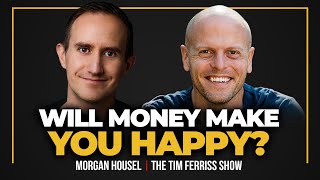 2 hr 11 min
Luck, marriage, social debt and book stories
Morgan Housel - Contrarian Money and Writing Advice, Three Simple Goals to Guide Your Life, and More
Who it’s for, and what you’ll learn
Best for: Readers of his books who want the human side: luck, parenting, marriage and stories from books he has read lately.
On uListen: summary · chapters · transcript
A long, reflective return visit in which Tim Ferriss reads back lines from Housel's writing and pushes back on vague answers.
You'll learn:
- His three life goals: “I really have three major life goals. I wanna stay married, I don't wanna get fat, and I wanna be there for my kids.” (1:09:24).
- Why he thinks money buys contentment but not happiness (41:38).
- Why he aims to live at 80 to 90 percent of his potential (1:25:18).
Housel speaks 67% of the words
20221 episodes
 3 hr 4 min
His life story, money and writing process
The Psychology of Money - Morgan Housel
Who it’s for, and what you’ll learn
Best for: Listeners who want the long, story-rich version of his ideas, plus how he became a writer.
On uListen: summary · chapters · transcript
A long, loose, often funny conversation in which Tim Ferriss reads Kindle highlights and blog passages and keeps bookmarking threads to revisit.
You'll learn:
- On having no mortgage: “It's a terrible, it's a terrible financial decision, but it's been the best money decision that we've ever made.” (1:30:36).
- Why he thinks your savings should look a little too conservative (1:54:46).
- Why writer's block usually means a bad idea (2:21:23).
Housel speaks 69% of the words
20203 episodes
 1 hr 12 min
Book basics, then Tesla, Musk and the election
Morgan Housel | How To Become Wealthy, Stay Wealthy & Be Happy | Modern Wisdom Podcast 222
Who it’s for, and what you’ll learn
Best for: Listeners who want The Psychology of Money's main ideas in a casual format, plus his read on markets and politics at the time.
On uListen: summary · chapters · transcript
A loose, bantering conversation, billed as his third Modern Wisdom visit that year, that leaves the book in its last third for Tesla and the US election.
You'll learn:
- Why controlling your time removes bad days more than it adds good ones (13:22).
- What Buffett would be worth with only 40 years of investing, from 25 to 65 (25:13).
- His golden rule: “live below your means and be patient. That's it. That's 90% of the finance. That is 90% of finance.” (39:13).
Housel speaks 72% of the words
 1 hr 3 min
Thinking out loud in the middle of the Covid crash
What Has Covid-19 Done To The Economy? | Morgan Housel | Modern Wisdom Podcast 151
Who it’s for, and what you’ll learn
Best for: Investors who want to hear how he reasoned mid-crash about cash, drawdowns and when to buy.
On uListen: summary · chapters · transcript
An urgent check-in recorded during the Covid market crash, with Chris Williamson relaying listener questions and Housel hedging heavily about what comes next.
You'll learn:
- How few investors actually trade in a sell-off, from a Vanguard statistic (21:48).
- Why he distrusts forecasts: “if you didn't see this coming a year ago, you have no right telling me what's gonna happen over the next year.” (42:47).
- Why uncertain pain hurts more than known pain (49:55).
Housel speaks 65% of the words
54 minWealth as control of your time
How To Create & Manage Your Personal Wealth | Morgan Housel | Modern Wisdom Podcast 142
Who it’s for, and what you’ll learn
Best for: Newcomers who want his core ideas in one short episode.
On uListen: summary · chapters · transcript
A relaxed interview recorded before his first book came out, with Chris Williamson asking broad prompts and Housel answering with long stories.
You'll learn:
- Why the one thing wealth reliably does for happiness is give you control of your time (1:37).
- Why wealth is invisible: “I think almost everyone knows someone who is ten times wealthier than you think. But you don't know that 'cause you can't see it.” (19:43).
- His stress test for your spending (35:18).
Housel speaks 83% of the words
What others say about him
Jimmy Carr, a guest on Modern Wisdom, calls Housel a genius writer and cites his point that the biggest inflation is in expectations
PlayBarry Ritholtz, a guest on My First Million, says Housel is tough to beat on behavioral finance
PlayJames Clear, a guest on Tim Ferriss's show, cites a line of Housel's about writing for yourself
PlayBen Gilbert, a host of Acquired, recalls how Housel reframed caring for a newborn in the middle of the night
Play
The full quotes
- Jimmy Carr, a guest on Modern Wisdom, calls Housel a genius writer and cites his point that the biggest inflation is in expectations: “Morgan Housel is, is such a genius writer. He's wonderful, but he has this idea of going, there's, uh, the biggest inflation in the world is not currency inflation. It's expectation inflation.” (Jimmy Carr, Modern Wisdom with Chris Williamson, August 10, 2026, at 1:53:19)
- Barry Ritholtz, a guest on My First Million, says Housel is tough to beat on behavioral finance: “On the behavioral finance side, uh, it's tough to beat Morgan Housel. He just is a great storyteller, uh, really gives a lot of insight with that.” (Barry Ritholtz, My First Million, June 10, 2026, at 34:44)
- James Clear, a guest on Tim Ferriss's show, cites a line of Housel's about writing for yourself: “if you're genuinely interested in it, that comes through in the writing. You know, like, I think Morgan Housel has some kind of line where it's like, "Writing for yourself is fun, and it shows. Writing for other people is work, and it shows."” (James Clear, Tim Ferriss, January 5, 2023, at 1:18:38)
- Ben Gilbert, a host of Acquired, recalls how Housel reframed caring for a newborn in the middle of the night: “Why would waking up at 3:00 AM to change a diaper and soothe a, you know, screaming... Like, why is that? But it's, uh... Actually, Morgan Housel put it to me in a really lovely way, where he just said, "What greater gift could you have than helping another human, another member in your family, who's new to the world, in their most intense time of need?"” (Ben Gilbert, Acquired ft. Ben Gilbert & David Rosenthal, December 18, 2023, at 4:55)
Questions people ask
Which Morgan Housel podcast should I watch first?
Start with The Diary of a CEO with Steven Bartlett (November 6, 2023), a tour of The Psychology of Money and Same as Ever through his most personal stories. With less time, try Modern Wisdom with Chris Williamson (February 13, 2020), which covers his core ideas in 54 min; if you are new to money and feel behind, The Mel Robbins Podcast (September 22, 2025) is the gentlest start.
What does Morgan Housel say about buying a house?
He treats it as a lifestyle choice rather than an investment: in his view, buy when you can afford it and expect to settle down, not as a bet on prices. He tells his own rent-then-buy story at 1:35:56 to 1:41:45, 6 min of The Diary of a CEO with Steven Bartlett (November 6, 2023), and more fully at 1:44:12 to 1:54:52, 11 min of The Diary of a CEO with Steven Bartlett (April 28, 2025); his case that zoning made housing unaffordable is 1:43:04 to 1:52:24, 9 min of Modern Wisdom with Chris Williamson (February 5, 2026).
How does Morgan Housel invest his own money?
Simply and cautiously, by his own account. On The Diary of a CEO with Steven Bartlett (April 28, 2025) he lists his net worth as a house, cash, Vanguard index funds and shares of Markel, on whose board he sits (1:41:13), and on BigDeal by Codie Sanchez he says he holds more cash than advisers would recommend, for surprises he can't foresee (31:58). He explains his allocation most plainly at 43:09 to 52:18, 9 min of The Mel Robbins Podcast (September 22, 2025), and on Modern Wisdom with Chris Williamson (March 16, 2020) he stresses that his approach is not right for everyone (27:48).
Does Morgan Housel think passive income is real?
He calls it mostly a myth. On The Diary of a CEO with Steven Bartlett (October 6, 2025) he says owning a rental is an endless run of repairs and late rent (55:27), and on BigDeal by Codie Sanchez he adds that investments carry a psychological price, from stock-market volatility to having to trust whoever runs a private fund (30:28). He also says many people who retire very early are bored within months, having lost the purpose work gave them (54:12 to 57:14, 3 min).
Where does Morgan Housel talk about The Art of Spending Money?
Most fully on The Diary of a CEO with Steven Bartlett (October 6, 2025), including why he wrote a book about spending at all (2:14 to 9:34, 7 min). Mel Robbins reads a passage from it on The Mel Robbins Podcast (September 22, 2025), where he tells its Vanderbilt story (54:51 to 58:42, 4 min), and Modern Wisdom with Chris Williamson (February 5, 2026) covers the best and worst ways to spend in a looser format (1:05:07).
What does Morgan Housel say about kids and money?
He says children learn by watching how parents spend and save, so lead by example rather than with lectures or humiliation. His fullest take is 1:59:53 to 2:12:02, 12 min of Huberman Lab with Andrew Huberman (December 2, 2024), where he warns that withholding resources to teach grit can teach resentment instead. Earlier, on Tim Ferriss (October 31, 2023), he concluded that the only reliable way to avoid spoiled kids is to give them less money (25:58), praising a billionaire investor who left his grandchildren nothing (26:43).
How this guide is made
uListen wrote this guide with AI from the full, speaker-labeled transcripts of the 15 episodes above, all from uListen's catalog, plus the four episodes quoted under What others say about him. Every quotation is checked word for word against its transcript, and every time comes from it. Where we say he tells a story nearly word for word on another show, a comparison of the transcripts found passages in close agreement. We update the guide when a new episode with him joins the catalog. To report a problem, email support@ulisten.ai.