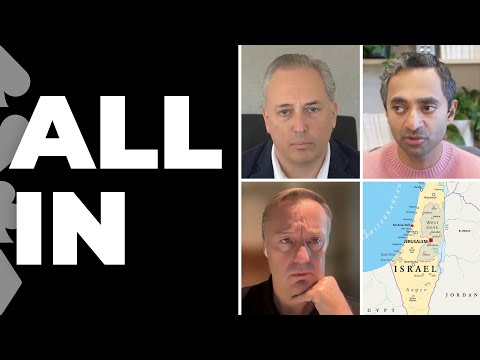
E149: Hamas terror attacks in Israel: fallout, reaction, next steps
Jason Calacanis (host), David Sacks (host), Chamath Palihapitiya (host)
In this episode of All-In Podcast, featuring Jason Calacanis and David Sacks, E149: Hamas terror attacks in Israel: fallout, reaction, next steps explores all-In hosts debate Hamas attacks, Israel’s response, and Western failures The hosts react to the Hamas terror attacks in Israel, comparing them to Israel’s 9/11 and condemning the massacres of civilians as unequivocal war crimes. They debate how Israel should respond, warning against an overreaction that could spiral into a wider regional or even global war and undermine long-term prospects for peace and a two‑state solution.
All-In hosts debate Hamas attacks, Israel’s response, and Western failures
The hosts react to the Hamas terror attacks in Israel, comparing them to Israel’s 9/11 and condemning the massacres of civilians as unequivocal war crimes. They debate how Israel should respond, warning against an overreaction that could spiral into a wider regional or even global war and undermine long-term prospects for peace and a two‑state solution.
They examine the intelligence failure that allowed the attacks, the humanitarian disaster looming in Gaza, and the strategic role of Hamas in sabotaging the Abraham Accords and Israel–Saudi normalization. A major thread is the distinction between Hamas and Palestinian civilians, and the necessity yet difficulty of dismantling Hamas without mass civilian casualties.
The conversation broadens into criticism of Western elites, especially elite universities’ reactions to the attacks, which the hosts see as evidence of a ‘woke’ ideological capture that excuses terrorism under an oppressor–oppressed framework. They also reassess Trump-era Middle East policy, praising the Abraham Accords and arguing that ‘Trump derangement syndrome’ prevented many from building on that progress.
Finally, they discuss America’s strategic position in a multipolar world, the broken U.S. defense procurement system, and the urgent need for more competent, excellence-driven leadership to avoid unnecessary wars, rebuild soft power, and pursue a realistic two-state solution.
Key Takeaways
Israel must respond decisively to Hamas while avoiding a 9/11-style overreach.
The hosts argue Israel is fully within its rights to dismantle Hamas after clear atrocities, but warn that a ‘level Gaza’ approach could ignite the Arab world, expand the conflict, and erode Israel’s moral standing—mirroring U. ...
Get the full analysis with uListen AI
Separating Hamas from Palestinian civilians is morally and strategically essential.
They stress that ~30,000 Hamas fighters have effectively held 2. ...
Get the full analysis with uListen AI
The Palestinian question cannot be bypassed; a two-state solution remains the only viable endgame.
The attack is framed as a deliberate attempt to derail normalization between Israel and Arab states (especially Saudi Arabia), proving that broader Middle East peace is impossible without addressing Palestinian statehood and rights; a one‑state outcome leads either to apartheid or expulsion.
Get the full analysis with uListen AI
Western ‘woke’ frameworks can blind elites to clear moral atrocities.
The hosts see student and institutional statements blaming Israel ‘entirely’ and omitting any Hamas condemnation as evidence of an oppressor–oppressed ideology that excuses or cannot recognize war crimes if committed by a designated ‘oppressed’ group.
Get the full analysis with uListen AI
Elite institutions are producing conformists, not first-principles thinkers.
Harvard and similar schools are criticized for auto-enrolling students into identity groups and issuing collective political statements, encouraging intellectual laziness, groupthink, and identity-based alignment instead of independent, principled reasoning.
Get the full analysis with uListen AI
Trump-era Middle East diplomacy deserves a more sober reassessment.
Despite rejecting Trump personally, several hosts now view the Abraham Accords, the push for Israel–Saudi normalization, stricter borders, and 100‑year bonds as examples of substantively good policy that ‘Trump derangement syndrome’ prevented many from extending or acknowledging.
Get the full analysis with uListen AI
The U.S. must fix its defense procurement and upgrade leadership in a multipolar world.
With artillery shells costing ten times Russia’s and stockpiles depleted by Ukraine, they argue the U. ...
Get the full analysis with uListen AI
Notable Quotes
“I think Israel is within its rights to dismantle and destroy Hamas… however, the question is how you do that.”
— David Sacks
“Those 30,000 Hamas terrorists have also been keeping 2.2 million Palestinians hostage for the last 20 years.”
— Chamath Palihapitiya
“These schools are woke madrasas.”
— Chamath Palihapitiya
“So much of the work that happened in that [Trump] administration turns out to have been right, and that’s what’s so frustrating for me.”
— Chamath Palihapitiya
“We are no longer the only superpower. We’re gonna have a really tough time in a multipolar world if we do not look for ways to de-escalate conflict when we can.”
— David Sacks
Questions Answered in This Episode
What concrete military and diplomatic strategies could Israel pursue to weaken or marginalize Hamas without triggering catastrophic civilian casualties in Gaza?
The hosts react to the Hamas terror attacks in Israel, comparing them to Israel’s 9/11 and condemning the massacres of civilians as unequivocal war crimes. ...
Get the full analysis with uListen AI
How can the U.S. and its allies credibly recommit to a two-state solution after years of drift, and what new frameworks or guarantees might make it workable for both Israelis and Palestinians?
They examine the intelligence failure that allowed the attacks, the humanitarian disaster looming in Gaza, and the strategic role of Hamas in sabotaging the Abraham Accords and Israel–Saudi normalization. ...
Get the full analysis with uListen AI
To what extent have elite Western institutions’ ideological frameworks distorted public understanding of the Israel–Palestine conflict, and how could they be reoriented toward genuine critical thinking?
The conversation broadens into criticism of Western elites, especially elite universities’ reactions to the attacks, which the hosts see as evidence of a ‘woke’ ideological capture that excuses terrorism under an oppressor–oppressed framework. ...
Get the full analysis with uListen AI
What reforms to U.S. defense procurement and industrial policy are realistic in the near term, and how might startups meaningfully shift the cost and innovation curve?
Finally, they discuss America’s strategic position in a multipolar world, the broken U. ...
Get the full analysis with uListen AI
In a multipolar world, what balance should the U.S. strike between hard power (military aid, deterrence) and soft power (diplomacy, cultural and economic ties) to reduce the risk of cascading regional wars like those now involving Israel and Ukraine?
Get the full analysis with uListen AI
Transcript Preview
All right, everybody. Welcome to episode 149 of the All-In Podcast. With me again, David Sacks and Chamath Palihapitiya. David Freiberg couldn't make it this week. We're gonna carry on without him and it's a difficult week, so just a quick opening statement from me about this episode. Like all of you, we're devastated by the terrorist attacks that occurred in Israel on Saturday, and I just wanna start the discussion here with two important housekeeping notes first. Uh, this is obviously a very dynamic situation and we're dealing with the fog of war, quite literally, so we're gonna do our best to make sense of what's happening, but things will change between when we tape this episode on Thursday and you choose to listen to it, in all likelihood, at some point over the weekend. Uh, second, there are gonna be some folks out there who claim, quite correctly, that we are not the experts on this topic, and thus we shouldn't chime in with our opinions. On the other side, the All-In community has told me explicitly they wanna hear us discuss, uh, what happened and they want a sense of normalcy. As one loyal listener explained to me last night at a dinner, "The fact that the four of you can debate hard topics, listen to each other, and in the end have a deeper understanding of the world gives me hope every week. That's why I listen." So, uh, we'll do what we do here every week. We'll have the hard discussion, we'll, uh, listen to each other deeply hopefully, and we'll try to understand the world and each other just a little bit more. And that's worth it, at least to me and apparently many of you. So with those two quick disclaimers, gentlemen, anything you wanna say up front before I recap where we are five days into this senseless brutality?
I think that was a pretty good intro, Jason. I mean, you're right. We're taping on Thursday, late morning Pacific Time. By the time this drops, it'll be Friday.
Yeah.
And so a lot could have happened. Also, it's true that the Middle East in general and this topic in particular is hugely complicated. We will be accused of not being experts, but at the same time, the audience seems to appreciate our opinions as consumers of information who are trying to make sense of the world.
Yeah.
So that's all we can really do.
Right. And conversations, I think, are, are how we make progress. Any, any thoughts before we get started here? And I'll recap what's occurred. Chamath, any, any, um, opening thoughts before we get into the details here?
On behalf of somebody who worked in Israel, I have a lot of friends there, spent a lot of time there, it's really just a terrible, devastating situation. I've really tried to stay off of social media just 'cause it's allowed me to kind of think a little bit more logically. It's fast and furious right now, I think, on X. And it's just a lot of people trying to make sure that their version of the truth is amplified over every other version of the truth, which I think is like, uh, is a point in the cycle where you, you just have to almost unplug from the matrix a little bit and find the few places that seem to be just telling things in an evenhanded way, which I also find on X, and then just kind of reconstruct what happened, why it happened, what do we do from here. I don't know. I don't know. I don't... I- I have a lot of thoughts on a lot of the peripheral issues, but the core issue is just, I'm just stunned that this happened. I don't, I- I don't even-
Install uListen to search the full transcript and get AI-powered insights
Get Full TranscriptGet more from every podcast
AI summaries, searchable transcripts, and fact-checking. Free forever.
Add to Chrome