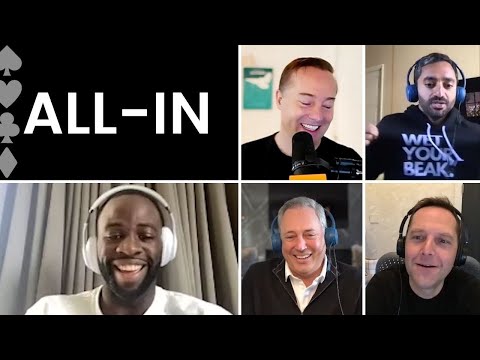
E21: Media misalignment, subjects controlling narratives & more with bestie guestie Draymond Green
Chamath Palihapitiya (host), Jason Calacanis (host), Narrator, David Friedberg (host), David Sacks (host), Draymond Green (guest), Draymond Green (guest), Draymond Green (guest), Draymond Green (guest), Draymond Green (guest), Narrator, Narrator, Narrator, Draymond Green (guest), Draymond Green (guest)
In this episode of All-In Podcast, featuring Chamath Palihapitiya and Jason Calacanis, E21: Media misalignment, subjects controlling narratives & more with bestie guestie Draymond Green explores tech titans slam media, celebrate direct platforms with Draymond Green This episode of the All-In Podcast explores how technology, social platforms, and personalities are disintermediating traditional media in politics, tech, and sports. The hosts argue that economic pressures have pushed news outlets toward clickbait and agenda-driven coverage, which erodes trust and drives founders, investors, and public figures to speak directly to their audiences via Twitter, podcasts, Clubhouse, and future creator-led networks.
Tech titans slam media, celebrate direct platforms with Draymond Green
This episode of the All-In Podcast explores how technology, social platforms, and personalities are disintermediating traditional media in politics, tech, and sports. The hosts argue that economic pressures have pushed news outlets toward clickbait and agenda-driven coverage, which erodes trust and drives founders, investors, and public figures to speak directly to their audiences via Twitter, podcasts, Clubhouse, and future creator-led networks.
They discuss free speech, censorship, and the risks and benefits of removing traditional gatekeepers, framing it as a ‘marketplace of ideas’ problem. A major segment focuses on Andreessen Horowitz’s media strategy and how venture brands and solo GPs are competing with legacy outlets for narrative control and deal flow.
NBA star Draymond Green joins to describe how athletes similarly bypass sports media, the mental strain of playing through COVID protocols, systemic racism in America, and the limits of ‘cancel culture’ on honest dialogue. The episode closes with self-deprecating readings of harsh listener comments and mean tweets, underscoring the combustible relationship between public figures, audiences, and media.
Key Takeaways
Owning your distribution is now strategic in tech, venture, and sports.
Founders, VCs, and athletes are increasingly bypassing journalists to speak directly via Twitter, podcasts, Clubhouse, and future networks, reducing the risk of being framed by adversarial or shallow coverage.
Get the full analysis with uListen AI
Traditional media’s business model pushes it toward outrage and agenda over depth.
With ad and subscription revenue gutted by the internet, outlets reward writers for followers and clicks, driving opinion-heavy, negative, and simplistic narratives instead of resource-intensive fact-gathering and nuanced analysis.
Get the full analysis with uListen AI
Tech and venture are becoming explicit competitors to media brands.
Firms like Andreessen Horowitz build large audiences through curated rooms, newsletters, and social followings, attracting the same guests and attention legacy outlets need, which heightens friction and mutual suspicion.
Get the full analysis with uListen AI
The best defense against bad speech is more and better speech, not gatekeepers.
Sachs argues that no elite group can be trusted to arbitrate truth without abusing censorship powers; instead, a competitive ‘marketplace of ideas’ plus open debate is a safer path, even if misinformation persists.
Get the full analysis with uListen AI
Long-form formats are winning because they can handle complexity.
Many issues—geopolitics, science, how companies or leagues actually operate—cannot be captured in five-paragraph news hits, so audiences are flocking to podcasts, streams, and live audio for context and depth.
Get the full analysis with uListen AI
Athletes are using their platforms to challenge both media narratives and social injustice.
Draymond Green describes hating what ‘media’ has become (clickbait, off-court gossip) and emphasizes players’ growing leverage to center issues like racism and policing, supported by an unusually aligned NBA commissioner.
Get the full analysis with uListen AI
Systemic racism and ‘cancel culture’ together constrain honest progress.
Green argues that America hasn’t fundamentally changed in decades on race—only visibility has—and that fear of social or career cancellation makes it hard for public figures to tell uncomfortable truths needed for real change.
Get the full analysis with uListen AI
Notable Quotes
““Everybody wants free speech for themselves and their allies, but they want to deny it to people they disagree with.””
— David Sacks
““The internet commoditized the reporting of facts, and so at that point, traditional media went wholesale into opinions.””
— David Sacks (paraphrasing Naval Ravikant)
““If you look at that first generation of star… we don’t trust institutions, we don’t trust companies. I’m gonna take my best shot at finding folks that I think are real.””
— Chamath Palihapitiya
““If you want me to be quite frank with you, I hate the media… I hate what media entails in today’s day and age.””
— Draymond Green
““We control the narrative. This ship don’t sail without us, and the things that matter to us have to matter to the league.””
— Draymond Green
Questions Answered in This Episode
If media gatekeepers lose influence, what guardrails—if any—should exist to prevent large direct-audience platforms from amplifying dangerous falsehoods?
This episode of the All-In Podcast explores how technology, social platforms, and personalities are disintermediating traditional media in politics, tech, and sports. ...
Get the full analysis with uListen AI
How might traditional news organizations realistically rebuild trust while competing with creator-led media and acknowledging their own bias and economic incentives?
They discuss free speech, censorship, and the risks and benefits of removing traditional gatekeepers, framing it as a ‘marketplace of ideas’ problem. ...
Get the full analysis with uListen AI
What would a fully developed ‘All-In Network’ or Andreessen-style media network look like, and how would its incentives and editorial norms differ from legacy outlets?
NBA star Draymond Green joins to describe how athletes similarly bypass sports media, the mental strain of playing through COVID protocols, systemic racism in America, and the limits of ‘cancel culture’ on honest dialogue. ...
Get the full analysis with uListen AI
From Draymond Green’s perspective, what specific reforms in sports journalism would make coverage more substantive about the game rather than off-court drama?
Get the full analysis with uListen AI
Does the rise of individual ‘truth-tellers’ risk creating new personality cults and echo chambers, and how can audiences critically evaluate which voices to trust?
Get the full analysis with uListen AI
Transcript Preview
(singing) Wet your beak. Come wet your beak. Wet your beak. Wet your beak. Ah, ah, ah, ah.
Confirming I am recording, testing. I am testing my recording. And here we go.
(singing) You gotta wet your beak. Gotta wet your beak.
Here we go in three, two...
What went all in? Let your wits slide. Rain Man, David Sa- What went all in? And I said. We open sourced it to the fans and they've just gone crazy with it. Love you guys. Queen of Quinoa. What went all in?
Hey, everybody. It's the All In Podcast. Wet your beak, young Spielberg. Coming at you on a Friday morning.
(singing) Wet your beak. Gotta wet your beak.
Afternoon drive time, the number 11 podcast in the world. It's the All In Podcast with the Queen of Quinoa, David Friedberg, Rain Man himself, with his hot new track from young Spielberg, I Am the Rain Man, David Sachs. And of course, wetting his beak, the absolute dictator, wetting his beak with his merch, merch game is strong, Chamath Palihapitiya. How's everybody doing on the backs of us becoming the number 11 podcast in the world?
Really good. Really, really good.
Wow, look at that enthusiasm. (laughs)
Really great. No, I think we had an intermittent, uh, uh, uh, Sachiepoo is not... Apparently, he, uh... With, with all these, with all his week, uh, beak wetting, he hasn't had time to pay the internet bill.
(laughs)
Hey, guys, I'm back.
You can go ahead and upgrade your DSL from, from 56 kilobits. I think you can afford it, okay?
He's hit his bandwidth limit because he was watching himself on Tucker over and over again this morning.
(laughs)
I'm sorry, I'm sorry. But, uh-
So he, he completely ran out of internet.
... I, I, I do, I do need to say this that yesterday, we do have firsthand evidence that David Sachs, after appearing on Tucker Carlson, then spent the next hour watching himself-
(laughs)
... appear on Tucker Carlson. (laughs)
Literally got up from the poker table-
My gosh.
... refused to play poker with his besties because he had to watch himself-
On repeat.
... no less than six times on Tucker.
Oh, my gosh.
No, no, it must have been, it must have been-
He watched it six times.
... 20, 30 times. No, no headphones, just listening to the iPhone, looking at it.
Yeah.
No, this is, this is-
Holding it up to his ear just so he doesn't miss a word.
Sure.
Optimizing his performance. What was it like to go on Fox News? Was this a dream for you, Sachs?
(laughs)
Is this a, is this a bucket list?
See, Jason, this is why you're such a scumbag because-
Install uListen to search the full transcript and get AI-powered insights
Get Full TranscriptGet more from every podcast
AI summaries, searchable transcripts, and fact-checking. Free forever.
Add to Chrome